Last updated November 17, 2026
New windows and doors improve comfort, cut energy bills and add long-term value to your home. Sightline Windows & Doors Summerlin pairs proven product lines with a local vetted installing partner for lasting performance - and a price put in writing.
Choose your installer
The unit is half the job - the install is the other half. Background-checked local installers measure, set, seal and insulate every opening, and they know the lines we quote inside and out.
Select the right products
Compare styles, materials and glass packages side by side until the fit is right for your rooms, your budget and your goals. The product-line comparison below is the place to start.
Prepare your home for install
Before install day we walk you through a short checklist - furniture pulled back, treatments down, a clear path to each opening - so install day is watch-it-happen, not scramble.
Compare the Lines We Quote
Every project is priced on the same lines, side by side - the price indicators below are relative, and your consultant shows exact numbers on your actual openings.
PGTThe line homeowners arrive naming - the most impact certifications in the industry$$$
- More impact certifications than any other line we quote
- WinGuard, EnergyVue and ClassicVue Max systems built for every wind zone
- 99% on-time delivery keeps your install date on the calendar
CGIThe heavyweight impact line$$$$$
- Large-missile impact ratings for the strictest wind zones
- Architectural-grade aluminum with commercial-depth frames
- The line we quote when protection is the whole point
CWSThe value pick$$
- Vinyl systems built to strict wind codes
- Strong energy packages at the friendliest price point
- The smart start for whole-home replacements on a budget
ESWSlim lines, big glass$$$$
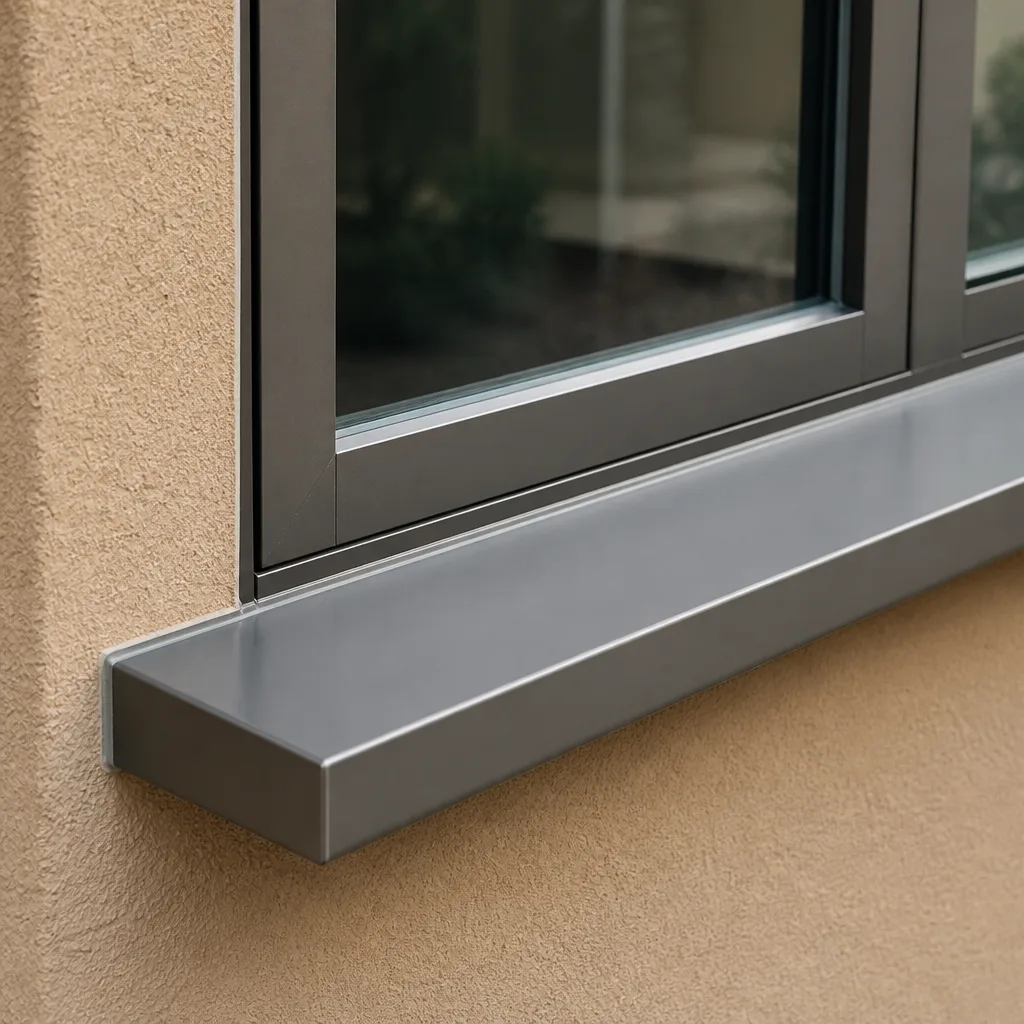
- Narrow-sightline aluminum for modern elevations
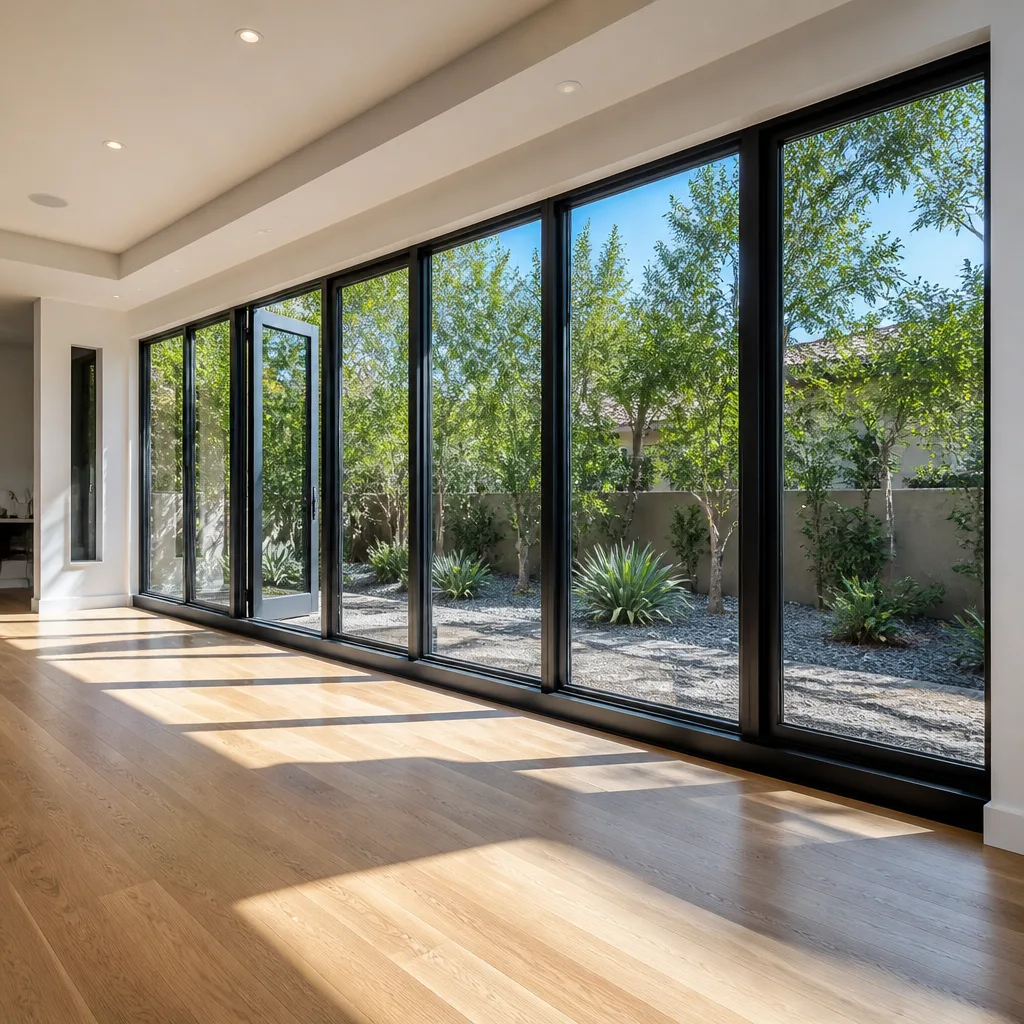
- Oversized openings and floor-to-ceiling glass
- Impact-rated without the bunker look
ECOThe aluminum impact workhorse$$$
- Factory-built aluminum impact systems
- A strong price-to-protection ratio for coastal homes
- Proven lines with short lead times
Windows & Doors Warning Signs: A Summerlin Homeowner’s Reference Guide
A sticky sliding door in Summerlin is not always a hardware problem. In a significant share of the doors we open up, it’s frame racking from slab settlement – and adjusting the rollers will ease the symptom for six to eighteen months before the frame stress reaches the glass. That gap between what a sign looks like and what it actually means is the whole point of this guide. We’re not going to hand you a checklist of “drafts, sticking, fogging” and send you off to call someone. We’re going to connect each observable symptom to the failure mechanism behind it, attach a documented cost range, and give you the diagnostic steps to tell one from the other. You’ll finish knowing which Summerlin problems are cosmetic, which are structural, and which will cost more every month you wait.
Quick Answer
Windows and doors in Summerlin fail in a predictable order: sealant and weatherstrip first (usually a repair in the low hundreds), then frame and glass, then the opening itself. The two most expensive mistakes are mistaking between-glass fog for surface haze, and mistaking slab settlement for a hardware fault. Both lead homeowners to spend money on the wrong fix. The dollar-store incense test, a three-month gap measurement, and a level check on the rough opening will tell you which failure you actually have before you call anyone.
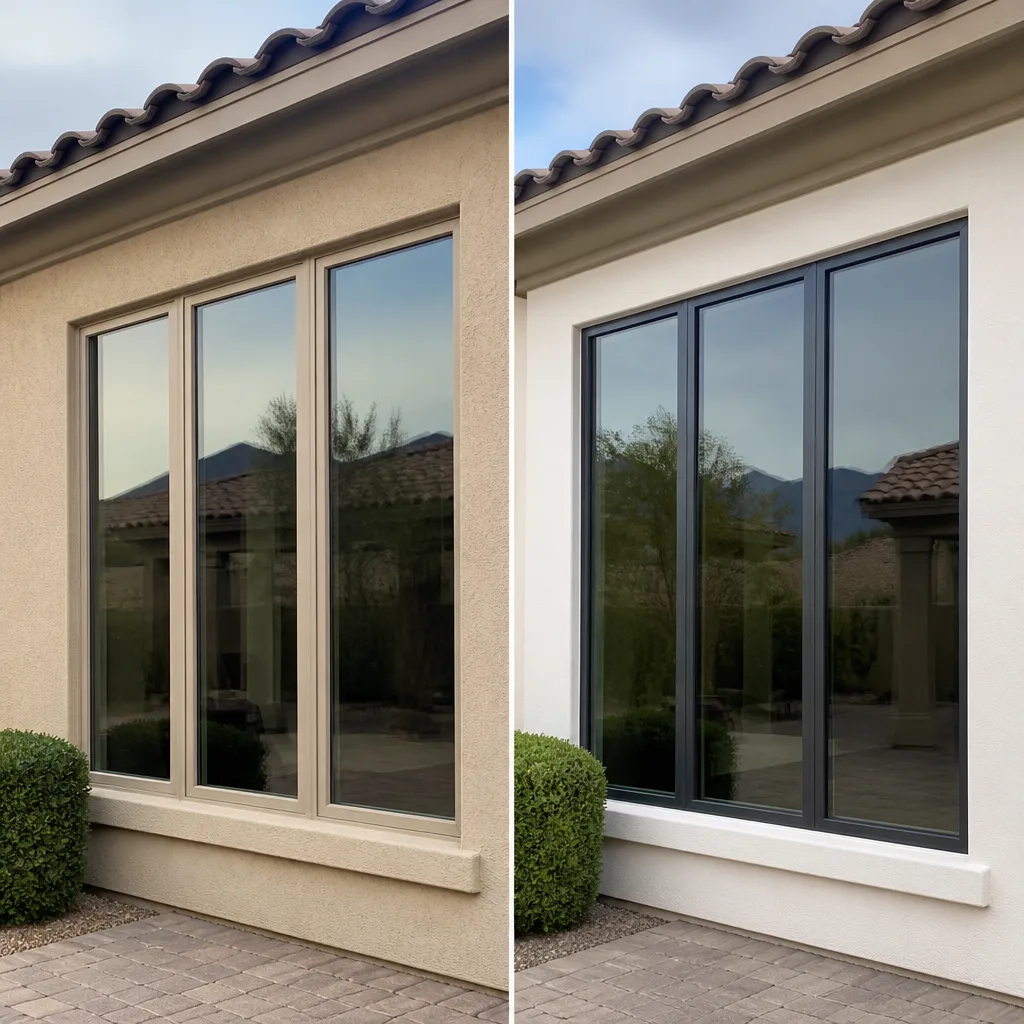
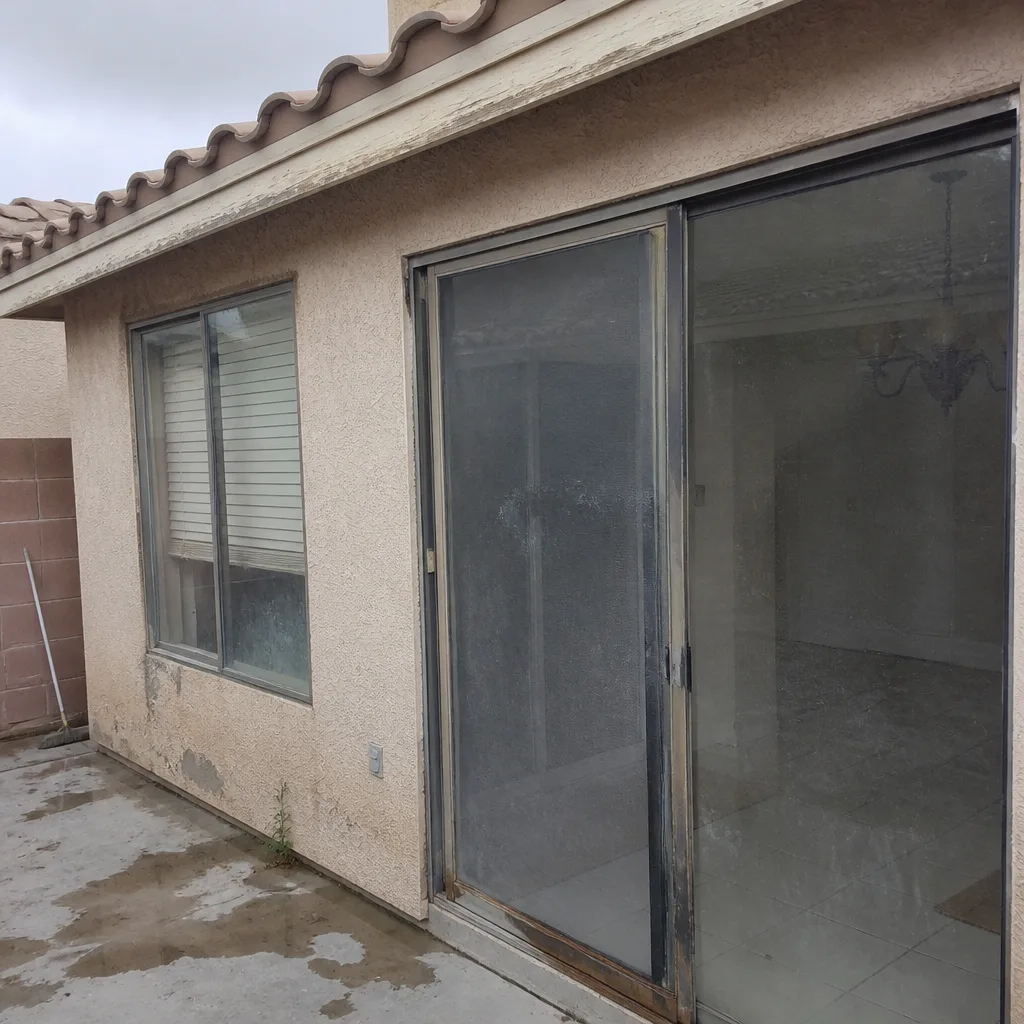 Before
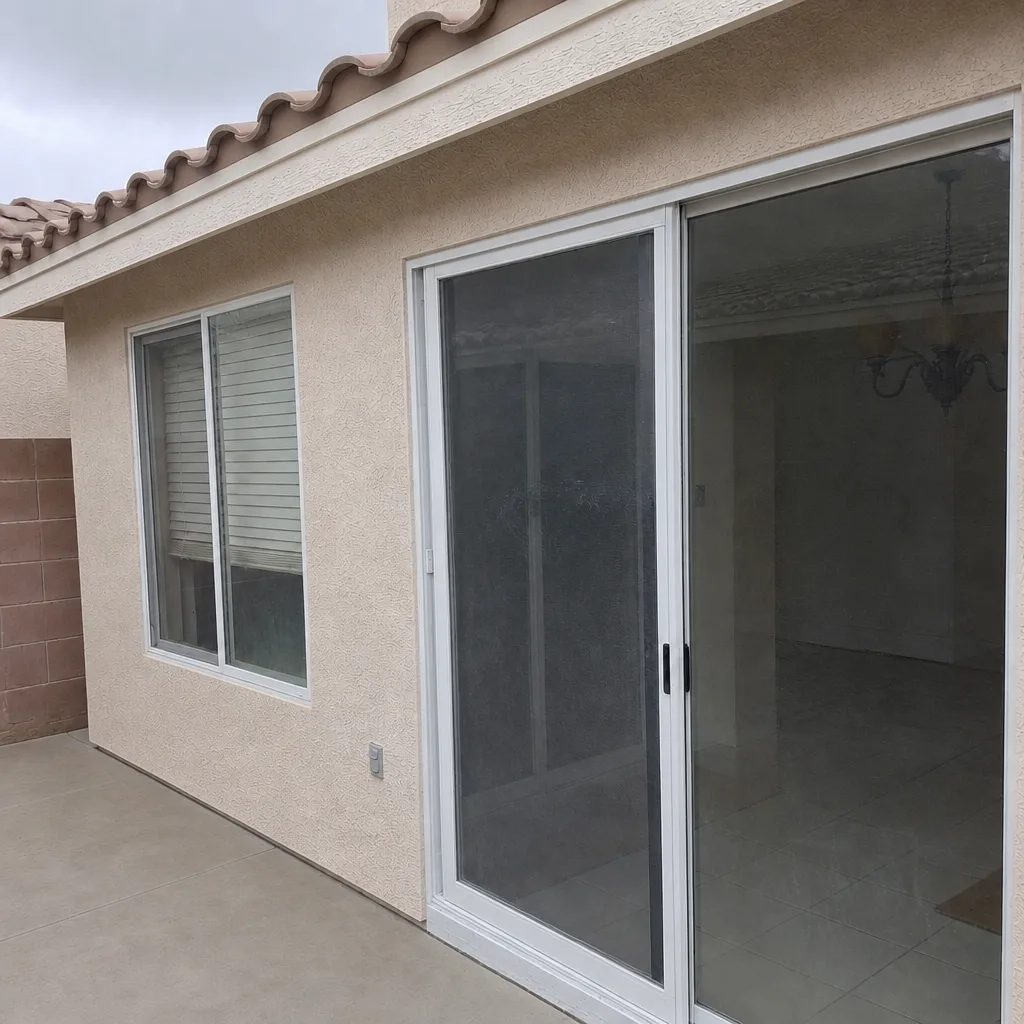 After
Table of Contents
- Between-Glass Fog vs. Surface Haze: Two Signs That Look Alike
- The Incense Test: Finding Air Infiltration Without Tools
- Slab Settlement and the Summerlin Door Corner That Binds First
- Frame Corrosion: Cosmetic Oxidation vs. Structural Pitting
- Your Energy Bill as a Warning Sign
- Repair or Replace? The Cost Trajectory That Decides It
- Common Mistakes to Avoid
- When to Call a Professional
Between-Glass Fog vs. Surface Haze: Two Signs That Look Alike

The first diagnostic mistake Summerlin homeowners make is treating all cloudiness the same. Fog between the panes and haze on the glass surface look similar in afternoon light and have nothing in common underneath.
Fog between the panes means a failed IGU seal. Your window is a sealed unit – two or three panes of glass separated by a spacer and a gas fill (argon or krypton), with the edges sealed to keep moisture out. When that perimeter seal fails, moisture enters the cavity and condenses. There’s no cleaning it. The fog is inside a sealed assembly you can’t reach, and it will return every time the temperature flips. A failed IGU seal also means the gas fill is gone, which drops the unit’s insulating value – you’re now heating and cooling the neighborhood through that window.
Surface haze is oxidation on vinyl or a mineral film on the glass exterior. It wipes off with a microfiber cloth and a mild cleaner. It’s cosmetic and cheap.
Here’s how to tell them apart without climbing anything:
- Look at the glass from an angle in bright light. If the cloudiness sits in a crisp “picture frame” band around the edges and creeps inward, it’s the seal.
- Try to wipe a small corner. If the haze lifts onto the cloth, it’s surface oxidation or mineral film, not a failed unit.
- Check both panes of a dual-pane window on a cold morning. Interior fog that clears as the day warms is condensation on the room side, not a seal failure.
The cost gap is real. A failed IGU on a standard opening in the Summerlin market typically runs $200 to $450 for the unit plus installation, because only the glass assembly is replaced, not the frame, trim, or opening. Surface haze costs a cloth and fifteen minutes. If a contractor quotes you a full window replacement for what turns out to be exterior haze, the diagnostic step got skipped. We’ve reviewed estimates where that exact substitution was buried in the line items. When in doubt, bring the written estimate for a free second opinion – we’ll tell you which failure the photos actually show.
The Incense Test: Finding Air Infiltration Without Tools
You can locate where a window or door is leaking air with a dollar-store incense stick and no tools. The smoke traces the actual airflow path, which tells you which of three failure points you’re dealing with: the sealant bead at the exterior of the frame, the weatherstrip at the operable sash or door slab, or the frame joint itself.
Air infiltration is the most common summer complaint we see in Summerlin, and it’s also the most frequently misdiagnosed. A homeowner feels warm air “coming through the window” and concludes the glass is bad. Usually the glass is fine and the leak is at a joint that a $15 tube of sealant would close.
Here’s the procedure, run on a windy afternoon or with the house fan on and everything sealed up:
- Light the incense and let it produce a steady smoke stream. Hold it about an inch from the surface.
- Start at the bottom exterior corner of the frame. Work the smoke along the perimeter.
- Watch where the smoke stream bends toward the interior or gets pulled under the frame.
- Then run the same trace on the interior side, around the weatherstrip and the meeting rail.
- Note the location and note the pattern.
What the pattern tells you:
- Smoke pulled in along a continuous seam at the exterior perimeter – the sealant bead has failed. Repair is resealing, typically $150 to $350 per opening.
- Smoke pulled through the operable sash or the door slab edge – the weatherstrip has flattened. Weatherstrip replacement is usually $80 to $200 per opening.
- Smoke pulled in at a corner joint or a miter – the frame joint is failing, and that’s a different problem. Frame joint failures tend to be a symptom of movement, not wear.
The third pattern is the one that matters. It sends you back to the level check on the rough opening, because a joint that’s opening up is responding to something moving the frame. Seal it and it reopens. We see this often at the base of doors facing west or southwest, where the elevation catches the most direct afternoon sun. The trap here is buying new windows when the diagnosis was a joint and a movement problem. If the smoke says joint, call (844) 560-5201 and get it measured before you get quoted for replacement.
Slab Settlement and the Summerlin Door Corner That Binds First
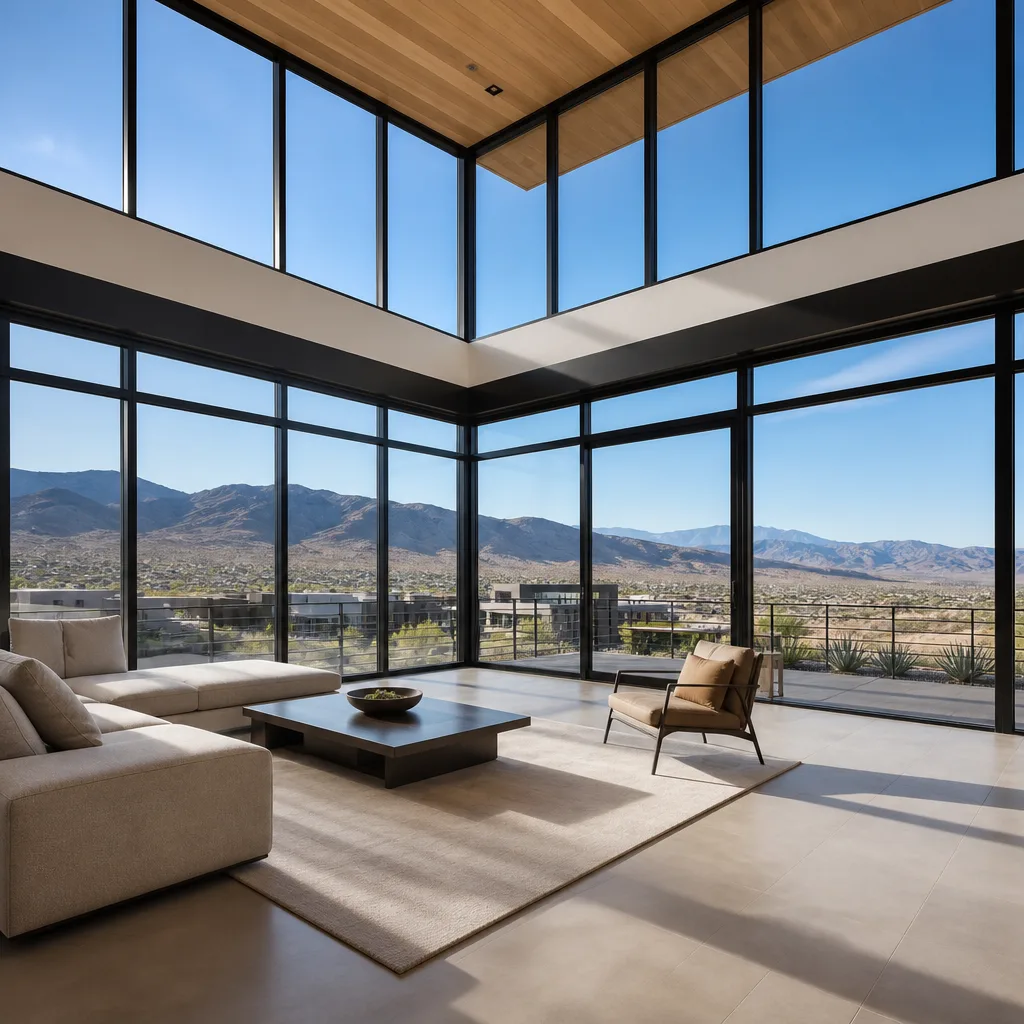
In our experience, a door that’s begun catching is doing one of two things: it’s dragging on the threshold because the hardware is out of adjustment, or it’s binding in the frame because the slab beneath it has moved. The two look identical from the handle side. The difference is what happens six to eighteen months after you adjust the rollers.
Summerlin sits on caliche – a dense, calcium-carbonate crust that forms in desert soils. Caliche is hard, but it doesn’t drain uniformly. Water pools on it and moves laterally instead of soaking down, and that lateral moisture is what moves the slab. We see caliche-related movement most often in the older Summerlin neighborhoods where the soil profile was graded differently than the newer west-side builds. Newer construction with better site drainage is less prone to this, but not immune.
Which corner binds first when the slab moves? On a hinged door, the hinge side at the bottom. On a sliding door, the sill end opposite the pull handle, where the panel seats into the jamb. The motion is almost always vertical along one corner, which puts the door out of square in the frame.
The correct diagnostic is a level check on the rough opening before touching the hardware. A contractor with up to 14 years on a door frame can read that in ten minutes. You can approximate it:
- Hold a 4-foot level against the door jamb, both vertically and horizontally.
- Measure the diagonal distances across the frame – from the top-left to bottom-right corner, then top-right to bottom-left. If they differ by more than 1/8 inch, the frame is out of square.
- Record the gap at the binding corner with a set of feeler gauges or a folded piece of paper.
- Measure again in 30 days, then in 90.
- If the gap is stable over three months, the movement is historical – the frame settled once and hasn’t continued. If it’s still growing, the movement is active and adjusting hardware would only mask it.
This is the point where repair-or-replace becomes a documented decision instead of a guess. If the frame is out of square and stable, a door can often be refit correctly. If it’s out of square and actively moving, you need to know that before anyone removes a trim piece. This is exactly the kind of thing we measure on a door installation in Summerlin survey, and the measurement goes in the written quote so the customer owns the number they can check.
Frame Corrosion: Cosmetic Oxidation vs. Structural Pitting
On aluminum windows, corrosion divides into two distinct categories, and only one of them threatens the window’s performance. Learning to see the difference protects the warranty and the checkbook.
Cosmetic oxidation is a chalky, whitish film on the anodized or painted finish. It’s what aluminum does in dry, sun-exposed Summerlin air. It isn’t structural. It doesn’t touch the thermal break, doesn’t weaken the frame, and cleans up with a mild cleaner and a non-abrasive pad. Many homeowners overreact to it and start pricing replacements when a wipe and a touch-up are all that’s required.
Structural pitting is a different animal. It’s localized corrosion that’s eaten into the metal enough to undermine the thermal break – the insulating element that separates the interior and exterior faces of the frame. Once that break is compromised, the aluminum conducts heat straight through the frame, and the window’s rated U-factor is no longer accurate. That pitting is not always visible as pitting. Sometimes it shows up first as a rough, pitted texture at a joint or an edge, or as a dark stain under the finish. That’s the failure you can’t wipe away.
Why this matters for the warranty: most manufacturer warranties include corrosion exclusions that trigger silently the moment the thermal break is compromised by pitting. The exclusion doesn’t announce itself. You find out when a claim is denied. Where the pitting is confirmed, some manufacturer lines – and here we’d look at ES Windows or ECO Window Systems depending on the opening’s exposure – are built with a heavier corrosion profile than the standard aluminum assembly. That doesn’t make them immune. It means the failure mode is better documented when it happens.
The check is simple: run a fingernail along the frame at the joints and look for a rough texture that catches. If the surface is chalky but smooth, it’s oxidation. If it’s rough, or if a dark stain sits under the finish, treat it as a pitting concern and get the frame measured before you assume you’re covered. Getting that confirmed in writing early is what the manufacturer will ask for later.
Your Energy Bill as a Warning Sign
Your monthly energy statement is a diagnostic tool before it’s a bill. When cooling costs climb by 15% or more over a comparable month from the prior year, windows and doors are a leading contributor in Summerlin homes – often before the problem shows up as visible fog or a draft.
The trap is spending money on the wrong units. A homeowner sees a rising bill and replaces the four windows on the north wall, because north-facing feels logical for heat. That’s usually the wrong elevation. The primary heat gain in a Summerlin home is almost always the west or southwest face, where the late afternoon sun hits at the harshest angle and the glass takes the load. East is next, from morning sun. North is the lowest-load elevation, unless the house has a lot of unshaded north glass.
So the first step is to identify the elevation driving your load, then calculate the per-window contribution. ENERGY STAR publishes a load estimator tool that lets you estimate the cooling load contribution of a given window at a given orientation. Here’s how we’d use it:
- Pull 12 months of energy statements before you buy anything. Note the rise by month.
- Walk the house with the tool open. Note every window by elevation and the age of the unit.
- Enter the window’s orientation, SHGC (solar heat gain coefficient), and the rough dimensions into the estimator.
- Compare the estimated cooling load contribution across windows on the same elevation versus windows on a different elevation.
- Rank the openings by estimated load. That’s where your replacement or upgrade dollars go first.
SHGC is the metric that matters most here – the fraction of solar heat a window lets through. A west-facing unit with a high SHGC is costing you every afternoon. A north-facing unit with a high SHGC is costing you much less. If you’re replacing, look at the rated performance, not just the brand. We specify product by what the opening requires, not by what’s stocked; on a west elevation, that often points to a line with an aggressive low-SHGC option, and CGI and CWS offer ranges we deploy for exactly that reason. If the bill is climbing, we’d rather you understand your load than buy the wrong four windows. Our window replacement in Summerlin process starts with a measured survey specifically so this elevation question gets answered before the scope is written.
Repair or Replace? The Cost Trajectory That Decides It
The repair-or-replace question is a math problem, not a gut feeling – and the math is easier to run than most homeowners expect, once you have the mechanism identified. Here’s the general trajectory we’ve seen across enough Summerlin homes to put numbers on it.
- Sealant or weatherstrip failure, one or two openings: $150 to $550 repair range. The failure mechanism is wear, not structure. Repair.
- Failed IGU seal, one opening: $200 to $450 to replace the glass assembly. The frame, trim, and weatherproofing remain serviceable. Repair.
- Multiple failed IGU seals across an elevation: This usually indicates a systemic problem – a batch of unit seals from the same manufacturing run failing together, or a frame that’s stress-loading the glass. At three or more failures on the same elevation, the replace math starts to overtake the repair math.
- Frame racking from active slab movement: Do not repair the door. Address the frame first. If the movement is historical, refit. If active, the opening needs a measured survey and the door installation will be qualified against the rough-opening condition.
- Structural pitting at the thermal break: The frame is compromised and the warranty is likely voided. Replace the affected units.
- Any single repair that has been done twice in the same opening: The second failure tells you the first was the wrong fix. Stop, diagnose, then decide.
The trajectory is the point. A $300 repair now that buys another season is cheaper than a $2,200 replacement that buys ten. But a $300 repair done every season for three seasons has cost more than a replacement and delivered less. Our 365-Day Done Right Promise exists because that “we can fix it” optimism is the wrong default when the mechanism says otherwise. When you’re weighing the two, the written price before work starts is the foundation – our window installation in Summerlin quote names the line items; the Sightline Windows & Doors Summerlin home page is where the Haven Standard’s Have it in writing clause lives and explains why the measured survey and the final invoice cannot diverge.
Common Mistakes to Avoid
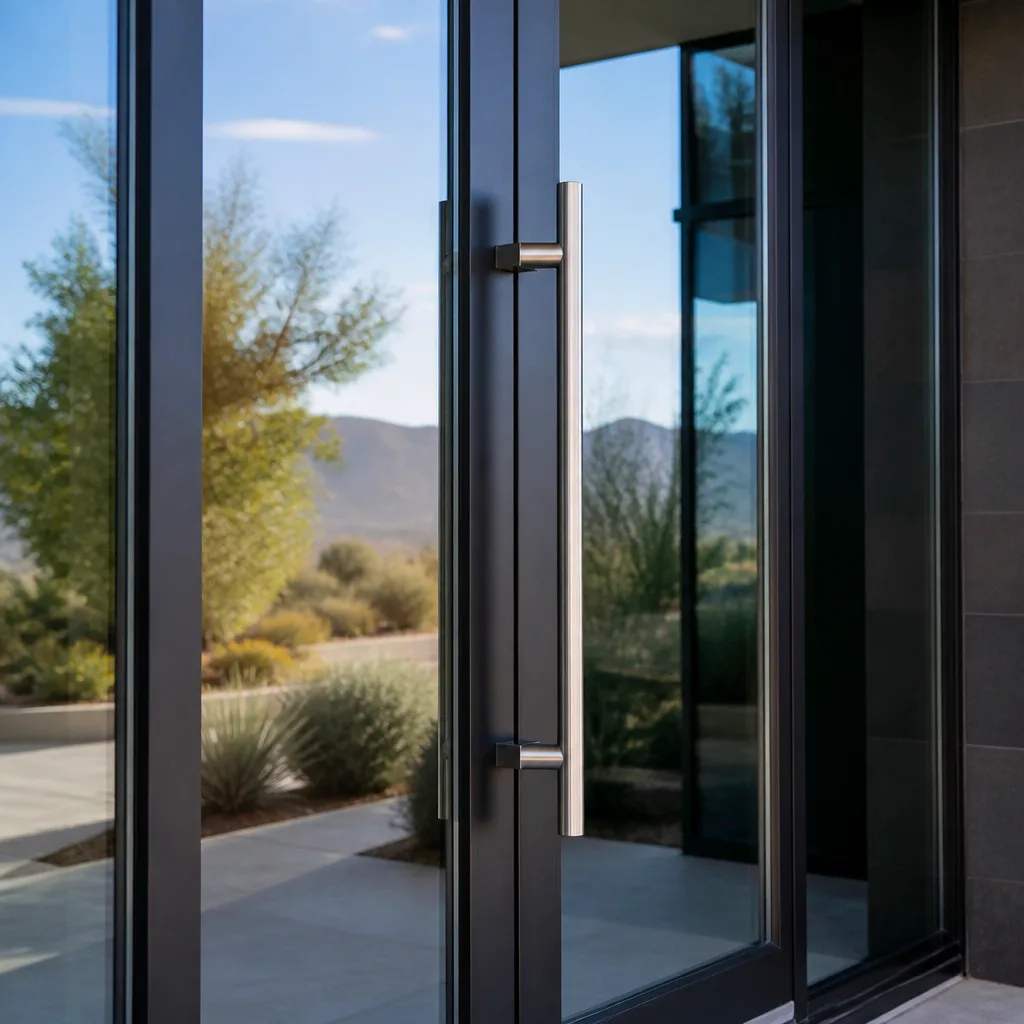
- Treating a sticky sliding door as a hardware job. Adjusting the rollers relieves the symptom for six to eighteen months while the frame continues to stress. The level check on the rough opening comes first, always.
- Cleaning a fogged unit instead of diagnosing the seal. You can wipe the exterior all day. Between-glass fog has to be resolved by replacing the glass assembly. Every hour spent cleaning is a wasted hour.
- Buying four new windows for a north-elevation bill climb. The primary heat gain in Summerlin homes is almost always west or southwest. Replacing the wrong elevation spends the budget without touching the load.
- Resealing a corner joint without checking for movement. Sealant fails because the joint is moving. Seal a moving joint and it reopens. Measure first.
- Assuming a chalky aluminum finish means the frame is ruined. Cosmetic oxidation is standard in desert air. It wipes off. Structural pitting is what voids the manufacturer warranty, and it doesn’t look the same.
- Accepting a verbal replacement diagnosis after a five-minute walkthrough. Measure it, write it down, and put the number in dollars on a line item. Haven Clause 4, No surprises, means a written scope exists before any work starts. If there isn’t one, the conversation isn’t finished.
- Rebuilding a whole window when the frame is fine. A failed seal means the glass assembly, not the frame. Replacing a sound frame wastes money and creates a larger cut in the wall than the problem requires.
When to Call a Professional
Some signs are a homeowner’s diagnostic project. Others need a trained eye and a level. Call a professional when the binding corner gap is still growing at the three-month measurement, when the INCENSE test flags a corner joint rather than a seam, when three or more units on the same elevation have failed IGU seals, when you can feel a rough texture under the finish at an aluminum joint, or when the energy bill has moved 15% or more and you can’t pin down which elevation is driving it. Adjusting door hardware to compensate for a moving frame is the one thing we’d tell a homeowner not to attempt – that’s exactly how the symptom gets treated and the cause stays hidden. Sightline Windows & Doors Summerlin offers free estimates in Summerlin – call (844) 560-5201 to schedule yours, and bring the written estimate for a free second opinion if you’re weighing repair against replacement.
Frequently Asked Questions
No. Fog between the panes is inside a sealed glass assembly and can’t be reached from either side. A failed IGU seal is the cause, and the fix is replacing the glass unit – usually $200 to $450 per opening in Summerlin – not cleaning it. Surface haze on the outside of the glass is a different problem and does wipe off with a mild cleaner. Call (844) 560-5201 if you want the seal confirmed before you commit to replacement.
A sticky sliding door in Summerlin most often means the slab has moved and the rough opening is out of square, which puts the panel in a bind. Roller adjustment relieves it because it masks the symptom, not because it fixes the cause – the frame stress continues. The first diagnostic is a level check on the opening, not a look at the hardware. If the diagonal measurements differ by more than 1/8 inch, the frame is out of square and that has to be addressed before anything else.
On a hinged door, it’s the hinge side at the bottom. On a sliding door, it’s the sill end opposite the pull handle. The movement is vertical along that corner, which pulls the frame out of square. Measure the gap at the binding corner on day one, day thirty, and day ninety. A stable gap is historical movement; a growing gap is active and needs a measured survey, not a repair.
Usually not. That film is cosmetic oxidation – a surface layer that forms on anodized and painted aluminum in dry, sun-exposed air. It cleans off and isn’t structural. What you should worry about is a rough, pitted texture at a joint, or a dark stain under the finish, which indicates corrosion into the thermal break. That failure can void the manufacturer warranty whether the manufacturer tells you or not.
They can, if you replace the elevation driving the cooling load. In Summerlin, that’s almost always the west or southwest face, where the late afternoon sun hits hardest – not north, which is where homeowners tend to start. Before you buy anything, use ENERGY STAR’s load estimator along with 12 months of your energy statements to rank the openings by estimated cooling contribution. Then replace the load, not the logical-looking elevation. Call (844) 560-5201 for a measured survey before you decide.
Repair when a single opening has a wear failure – a failed sealant bead, fl attened weatherstrip, or one failed IGU seal – because the structure is sound. Replace when the failure is structural: active slab movement racking the frame, structural pitting at the thermal break, or three or more IGU failures on the same elevation. The math turns when the same opening has been repaired twice. The written quote should make the line-item difference clear either way. Estimates in Summerlin are free.
The Bottom Line
The signs most guides list – drafts, sticking, fogging – are symptoms, not diagnoses. What matters is the mechanism behind them. Use the tools in this guide: the incense trace to locate the air path, the three-month gap measurement to separate active from historical movement, the level check on the rough opening before touching door hardware, the fingernail check to tell oxidation from pitting, and the ENERGY STAR load estimator to rank your summer load by elevation. The cost ranges in this guide should let you weigh repair against replacement from facts rather than from a contractor’s urgency. If the mechanism points toward structural failure, get it measured before you spend money on the wrong fix.
Contact
Every Sightline Windows & Doors Summerlin engagement starts with a measured survey you keep and a written price before any work starts – the quote and the contact are the same document. If a Summerlin warning sign has moved from cosmetic to structural, send us the photos and get a fixed written number. Call (844) 560-5201 for a free estimate.
Written by the team at Sightline Windows & Doors Summerlin.
Six Reasons Homeowners Choose Sightline Windows & Doors Summerlin
Laminated glass and reinforced frames hold up to wind-driven rain, hail and flying debris, so your openings stay sealed when the weather turns.
Low-E insulated impact glass from our manufacturer lines commonly cuts monthly cooling bills 20-30%.
Laminated impact glass shuts out up to 40% of outside noise - traffic, neighbors, weather.
Monitoring services run $30-90 a month. Laminated impact glass resists forced entry around the clock, with no subscription.
Tighter seals and insulated glass even out hot and cold rooms and stop the drafts at the frame.
A full impact package upgrades curb appeal, buyer confidence and appraised value in one project.
Other Sightline Windows & Doors Summerlin Services