Last updated November 17, 2026
New windows and doors improve comfort, cut energy bills and add long-term value to your home. Sightline Windows & Doors Summerlin pairs proven product lines with a local vetted installing partner for lasting performance - and a price put in writing.
Choose your installer
The unit is half the job - the install is the other half. Background-checked local installers measure, set, seal and insulate every opening, and they know the lines we quote inside and out.
Select the right products
Compare styles, materials and glass packages side by side until the fit is right for your rooms, your budget and your goals. The product-line comparison below is the place to start.
Prepare your home for install
Before install day we walk you through a short checklist - furniture pulled back, treatments down, a clear path to each opening - so install day is watch-it-happen, not scramble.
Compare the Lines We Quote
Every project is priced on the same lines, side by side - the price indicators below are relative, and your consultant shows exact numbers on your actual openings.
PGTThe line homeowners arrive naming - the most impact certifications in the industry$$$
- More impact certifications than any other line we quote
- WinGuard, EnergyVue and ClassicVue Max systems built for every wind zone
- 99% on-time delivery keeps your install date on the calendar
CGIThe heavyweight impact line$$$$$
- Large-missile impact ratings for the strictest wind zones
- Architectural-grade aluminum with commercial-depth frames
- The line we quote when protection is the whole point
CWSThe value pick$$
- Vinyl systems built to strict wind codes
- Strong energy packages at the friendliest price point
- The smart start for whole-home replacements on a budget
ESWSlim lines, big glass$$$$
- Narrow-sightline aluminum for modern elevations
- Oversized openings and floor-to-ceiling glass
- Impact-rated without the bunker look
ECOThe aluminum impact workhorse$$$
- Factory-built aluminum impact systems
- A strong price-to-protection ratio for coastal homes
- Proven lines with short lead times
DIY vs Professional Window Installation: What’s Safe to Do Yourself
A homeowner who installs their own windows in Nevada has no installer warranty to call when something goes wrong. That’s a manageable trade-off for a single-story wood-frame window in a dry climate. It’s a serious financial exposure for a stucco opening above the first floor, where a bad seal doesn’t show up as a drip on install day. It shows up as a soft sill plate in year three, after the stucco has to come off to find it. This guide draws the line at specific task categories rather than handing down a blanket verdict. You’ll learn which jobs a careful homeowner can genuinely handle, which ones cross into the building envelope, what Nevada licensing actually requires, and how to read your own rough opening well enough to make the call. We write this from Summerlin, where the housing stock and the desert climate both shape the answer.
Quick Answer
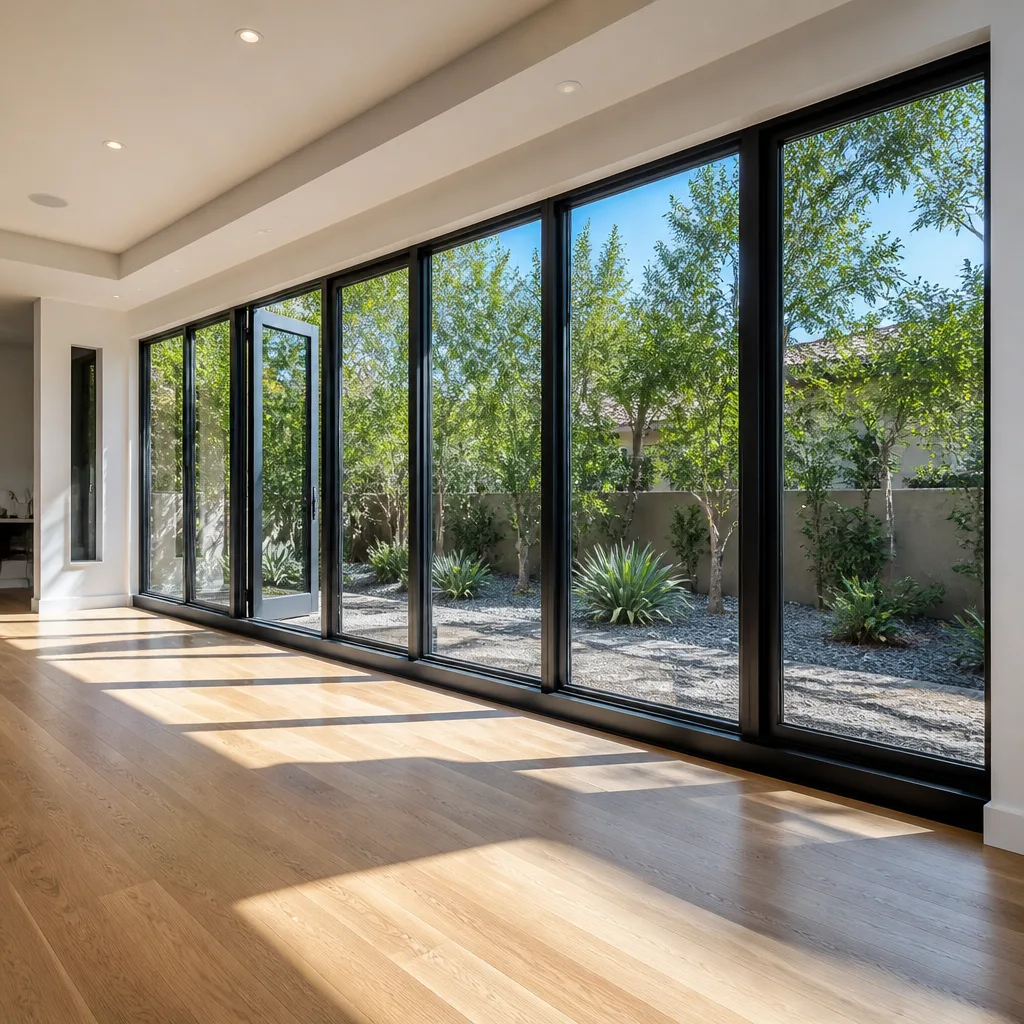
Sash replacement inside existing frames, weatherstripping, and exterior caulk are realistic DIY tasks for a careful homeowner. Anything that opens the building envelope, involves stucco cutting and flashing, sits above the first floor, or falls under Nevada contractor licensing is not. A full-frame replacement is a licensed trade for reasons of liability and water management, not because the tools are secret.
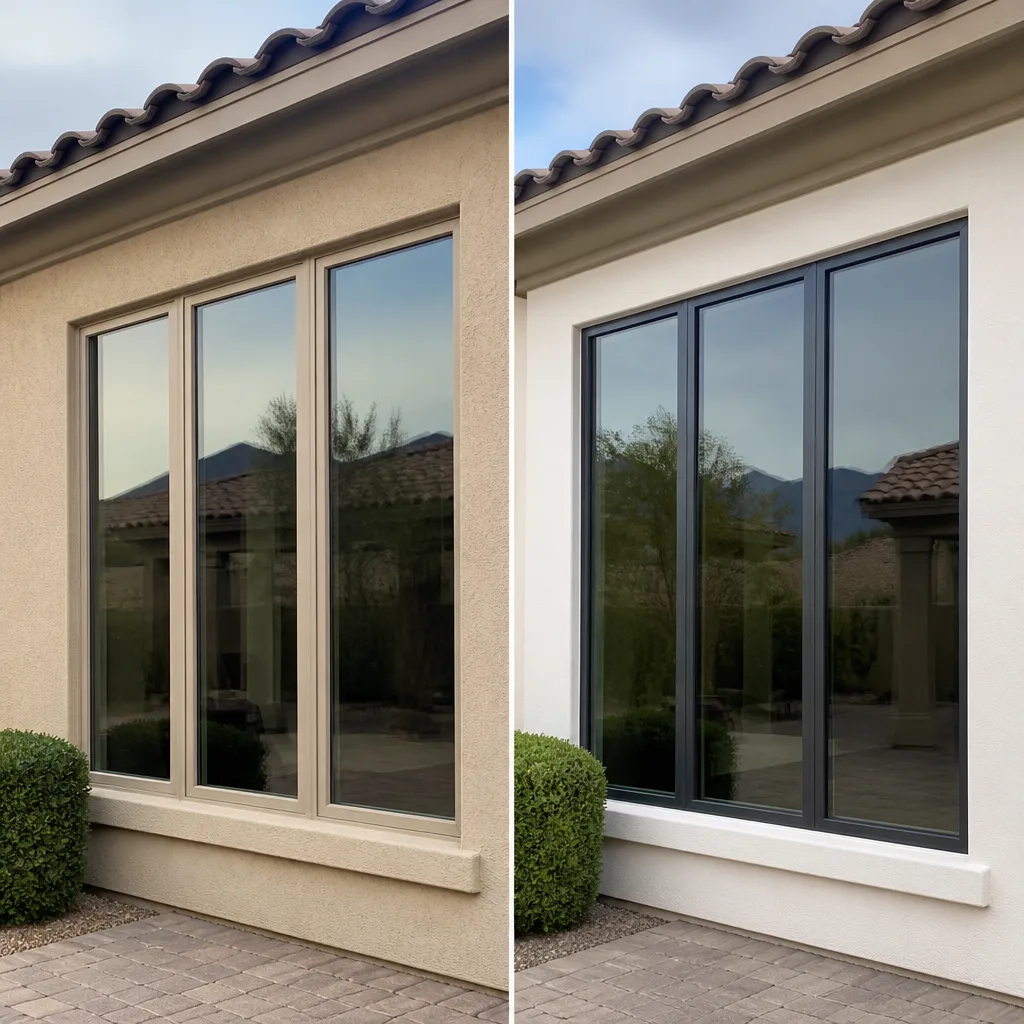
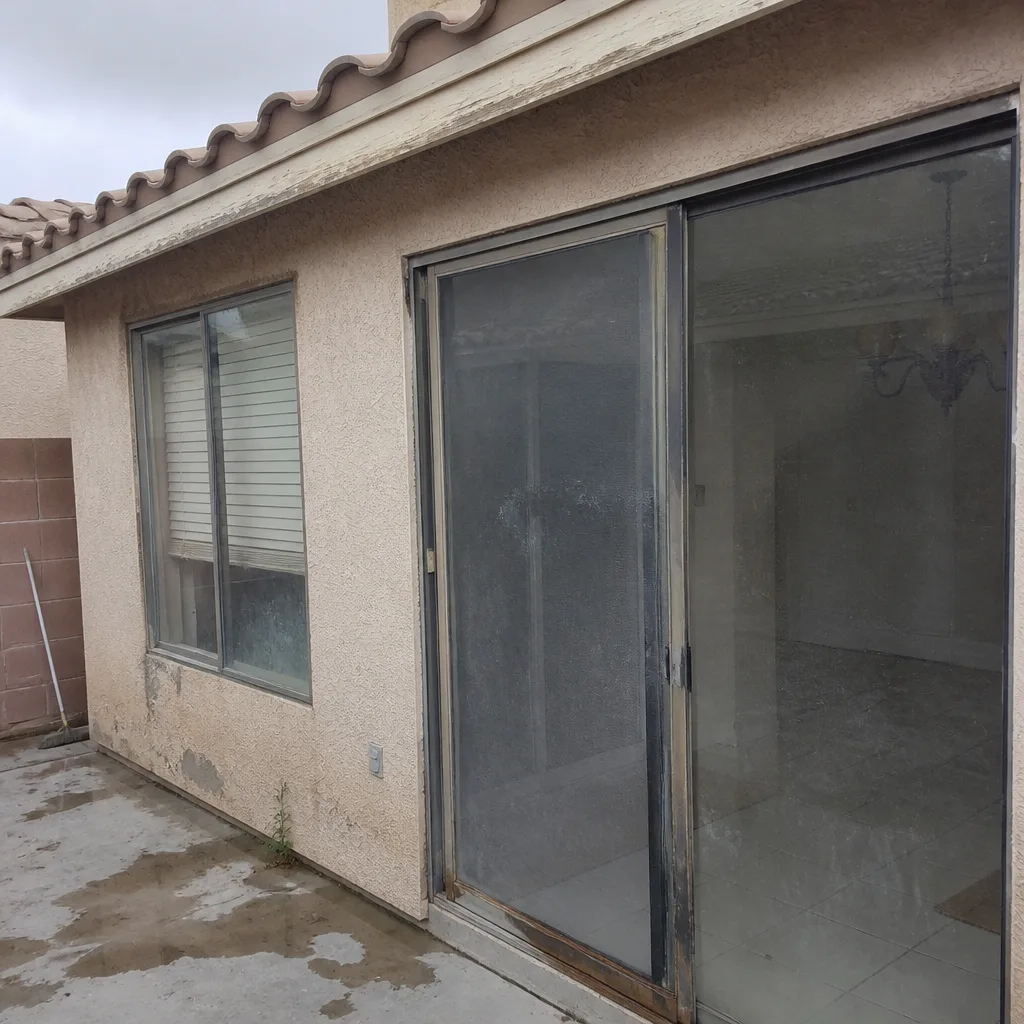 Before
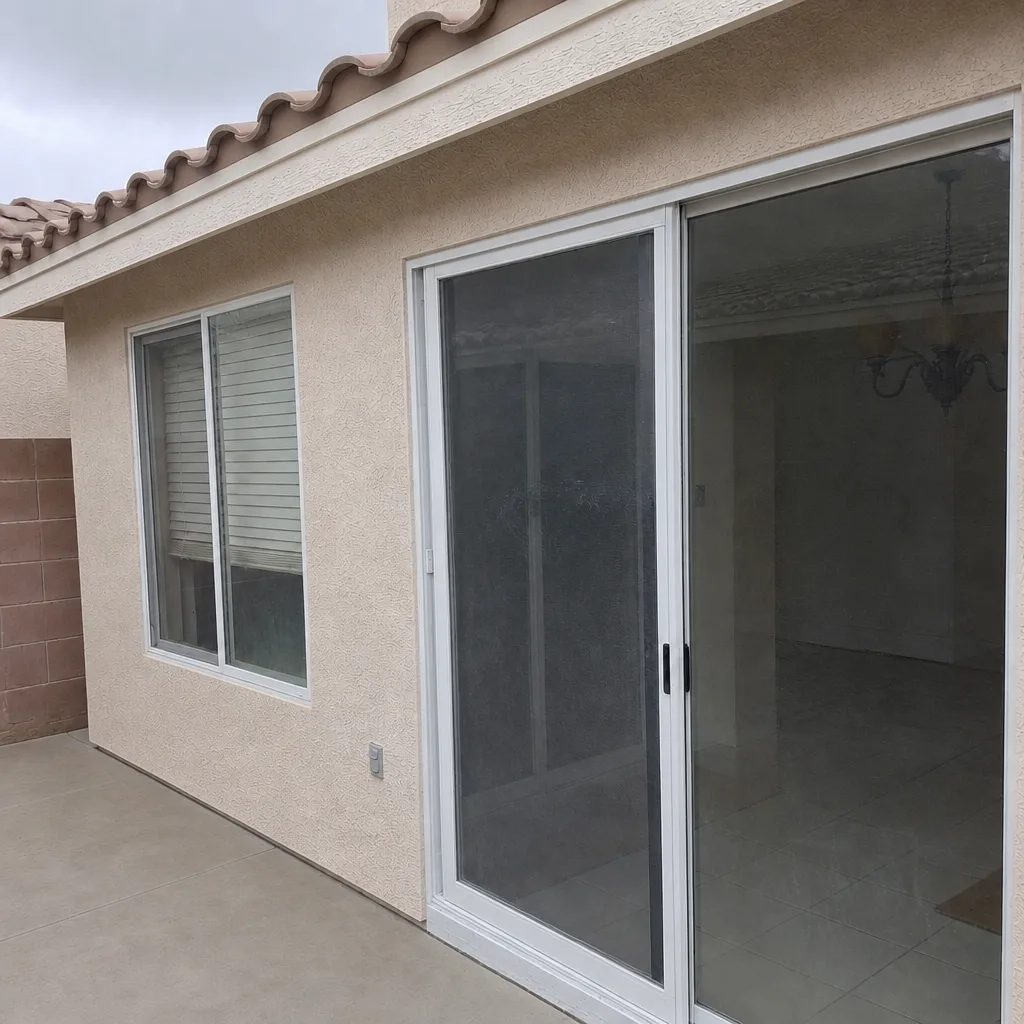 After
Table of Contents
- What “Opening the Building Envelope” Actually Means
- Tasks That Are Genuinely Safe to Do Yourself
- The Four Disqualifying Factors in Your Rough Opening
- What Nevada Licensing Requires and Why It Matters at Claim Time
- The Real Cost Comparison, Tools and Disposal Included
- What a Professional Measured Survey Should Contain
- The Warranty Question at Resale
- Common Mistakes to Avoid
- When to Call a Professional
- Frequently Asked Questions
- The Bottom Line
What “Opening the Building Envelope” Actually Means

The building envelope is the layer that separates conditioned indoor air from the outside. In a Summerlin home it usually means the stucco or siding on the exterior, the weather-resistive barrier behind it, the flashing that directs water away from the opening, and the framing that carries the window. A replacement that touches all of those is envelope work. A replacement that touches only the sash and the trim is not.
This distinction is the whole ballgame. The window unit itself is a manufactured product with a spec sheet. The envelope is where craftsmanship and liability live, because water intrusion is the failure mode that costs real money. In the Las Vegas Valley, we get roughly four inches of rain a year, and most of it arrives in bursts during monsoon season between July and September. A flashing detail that would leak in Seattle in month one might hold for two summers in Summerlin and then fail all at once when a heavy cell parks over the valley. That delayed failure is why DIY envelope work is risky in a way that doesn’t show up on inspection day.
Full-frame replacement means the entire unit comes out, the rough opening is exposed, the flashing is redone, and a new unit goes in with its own nailing fin. Pocket replacement keeps the existing frame and slides a new sash-and-frame assembly into it. The second is closer to a DIY task. The first is envelope work. If you’re planning a window replacement in Summerlin, knowing which of the two you’re actually doing is the first decision, before any tool comes out.
Tasks That Are Genuinely Safe to Do Yourself
We’re not going to tell you everything requires a truck and a crew. That would be dishonest, and it would waste your money. Here are the jobs where a homeowner with patience and a level can do real work.
- Sash replacement in an existing frame. If the frame and flashing are sound and you’re swapping the operable sash, this is a measured, careful task. You order the sash to the existing opening, set it, check the reveal, and adjust the hardware.
- Weatherstripping. Worn weatherstrip is the number one cause of a drafty window that isn’t actually failing. It’s inexpensive and forgiving.
- Exterior caulk at the perimeter joint. Cutting out failed caulk and re-sealing the joint between window frame and exterior wall is routine maintenance. It’s also the single most-skipped task in desert homes, because the sun bakes the caulk brittle in a few summers.
- Interior trim and casing. Cosmetic, low-risk, and fully reversible.
- Hardware, locks, and screen replacement. No envelope involvement at all.
The line is simple: if the task requires you to remove the window unit from the wall, it’s no longer on this list. Sash work stays inside the frame. Anything that exposes the rough opening is envelope work. Glazing replacement is a gray area: a single broken pane in an older wood sash is a real DIY job for a patient person, while a failed sealed unit in a modern insulated glazing assembly is a factory order. If you’re unsure which you have, a measured survey will tell you, and we’d rather you know before you start.
The Four Disqualifying Factors in Your Rough Opening
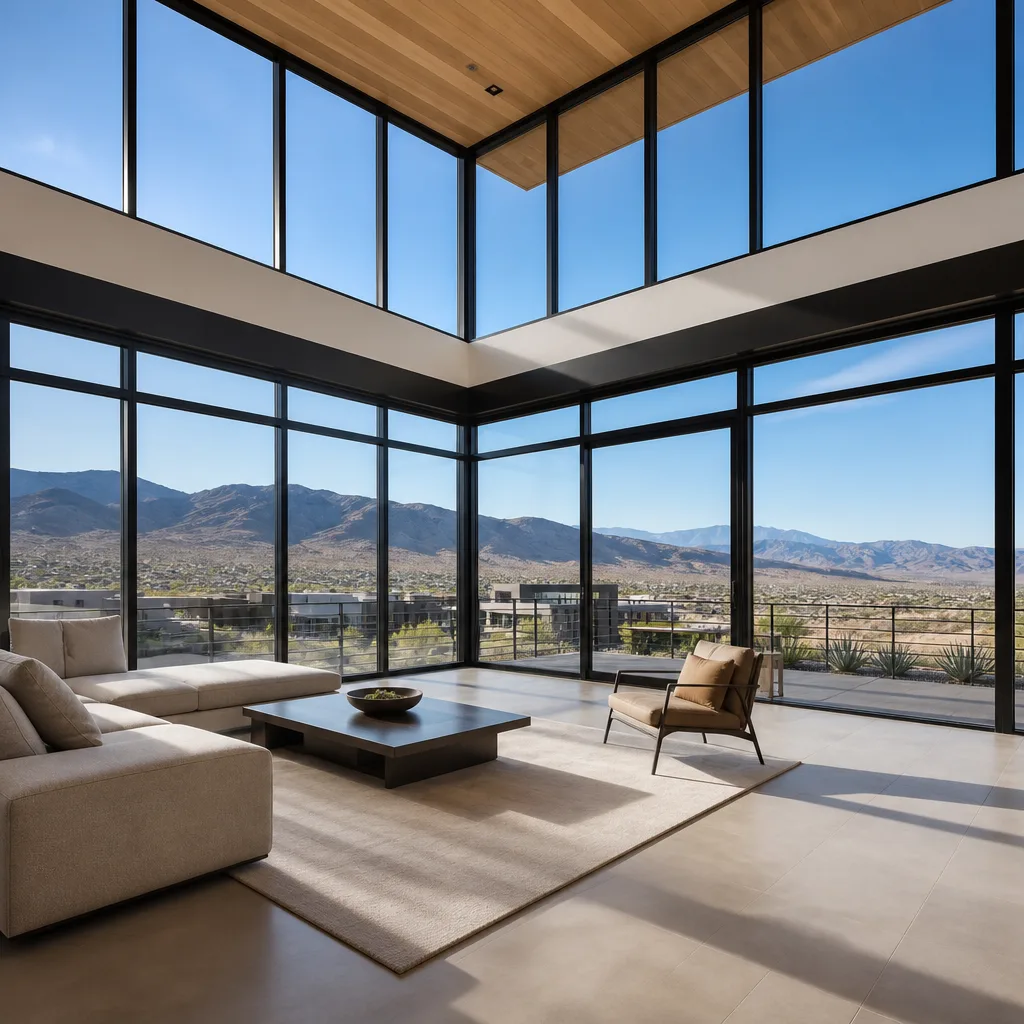
Before you decide, evaluate your own opening against four specific factors. Any one of them moves the job out of DIY territory. This is the step most homeowners skip, and it’s the one that determines your outcome.
- Stucco. Cutting stucco to a new rough opening is not a caulk-and-go job. It requires a clean cut, new weather-resistive barrier lapped correctly, and a proper stucco return. In Summerlin, where the majority of homes built from the 1990s forward are stucco over frame, this is the most common disqualifier we see. A bad stucco patch is a water channel.
- Flashing condition. Pull the interior trim and look at the flashing behind it. If you see rust, staining, or soft framing, the opening has already been wet. That’s a repair job before it’s a replacement job, and it’s not DIY.
- Header integrity. The header is the structural beam above the opening. If it’s been modified, notched, or you can’t verify it, stop. Window openings carry load, and this is where building code actually matters.
- Second-floor access. Above the first floor, you’re working off a ladder or scaffold with a window unit that weighs far more than it looks. Fall risk is real, and the tool cost to do it safely (scaffolding, lifts, fall protection) usually exceeds the labor you’d save.
We’ve also seen heat-related issues unique to this valley. Vinyl frames expand and contract significantly across a 40-degree daily swing, and a frame set too tight on a July afternoon will bind by winter. A professional accounts for this in the install, and a do-it-yourselfer often doesn’t know it matters until the sash sticks. That’s an installation detail, not a product defect, which means a manufacturer’s warranty won’t cover it.
What Nevada Licensing Requires and Why It Matters at Claim Time
Nevada requires a state contractor’s license for any work on a structure where the contract price exceeds $1,000 in labor and materials combined, and window replacement almost always clears that threshold. The license is issued by the Nevada State Contractors Board and requires a qualifying party to pass exams and post a bond. A licensed installer carries a license number, and the number is verifiable on the board’s website. We publish our license numbers on the page for exactly this reason.
Here’s where the DIY decision becomes a financial one. If you install your own window and water intrusion damages the wall, the subfloor, or the framing, your homeowner’s insurance claim goes into a different category. Insurers ask who did the work. When the answer is “the homeowner,” the claim is evaluated as homeowner-caused damage, and coverage for the resulting rot and mold is frequently denied or limited. When a licensed contractor did the work, the claim has a responsible party to point at, and the installer’s liability coverage and warranty come into play.
This isn’t a scare tactic, and we’re not going to invent a statistic to dress it up. It’s a plain reading of how claims get evaluated. The cost of a professional install against the cost of a denied water-damage claim is not a close comparison. If a contractor offers to do your install without a license number, that offer carries the same gap in coverage, which is why we recommend checking the number before the first visit. Our own crews are background-checked, uniformed, and identified by license number, which is Haven Clause 3 (Verified Crews) in practice: the person at your door is the person on the record.
The Real Cost Comparison, Tools and Disposal Included
The usual comparison is “professional labor versus zero labor.” That’s not real. Here’s the honest version, laid out line by line. These are typical Las Vegas Valley ranges, not a quote for your specific home.
- Professional full-frame replacement, per opening: roughly $650 to $1,400 installed, depending on size, material, and glazing. This includes the unit, labor, flashing, disposal, and warranty.
- Professional pocket replacement, per opening: roughly $400 to $900 installed. Lower cost because the envelope stays intact.
- DIY tools if you don’t own them: $300 to $800 for a decent level, laser, pry bars, caulk gun, scaffolding or ladder accessories, and a decent saw. The tool cost rarely pays back on fewer than four windows.
- Old unit disposal: $30 to $75 per window via a haul-away service or transfer station, plus your time. Old glass units are heavy and awkward and don’t go in the curbside bin.
- The cost of doing it twice: this is the real number. A failed DIY install that leaks or binds typically costs the full replacement again, plus drywall or stucco repair.
The thing homeowners consistently forget is the value of the labor warranty. A professional install carries a labor warranty that transfers to the next owner in many cases, which is a document at resale. Your own time and skill carry no transferable warranty. If you’d like a second opinion on any written estimate you’ve been given, we’ll review it at no charge, which is one way to sanity-check a price before you commit to anything.
What a Professional Measured Survey Should Contain
A clipboard estimate and a measured survey are not the same document. The clipboard version is a price. The measured survey is a specification you keep, and the written quote is generated from it, which means the quote can’t drift from what’s in your opening. This is Haven Clause 1: have it in writing. Here’s what the document should contain so you can verify you’re getting a real spec.
- Opening dimensions taken at the rough opening, not from the old sash, in both width and height, recorded in at least two positions to catch a racked opening.
- Frame type and material specified exactly, down to the product line. Vague descriptions like “vinyl window” are not a spec.
- Glazing specification with the U-factor and SHGC named. These are the two numbers that determine energy performance in a desert climate, and they should be on the page.
- Product line and manufacturer called out by name. We work from eight verified lines including PGT, Therma-Tru, ViewLux, and Mr-Glass, and each is specified by what the opening requires, not by what’s convenient. The name belongs on the document.
- Scope of work covering flashing, stucco repair, trim, disposal, and any framing repair, itemized so nothing is a surprise later.
- One total price matching the survey, with no line that says “TBD” or “allowance.” An allowance is a price that hasn’t finished being agreed.
If you’re getting a window installation in Summerlin quoted, ask to keep the survey. A company that won’t hand it over is telling you something. When we measure an opening, the customer keeps that document, and the quote is generated from it, so the two can’t disagree.
The Warranty Question at Resale
When you sell a home, a buyer’s inspector will look at every window. A professionally installed window with a documented warranty gives you a document to hand over. A self-installed window gives you nothing to show, and buyers know the difference. The 365-Day Done Right Promise we write into every job means that if a window isn’t right inside the first year, we come back and make it right; that promise is stamped on the job under the Haven Standard rather than offered as a courtesy. It’s backed with a documented photo record on every visit, so there’s evidence of what was installed and how.
That combination, a written warranty plus photographs of the flashing and the finished opening, is a genuine asset at resale, and it’s the piece a homeowner can’t replicate on their own. A serious buyer will ask about the windows. Being able to answer with a document rather than a shrug is worth more than the labor you saved.
Common Mistakes to Avoid
- Measuring from the old sash instead of the rough opening. This is the most common error, and it produces a unit that doesn’t fit. Measure the opening, and measure it in more than one place.
- Caulking over a failed flashing detail. Caulk is the last line of defense, not the first. A failed flashing detail behind fresh caulk will still leak, and it fails all at once when a monsoon cell dumps on Summerlin.
- Setting a vinyl frame too tight in July heat. The frame expands and contracts roughly a quarter inch across a valley temperature swing. Give it the movement joint it needs, or it binds by winter.
- Skipping the permit because the job “looks easy.” Permits exist to show the work was done to code. Unpermitted work surfaces at inspection time or resale, and it costs more to fix then.
- Hiring an unlicensed installer to save a few hundred dollars. The license number is the thing your insurance claim depends on. Check it on the state website before anyone shows up.
- Disposing of old units curbside. Old glass and frames aren’t accepted in the bin, and a fine is cheaper than what happens if someone gets hurt. Use a haul-away service.
- Skipping the photo record. If you do any work yourself, photograph the flashing and the finished opening before the trim goes back on. It’s the only evidence you’ll have if something goes wrong later.
When to Call a Professional
Call a professional whenever the job involves the envelope, a second-story opening, stucco, or a structural question. That covers most full-frame replacement in Summerlin. Also call when the flashing has failed, when the framing is soft, when the contract price clears Nevada’s licensing threshold (which it usually does), or when you need a warranty you can transfer. And call when you’ve been quoted a price you don’t fully understand; a second opinion on a written estimate is free, and we’d rather you felt certain before committing. Sightline Windows & Doors Summerlin offers free estimates in Summerlin and will hand you a written price before any work starts; every engagement begins with a measured survey you keep, without exception. If you’d like us to look at a specific opening, we do that at no charge. While we’re there, we’ll point out what a professional would check that you’d never know to look at.
Frequently Asked Questions
You can legally install a window in your own home, but the licensing requirement, the insurance gap on water damage, and the lack of a transferable warranty usually make it a bad deal. The simpler tasks, like sash replacement and caulking, are genuinely fine to do yourself. The envelope work is where the risk concentrates.
For one or two openings where the frame is sound and you’re doing sash work, yes. For four or more full-frame replacements, the tool cost, disposal, and the cost of one failed install usually wipe out the savings. Call (844) 560-5201 for an exact quote on your specific openings; estimates are free.
Your insurer will evaluate the claim as homeowner-caused damage, and coverage for the resulting rot and mold is often denied or limited. When a licensed contractor did the work, the claim has a responsible party and the installer’s liability coverage comes into play. That is the single biggest argument for hiring a licensed installer.
Full-frame window replacement generally needs a permit in Clark County, and the permits are typically pulled by the licensed contractor doing the work. Pocket replacements in an existing frame sometimes don’t. We pull the permits and pass the inspections on the jobs we do, and the customer gets the documentation.
Full-frame replacement runs roughly $650 to $1,400 per opening installed, and pocket replacement roughly $400 to $900, depending on size, material, and glazing. Those are ranges; the exact price for your opening needs a measured survey. Call (844) 560-5201 for a written price before any work starts.
Often yes, if it’s a sash, weatherstripping, or caulk issue. A measured survey will tell you whether you have a repairable opening or a failed assembly. If you’re unsure which situation you’re in, get a free second opinion on any written estimate and let someone read the opening with you.
The Bottom Line
The DIY versus professional decision isn’t about whether you’re handy, it’s about what you’re willing to own when something fails. Sash replacement, weatherstripping, and caulk are real DIY tasks. Full-frame replacement in stucco, above the first floor, near failed flashing, or over a dubious header is a licensed job, and the reason is liability, not difficulty. Nevada’s licensing rule and the insurance-claim consequences are what make the difference financial. If you want the work done, get a measured survey you keep and a written price you can hold against the final invoice. That’s the whole standard at Sightline Windows & Doors Summerlin, where the survey and the quote are the same document. Call (844) 560-5201 for a free estimate on your windows and doors, and let us put the price on the page before any work starts.
About Sightline Windows & Doors Summerlin
Sightline Windows & Doors handles every job under the Haven Standard, which has governed all 18,000+ openings the brand has completed since 2012: have it in writing, arrive on schedule, verified crews, evidence on every job, and no surprises. Our technicians have up to 14 years of experience, are background-checked and uniformed, and are identified by license number before arrival. Every quote is written before any work starts, every visit leaves a documented photo record, and every job carries the 365-Day Done Right Promise. We’re independently owned and operated, working from eight verified manufacturer lines including PGT and Therma-Tru. For a written price on your specific opening, reach us at (844) 560-5201, or start at our Sightline Windows & Doors Summerlin home page. You can also review door installation in Summerlin if doors are part of your project.
Written by the team at Sightline Windows & Doors Summerlin.
Six Reasons Homeowners Choose Sightline Windows & Doors Summerlin
Laminated glass and reinforced frames hold up to wind-driven rain, hail and flying debris, so your openings stay sealed when the weather turns.
Low-E insulated impact glass from our manufacturer lines commonly cuts monthly cooling bills 20-30%.
Laminated impact glass shuts out up to 40% of outside noise - traffic, neighbors, weather.
Monitoring services run $30-90 a month. Laminated impact glass resists forced entry around the clock, with no subscription.
Tighter seals and insulated glass even out hot and cold rooms and stop the drafts at the frame.
A full impact package upgrades curb appeal, buyer confidence and appraised value in one project.
Other Sightline Windows & Doors Summerlin Services
What Neighbors Say About Sightline Windows & Doors Summerlin