Last updated November 17, 2026
New windows and doors improve comfort, cut energy bills and add long-term value to your home. Sightline Windows & Doors Summerlin pairs proven product lines with a local vetted installing partner for lasting performance - and a price put in writing.
Choose your installer
The unit is half the job - the install is the other half. Background-checked local installers measure, set, seal and insulate every opening, and they know the lines we quote inside and out.
Select the right products
Compare styles, materials and glass packages side by side until the fit is right for your rooms, your budget and your goals. The product-line comparison below is the place to start.
Prepare your home for install
Before install day we walk you through a short checklist - furniture pulled back, treatments down, a clear path to each opening - so install day is watch-it-happen, not scramble.
Compare the Lines We Quote
Every project is priced on the same lines, side by side - the price indicators below are relative, and your consultant shows exact numbers on your actual openings.
PGTThe line homeowners arrive naming - the most impact certifications in the industry$$$
- More impact certifications than any other line we quote
- WinGuard, EnergyVue and ClassicVue Max systems built for every wind zone
- 99% on-time delivery keeps your install date on the calendar
CGIThe heavyweight impact line$$$$$
- Large-missile impact ratings for the strictest wind zones
- Architectural-grade aluminum with commercial-depth frames
- The line we quote when protection is the whole point
CWSThe value pick$$
- Vinyl systems built to strict wind codes
- Strong energy packages at the friendliest price point
- The smart start for whole-home replacements on a budget
ESWSlim lines, big glass$$$$
- Narrow-sightline aluminum for modern elevations
- Oversized openings and floor-to-ceiling glass
- Impact-rated without the bunker look
ECOThe aluminum impact workhorse$$$
- Factory-built aluminum impact systems
- A strong price-to-protection ratio for coastal homes
- Proven lines with short lead times
DIY vs Professional Window Replacement: What’s Safe to Do Yourself
Most window work splits cleanly in two: tasks that touch only the sash and hardware, and tasks that disturb the rough opening. The first group is genuinely DIY-friendly. The second is where homeowners get into trouble, and in Clark County it’s also where permits and resale disclosure enter the picture. This guide draws that line task by task. You’ll learn which jobs a careful homeowner can finish with a drill and a weekend, which ones require carpentry skill, which ones Nevada code reserves for a licensed contractor, and how to price the difference honestly. If you own a home in Summerlin, the stakes are a little higher because of how these houses are built and how the local resale market reads unpermitted work.
Quick Answer
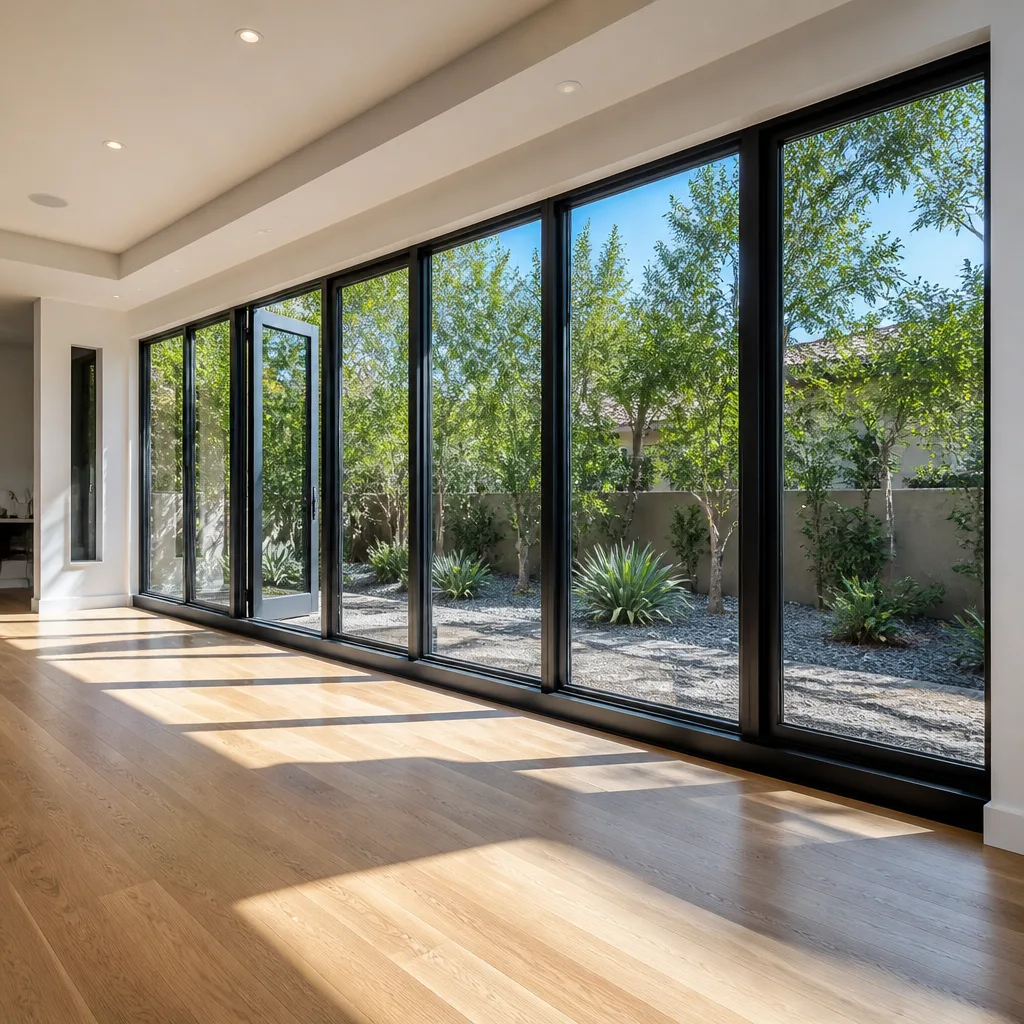
A homeowner can safely replace weatherstripping, sash hardware, interior stops, and a replacement insert window where the existing frame stays in place. You should not cut a rough opening, reframe a header, or install a full-frame replacement yourself; in Clark County that work often requires a permit and an inspection, and an unpermitted window replacement can complicate a future sale. The dividing line is structural, not a matter of confidence or tool ownership.
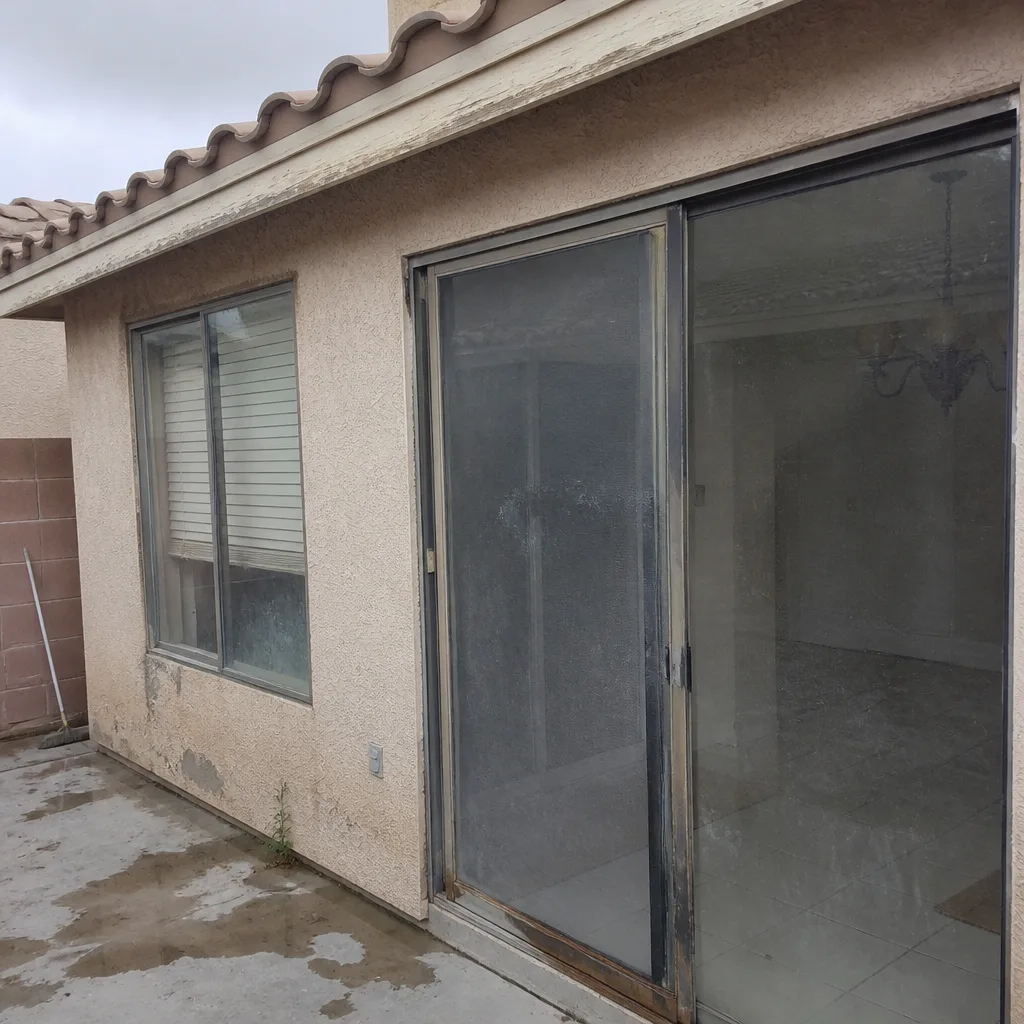 Before
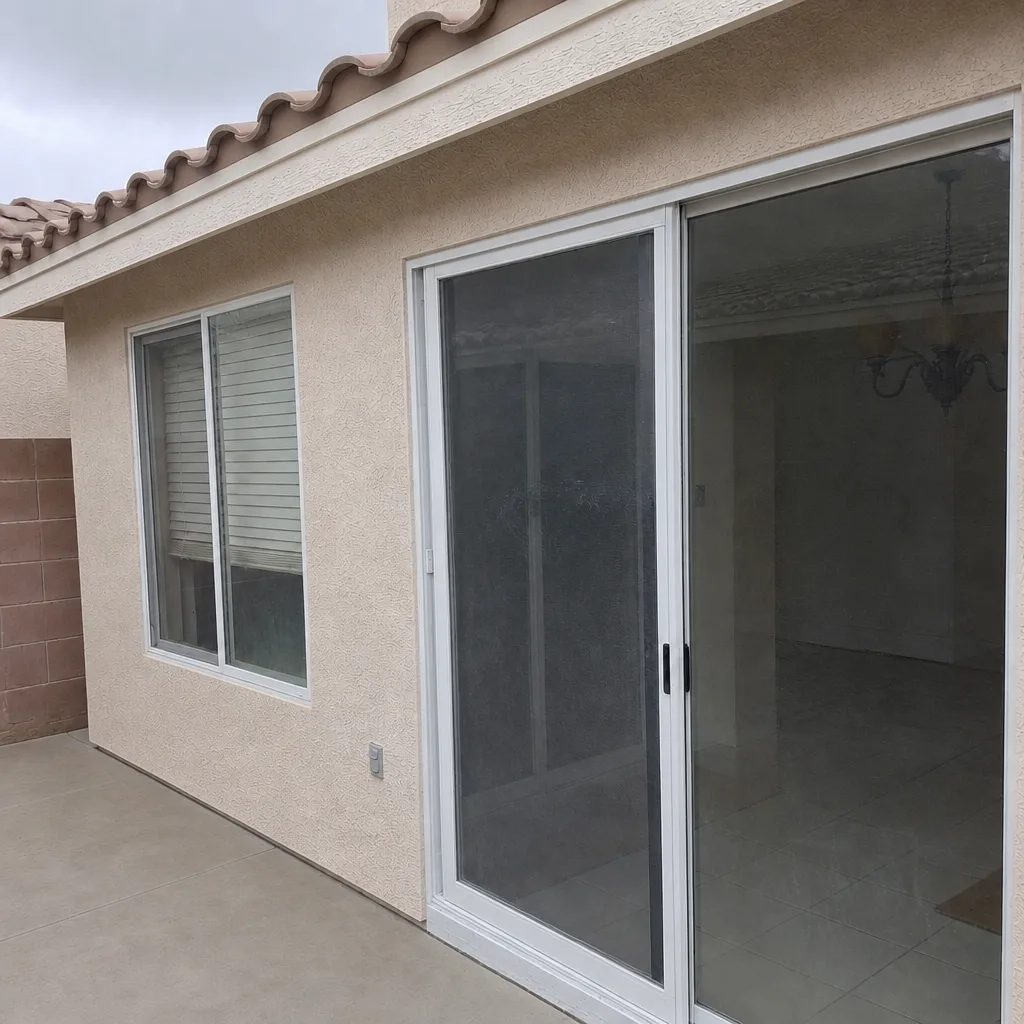 After
Table of Contents
- Task-by-Task Classification: What’s Actually Safe
- The Permit Threshold in Clark County
- Insert Replacement vs. Full-Frame Replacement: The Real Difference
- The Money: DIY Materials vs. Professional Labor
- Risk Inventory for DIY Full-Frame Work
- Why Summerlin Homes Are a Special Case
- What to Verify Before You Hire Anyone
- What Unpermitted Work Costs at Resale
Task-by-Task Classification: What’s Actually Safe

Window work is not one skill. It’s a ladder of skills, and most homeowners sit comfortably on the first two rungs. Here’s the honest breakdown, organized by what the task actually demands.
Tier 1: No tools beyond a drill and a putty knife
- Weatherstripping replacement. Peel the old strip, clean the channel, press on the new bulb or fin seal. A $15 roll and twenty minutes per window.
- Sash hardware swaps. Latches, locks, tilt-pivot shoes, and balance covers on double-hungs are screw-and-clip jobs. Match the part number stamped on the old hardware.
- Interior stops and trim. Cosmetic stops that hold a sash in place can be removed and re-set without touching the frame’s structural connection.
- Glazing putty touch-ups on wood sashes. Scrape, prime, re-putty, paint. Straightforward for anyone patient with a putty knife.
- Screen replacement and spline re-seating. A spline roller and a role of mesh. No structural risk.
Tier 2: Basic carpentry skill required
- Replacement insert windows. The existing frame stays; only the sash assembly comes out and a new insert goes in. This is the one window “replacement” a careful homeowner can legitimately attempt, and it’s the category most DIY guides are actually describing.
- Jamb extension adjustments where a new insert sits proud of the old jamb and needs a filler piece trimmed and set.
- Caulking and flashing repair on the exterior face where the existing flashing is intact and you’re refreshing the sealant bead, not rebuilding the water path.
Tier 3: Licensed contractor territory
- Cutting or enlarging a rough opening. Structural. Full stop.
- Header reframing for a wider window or a door conversion.
- Full-frame replacement where the old frame, nailing fin, and flashing come out.
- Any work that requires a permit and inspection under Clark County code.
- Second-story or high-elevation work where fall protection is required.
If your project lands in Tier 1, do it yourself and put the savings toward a better product on the windows you do replace. If it lands in Tier 3, the question isn’t whether you’re capable; it’s whether the work is legal to perform without a license and insurable if something goes wrong. Our window replacement in Summerlin team sees this split play out every week, and it’s almost always decided by which tier the job sits in.
The Permit Threshold in Clark County
Clark County requires a building permit for window replacement when the work involves structural alteration, a change in the size of the opening, or replacement of the frame itself in a way that affects the building envelope. A like-for-like insert swap into an existing frame typically does not trigger a permit. A full-frame replacement, a window-to-door conversion, or any change to the rough opening does.
What the inspection actually covers matters here, because it’s the part DIY guides skip:
- Flashing and weather-resistive barrier continuity. The inspector checks that the new flashing integrates with the WRB, not just that caulk was applied.
- Nailing fin attachment and fastener schedule. Spacing, type, and penetration depth.
- Egress compliance for any bedroom window, including clear opening dimensions and sill height.
- Energy code compliance for the glazing package: U-factor and SHGC limits per the current Nevada energy code adopted by the jurisdiction.
- Structural connection to the header where the opening changed.
Pull a permit as the homeowner and you become the responsible party for all five. That’s a real legal exposure, not a paperwork formality. It’s also why a DIY permit pull can cause headaches at resale: the file shows a homeowner-performed installation with no licensed contractor of record, and buyers’ agents in the Summerlin market ask about that.
Insert Replacement vs. Full-Frame Replacement: The Real Difference
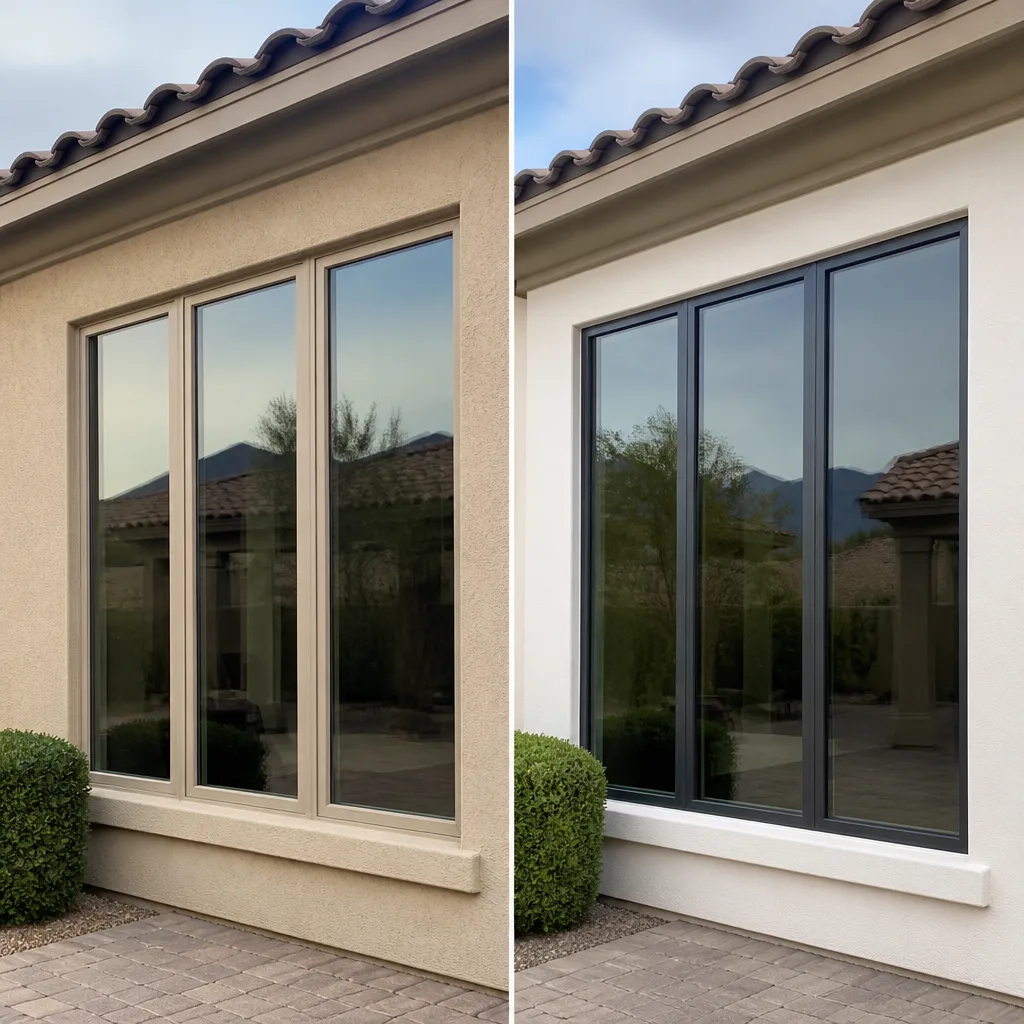
These two terms get used interchangeably in marketing, and they shouldn’t be. The distinction is the whole ballgame for the DIY question.
- Insert replacement. The original frame and sill stay in the wall. The old sashes come out, the new insert unit is set into the existing jamb, and the perimeter is sealed. You’re replacing a window inside a window. Material cost for a mid-grade vinyl insert runs roughly $180 to $450 per unit in the Las Vegas metro, depending on size and glazing.
- Full-frame replacement. The entire unit, including the frame and nailing fin, is removed. The rough opening is exposed, flashing is rebuilt, the new unit is fastened through the fin, and the exterior is finished. Material cost runs $275 to $650 per unit for a comparable product, before labor and finish work.
A DIY full-frame replacement isn’t just harder. It’s a different trade. It involves exterior finish carpentry, stucco or siding repair, and water management details that fail silently if you get them wrong. An insert swap asks whether you can follow a level and a shim schedule. A full-frame replacement asks whether you can rebuild a drainage plane.
If you’re weighing which path makes sense for your home’s age and window condition, our guide to window installation in Summerlin walks through the conditions that push a project from insert territory into full-frame territory.
The Money: DIY Materials vs. Professional Labor
Let’s put real numbers on the table, because the “DIY saves money” claim is often repeated and rarely checked. These are planning ranges for the Las Vegas metro market, not quotes for your specific home.
- DIY insert replacement, materials only: $180 to $450 per window, plus $30 to $60 in sealant, shims, and trim.
- DIY insert replacement, tools you may not own: a quality stud finder, oscillating tool, and laser level can add $200 to $400 if you’re buying them for one job.
- Professional insert replacement, installed: $475 to $850 per window, labor and materials combined.
- Professional full-frame replacement, installed: $750 to $1,400 per window, depending on size, glazing, and exterior finish.
- DIY full-frame replacement: the material cost above, plus permit fees, plus whatever the repair costs when the flashing fails a year later.
Where’s the break-even? On insert replacement, DIY saves roughly $250 to $400 per window on labor, so five windows saves $1,250 to $2,000. That’s real money, and if you’re handy and patient, it’s a legitimate project. On full-frame, the labor savings look bigger on paper but the risk-adjusted number is often negative once you price the permit, the exterior repair, and the probability of a water intrusion problem you won’t see for two winters. The honest break-even point is usually around two to three inserts before the tool purchases and time start eating the savings.
There’s one thing a written quote gives you that DIY doesn’t: a fixed number you can compare against. We offer a free second opinion on any written estimate, so bring a competitor’s quote and we’ll review the scope at no charge.
Risk Inventory for DIY Full-Frame Work
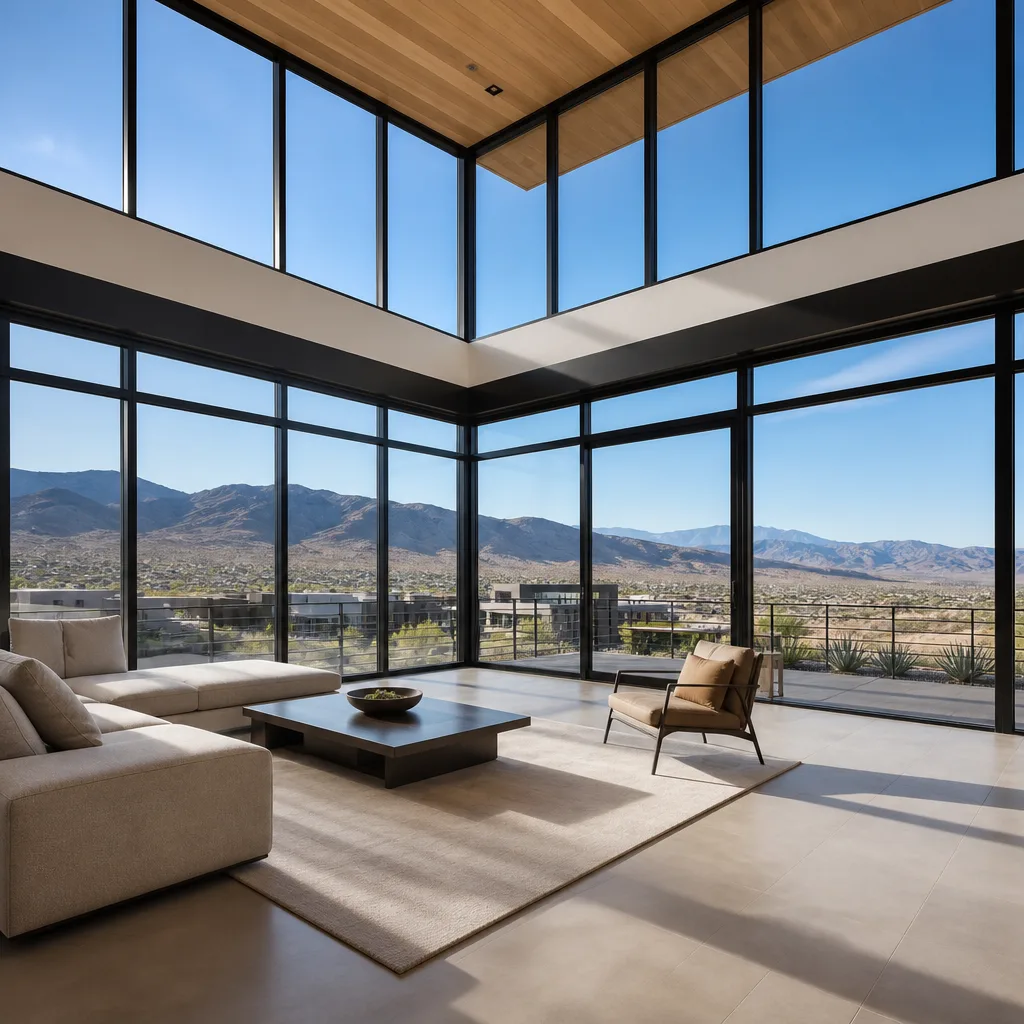
Here’s what actually goes wrong when a homeowner attempts full-frame work, stated plainly so you can weigh it against the labor savings.
- A miscut rough opening. Cut too wide or out of square and the new unit won’t seal. Fixing it means sistering framing, which is structural work and outside the scope of a DIY repair.
- Improper flashing. This is the most common failure we see on Summerlin homes. The Las Vegas Valley gets roughly 4 to 5 inches of rain a year, but it arrives in bursts. A flashing detail that’s slightly wrong holds up for a season or two, then drives water behind the stucco during a monsoon downpour. By the time you see a stain on the drywall, the sheathing is already compromised.
- Loss of energy performance. A poorly air-sealed frame leaks more than the old window did. You pay for the new glazing and never realize the savings.
- Voided manufacturer warranty. Most window warranties are void if the unit was installed by someone other than a licensed installer or outside the manufacturer’s installation instructions. You own the product failure.
- No insurance if you’re injured or you damage the home. A licensed, insured contractor carries general liability and workers’ comp. You don’t, and your homeowner’s policy may not cover a self-inflicted construction defect.
- A permit problem you inherit at resale. Unpermitted structural work surfaces during a buyer’s inspection, and it becomes a negotiating chip against you.
None of this means you can’t touch your windows. It means the structural tier carries risks you can’t quantify in advance, which is exactly the profile of work that belongs with a licensed contractor.
Why Summerlin Homes Are a Special Case
Summerlin’s housing stock is a mix of wood-sheathed and stucco-clad construction, and the newer villages have tighter envelope requirements than older Las Vegas neighborhoods. That matters for two reasons.
First, stucco-clad walls don’t forgive flashing errors. The stucco system relies on a drainage plane behind it and a weep screed at the bottom; a window installed without properly integrating into that plane creates a pocket where water collects. On wood-sheathed homes, that pocket feeds mold and rot. We’ve seen this play out on homes in The Ridges and Red Rock Country Club where a DIY or cut-rate install left a flashing gap that only revealed itself after two rainy seasons.
Second, Summerlin resale values are high enough that buyers ask more questions. An unpermitted window replacement on a $1.2 million home in Summerlin is a disclosure issue a buyer’s agent will find. The permit record is part of the value story.
We work these neighborhoods routinely, and our Sightline Windows & Doors Summerlin home page lays out the local detail. Every job starts with a measured survey you keep, and the written quote can’t differ from that document, because the measurement and the quote are the same document. That’s Haven Clause 1, and it’s the whole reason the brand exists.
What to Verify Before You Hire Anyone
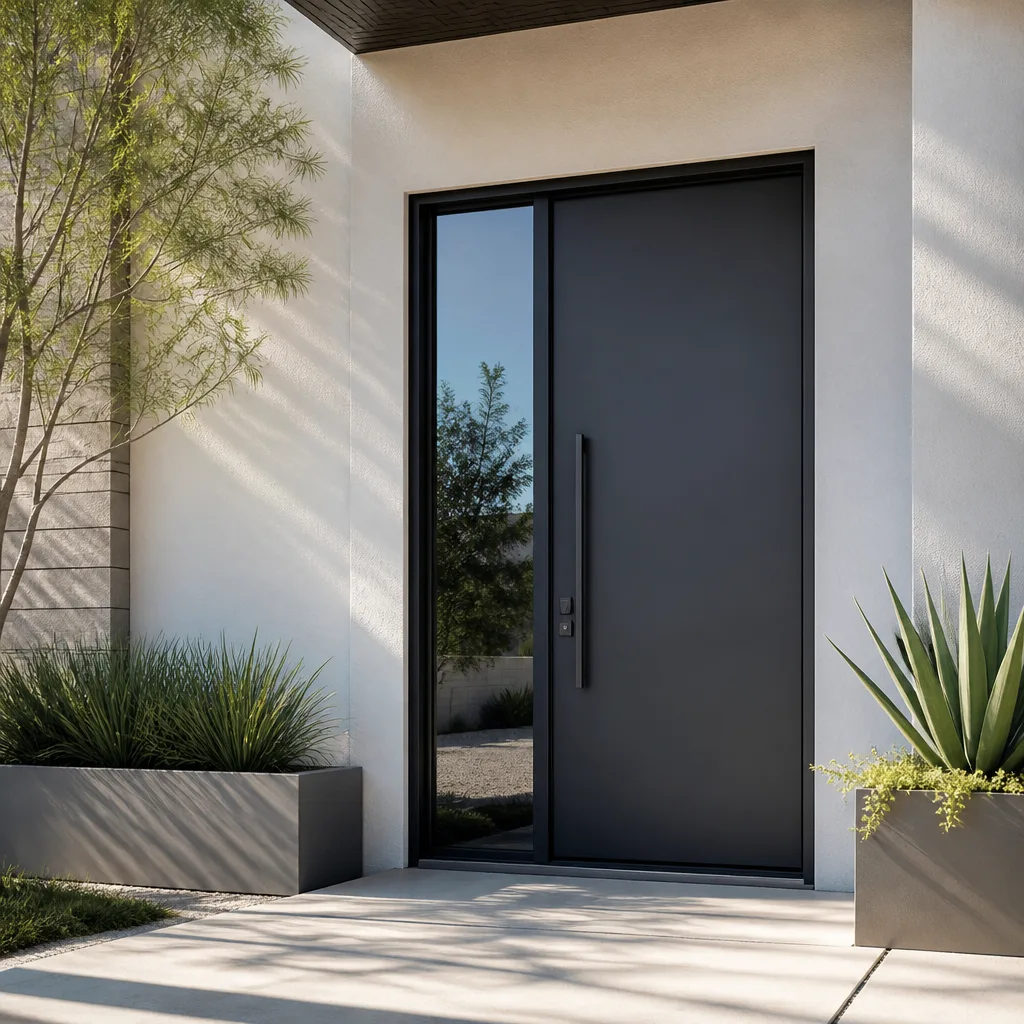
If you’re handing off the structural tier, here’s the checklist. Run it before you sign anything, not after.
- License lookup. Pull the contractor’s license number on the Nevada State Contractors Board site. Check the classification covers residential window work and that the license is current. Ask them to put the number on the written scope.
- Insurance certificate. Request a current certificate of general liability and workers’ comp, naming you as the property owner. Call the carrier if you want to be sure it’s live.
- Written scope of work. It should specify the product line by name, the unit sizes, the glazing specs (U-factor, SHGC), what’s included in the exterior finish repair, and who pulls the permit. A scope that says “replace windows as discussed” isn’t a scope.
- Fixed price with no change order clause unless you approve it. A written price before any work starts, not an estimate that drifts once demo exposes the wall.
- Workmanship warranty in writing and the manufacturer’s product warranty, both.
- Photo record clause. Ask whether you’ll get documented photos of the flashing and framing before the exterior is closed up. Ours includes this on every job as standard, not as an upsell.
We specify products from eight manufacturer lines, including ES Windows and ECO Window Systems for a range of performance tiers, and every technician is background-checked, uniformed, and identified by license number before arrival. That’s Haven Clause 3, Verified Crews. The person at your door is the person on the record.
For the door side of the same conversation, our door installation in Summerlin page covers how door openings differ from window openings and where the permit threshold sits for those.
What Unpermitted Work Costs at Resale
An unpermitted window replacement in Clark County usually doesn’t stop a sale, but it costs you at the table. Buyers and their agents treat missing permits as evidence of other undocumented work. The concessions they ask for commonly run $5,000 to $15,000 on a Summerlin property, well above the $2,000 to $6,000 a permitted professional install would have cost. The math rarely favors the DIY route on structural work.
Common Mistakes to Avoid
- Confusing insert and full-frame in the product description. Homeowners buy a “replacement window” assuming insert, receive a full-frame unit, and discover the wall has to come apart. Read the spec sheet before you order.
- Pulling a permit as the owner for work you can’t legally perform. The permit makes you responsible for inspections you can’t pass.
- Caulking over failing flashing. A fresh bead of sealant over existing flashing hides the problem without fixing the drainage path, especially during Summerlin’s monsoon season.
- Ignoring the energy code. Nevada’s adopted energy code limits U-factor and SHGC. A bargain unit that misses the spec passes nothing and saves nothing.
- Skipping the measured survey. Buying a unit off a rough tape measurement is how a $350 window becomes a $900 repair.
- Assuming the warranty covers self-installation. Most manufacturer warranties require a licensed installer; read the fine print before you void it.
- No photo record. Without photos of the flashing and framing, you have no way to prove the install was done correctly if a future buyer or insurer asks.
When to Call a Professional
Call a licensed contractor when the work touches the rough opening, involves header reframing, requires a permit under Clark County code, sits on a second story, or changes the size of the opening. Call when the exterior is stucco and the flashing needs to integrate with the drainage plane. Call when you want the permit and the inspection on record. Call when the manufacturer’s warranty requires a licensed installer. Call when the risk-adjusted math on DIY turns negative, which it usually does on full-frame work. Sightline Windows & Doors Summerlin offers free estimates in Summerlin – call (844) 560-5201 to schedule yours. Every job comes under the Haven Standard, with a written price before any work starts and the 365-Day Done Right Promise stamped on it.
Frequently Asked Questions
Yes, for insert replacement where the existing frame stays and no permit is required. You cannot legally perform work that requires a building permit, that alters the structure, or that a licensed contractor is required by code to perform. If the job touches the rough opening, use a licensed contractor.
It depends on the scope. Like-for-like insert swaps typically don’t require a permit. Full-frame replacement, size changes, and structural alterations do. Call (844) 560-5201 if you want us to look at your specific scope and tell you where it sits before you commit.
Roughly $250 to $400 per window in labor. On five windows that’s $1,250 to $2,000 before tool costs. The savings are real on insert work; they rarely hold up on full-frame work once you price the permit, exterior repair, and risk.
Unpermitted work doesn’t usually kill a sale, but buyers ask for concessions that commonly run $5,000 to $15,000 on a Summerlin home. The permit record matters in this market. Call (844) 560-5201 for a free estimate if you want the work done on record.
Most window manufacturers require installation by a licensed installer per their instructions, and self-installation can void the product warranty. Verify the terms before you buy the unit.
The product line by name, unit sizes, glazing specs (U-factor, SHGC), what exterior finish repair is included, who pulls the permit, the fixed price, and the workmanship warranty terms. If any of those is missing, ask for it in writing before signing.
The Bottom Line
The DIY question isn’t about your capability; it’s about the task. Weatherstripping, hardware, interior stops, and insert replacement into an existing frame are fair game for a careful homeowner. Rough openings, headers, full-frame replacement, and anything permit-triggered in Clark County belong with a licensed contractor, and Summerlin’s stucco-and-sheathing construction makes that line sharper than it is elsewhere. Price the labor savings honestly against the permit, the exterior repair, and the resale risk. On insert work, DIY often pencils out. On full-frame, it usually doesn’t. Call (844) 560-5201 for a free estimate and a written price before any work starts.
Written by the team at Sightline Windows & Doors Summerlin.
Six Reasons Homeowners Choose Sightline Windows & Doors Summerlin
Laminated glass and reinforced frames hold up to wind-driven rain, hail and flying debris, so your openings stay sealed when the weather turns.
Low-E insulated impact glass from our manufacturer lines commonly cuts monthly cooling bills 20-30%.
Laminated impact glass shuts out up to 40% of outside noise - traffic, neighbors, weather.
Monitoring services run $30-90 a month. Laminated impact glass resists forced entry around the clock, with no subscription.
Tighter seals and insulated glass even out hot and cold rooms and stop the drafts at the frame.
A full impact package upgrades curb appeal, buyer confidence and appraised value in one project.
Other Sightline Windows & Doors Summerlin Services
What Neighbors Say About Sightline Windows & Doors Summerlin