Last updated November 17, 2026
New windows and doors improve comfort, cut energy bills and add long-term value to your home. Sightline Windows & Doors Summerlin pairs proven product lines with a local vetted installing partner for lasting performance - and a price put in writing.
Choose your installer
The unit is half the job - the install is the other half. Background-checked local installers measure, set, seal and insulate every opening, and they know the lines we quote inside and out.
Select the right products
Compare styles, materials and glass packages side by side until the fit is right for your rooms, your budget and your goals. The product-line comparison below is the place to start.
Prepare your home for install
Before install day we walk you through a short checklist - furniture pulled back, treatments down, a clear path to each opening - so install day is watch-it-happen, not scramble.
Compare the Lines We Quote
Every project is priced on the same lines, side by side - the price indicators below are relative, and your consultant shows exact numbers on your actual openings.
PGTThe line homeowners arrive naming - the most impact certifications in the industry$$$
- More impact certifications than any other line we quote
- WinGuard, EnergyVue and ClassicVue Max systems built for every wind zone
- 99% on-time delivery keeps your install date on the calendar
CGIThe heavyweight impact line$$$$$
- Large-missile impact ratings for the strictest wind zones
- Architectural-grade aluminum with commercial-depth frames
- The line we quote when protection is the whole point
CWSThe value pick$$
- Vinyl systems built to strict wind codes
- Strong energy packages at the friendliest price point
- The smart start for whole-home replacements on a budget
ESWSlim lines, big glass$$$$
- Narrow-sightline aluminum for modern elevations
- Oversized openings and floor-to-ceiling glass
- Impact-rated without the bunker look
ECOThe aluminum impact workhorse$$$
- Factory-built aluminum impact systems
- A strong price-to-protection ratio for coastal homes
- Proven lines with short lead times
Window Installation Maintenance Schedule: What to Do and When
The sealant around a Summerlin window that was installed correctly in 2018 is statistically overdue for inspection today. UV index and thermal cycling in the Las Vegas valley degrade silicone roughly 30% faster than the manufacturer’s temperate-climate rating assumes, which means the bead that looked fine at installation has likely lost its flexibility years ahead of schedule. Window maintenance isn’t a vague “inspect annually” task; it’s a specific sequence of checks tied to Summerlin’s seasonal calendar. This guide names the month, the task, and the exact threshold at which a maintenance item becomes a repair.
Quick Answer
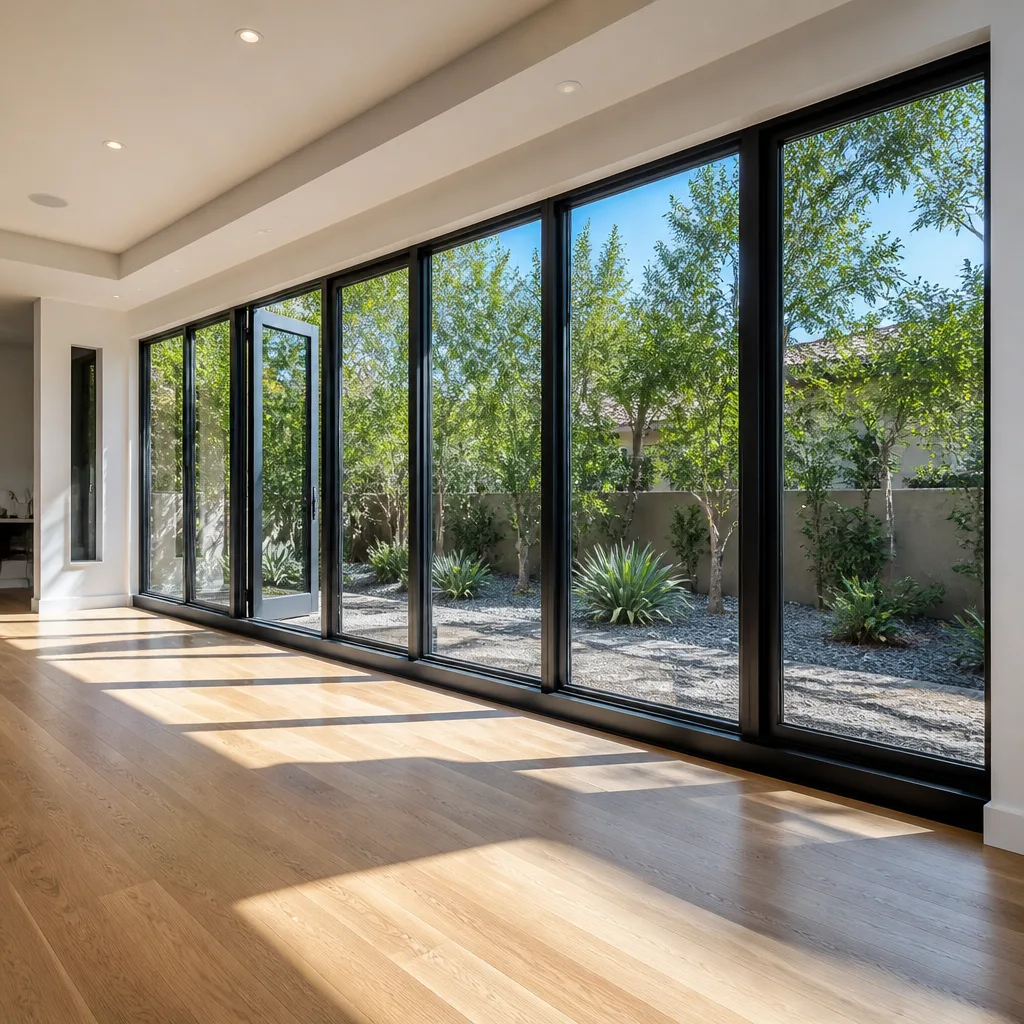
Window maintenance in Summerlin follows a four-season cycle: check and re-seal in spring before the heat peaks, clear weep holes and inspect drainage after monsoon season in late summer, lubricate hardware in fall, and check for IGU fogging and condensation in winter. Each task has a measurable pass/fail threshold. Sealant that no longer stretches needs replacing; a blocked weep hole that costs $180 to clear can cause thousands in frame and drywall damage if ignored.
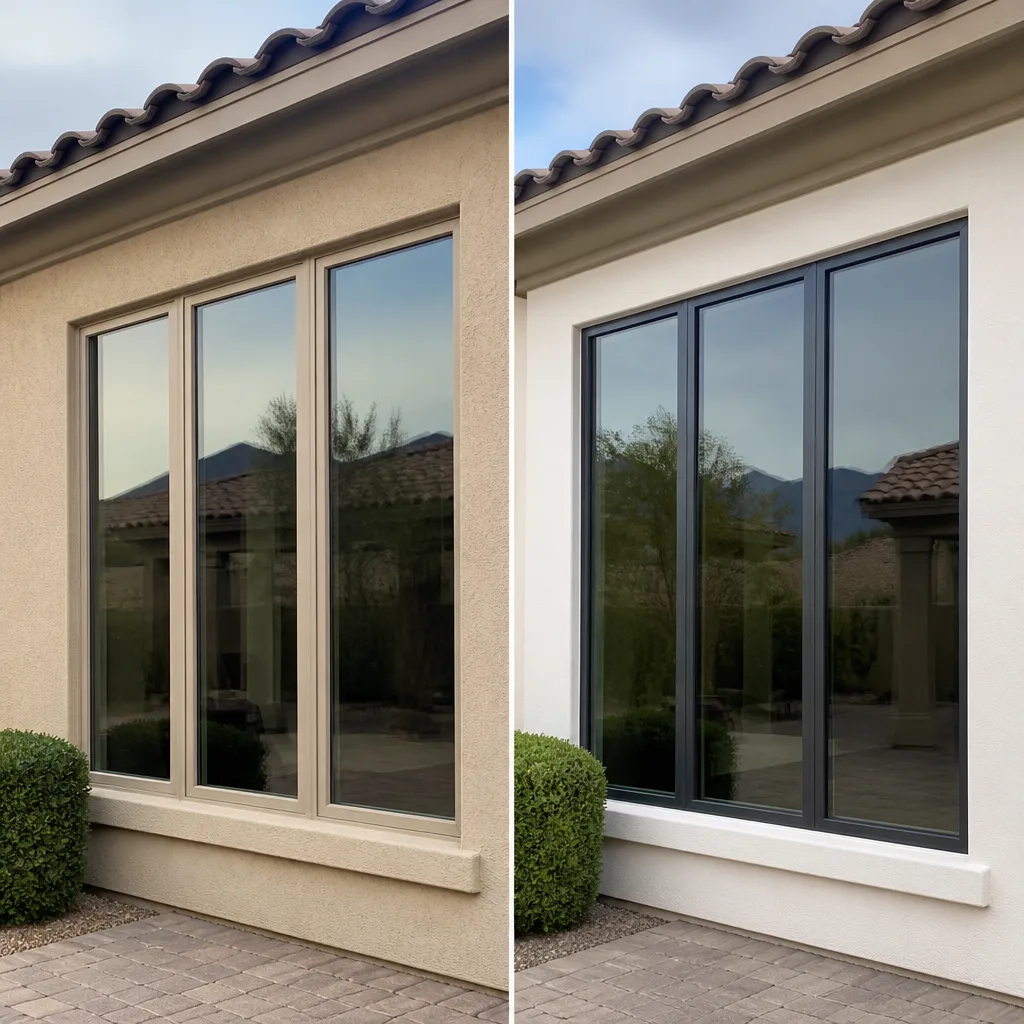
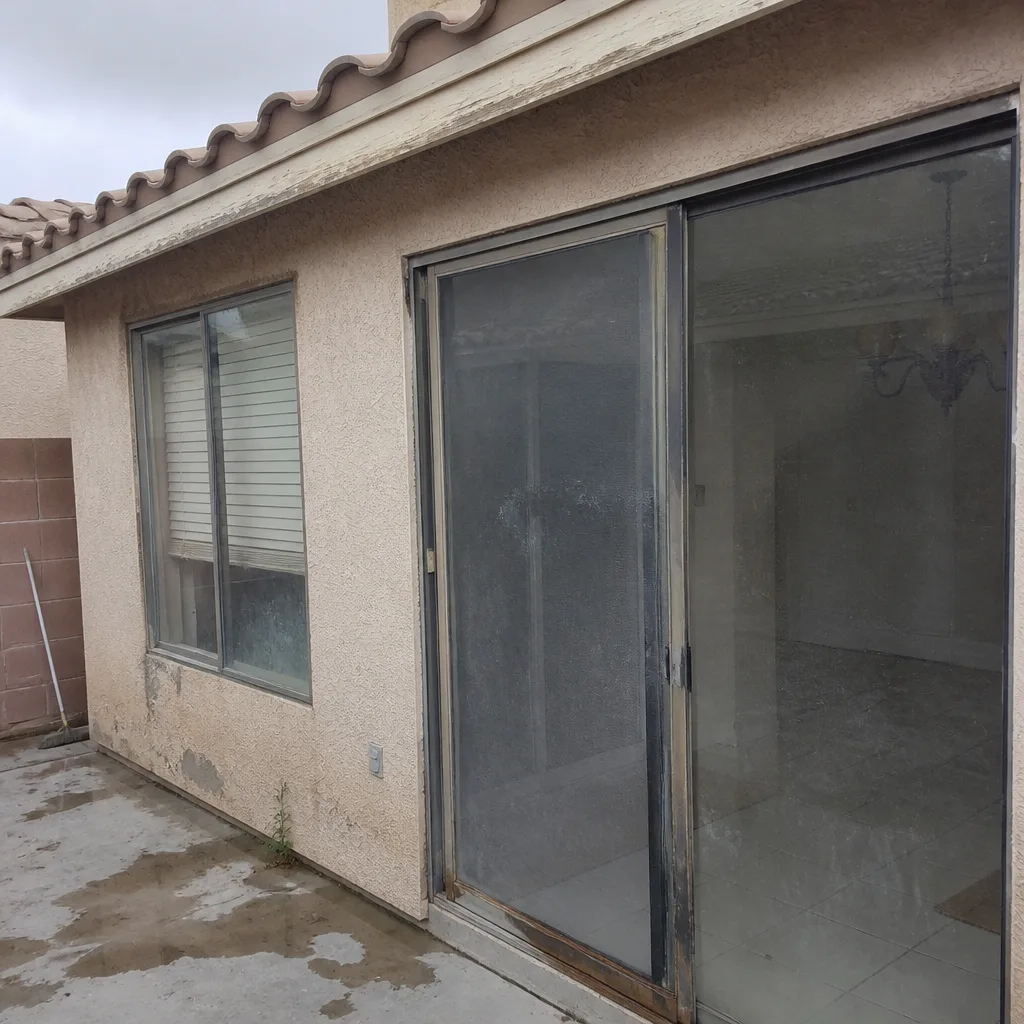 Before
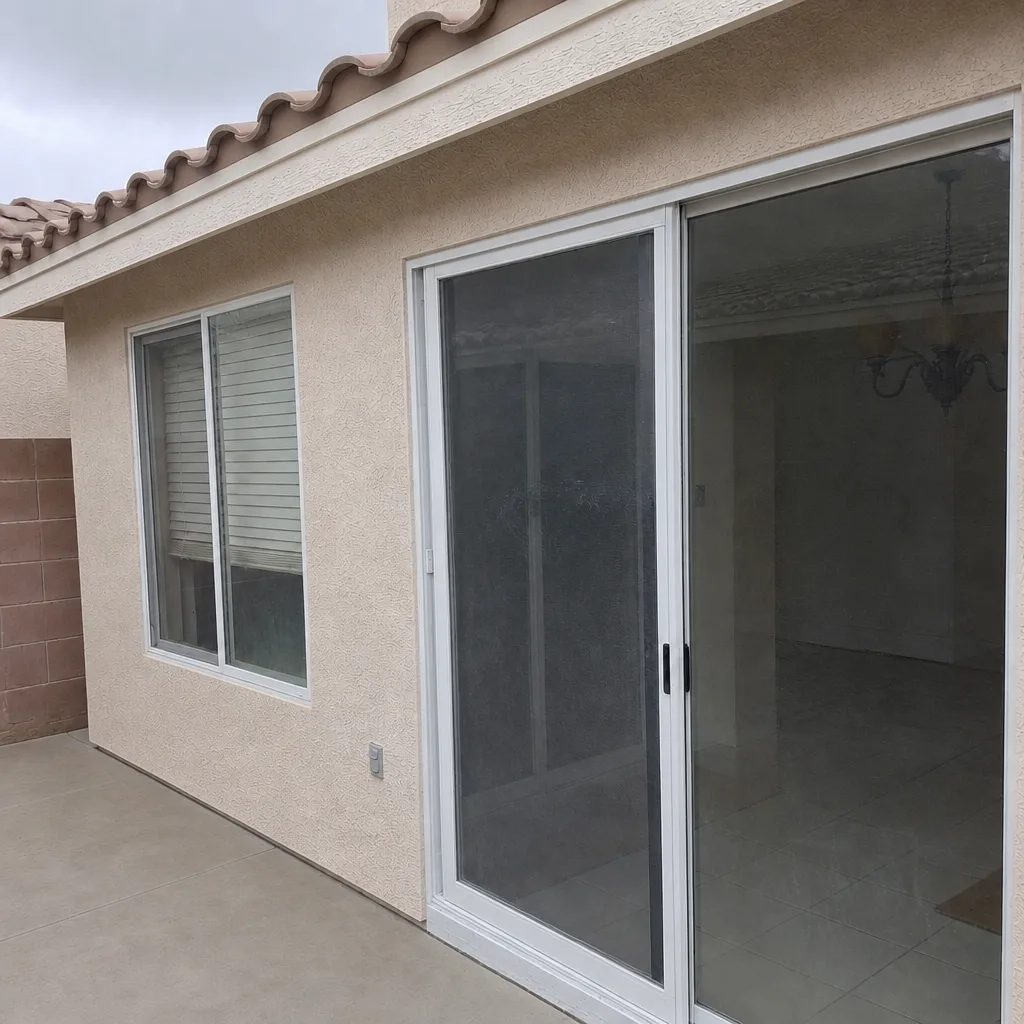 After
Table of Contents
- Why Summerlin Windows Age Faster Than the Manual Says
- Spring (March – May): The Pre-Summer Sealant Check
- Summer (June – August): Post-Monsoon Drainage Inspection
- Fall (September – November): Hardware Lubrication by Frame Material
- Winter (December – February): The IGU Fogging Check
- How to Measure Whether Your Sealant Has Years Left or Needs Replacing Now
- The Weep Hole Inspection: Water Damage Cost vs. the 10-Minute Fix
- Building a Year-Over-Year Photo Log for Warranty Evidence
Why Summerlin Windows Age Faster Than the Manual Says

Most window manufacturers rate their sealants and weatherstripping against a temperate-climate UV exposure curve. Summerlin doesn’t live on that curve. The Las Vegas valley regularly hits a UV index of 11 or higher from May through September, and the diurnal temperature swing in Summerlin neighborhoods like The Ridges and Red Rock Country Club can run 30°F or more in a single day. That daily expansion and contraction is thermal cycling, and it works on sealant the way bending a paperclip back and forth works on the wire.
The practical effect is that silicone and polyurethane beads crack, shrink, and pull away from the frame roughly 30% sooner than a temperate-climate maintenance schedule would predict. Weatherstripping compresses faster. Vinyl frames expand more. In our experience installing and replacing windows across Summerlin, we’ve opened frames where the factory sealant was intact and frames five years younger where the bead had already failed along the sun-facing elevation.
That’s the reason this schedule is month-specific rather than “once a year.” Summerlin’s climate doesn’t spread its stress evenly across the calendar. The tasks below are timed to catch damage the season before it becomes a repair. If you’re evaluating whether your current windows are worth maintaining at all, our Window Replacement in Summerlin guide covers the point at which replacement beats repair.
Spring (March – May): The Pre-Summer Sealant Check
The single most important task of the year happens in spring, before UV load peaks. A sealant bead that’s already cracked in March will be a water intrusion point by July. The spring check is about finding failure while the fix is cheap.
- Walk the exterior of every west- and south-facing window. These elevations take the most direct solar load in Summerlin. Run a fingernail or a plastic probe along the sealant bead where the frame meets the stucco.
- Look for gaps, cracking, or pull-away. Any visible separation between sealant and frame or stucco is a fail. Don’t caulk over it; that hides the problem.
- Check the bead’s flexibility using the method in the sealant section below. A bead that’s hard as a pencil is done.
- Confirm weep holes are open before the first heat wave. (Detail below.)
- Photograph everything, labeled by date and window location, into your photo log.
Spring is also the right time to check that your windows’ low-E coating and insulation are still performing, because a window that’s been losing thermal efficiency all winter will show it in the first weeks of warm weather. If your home was built or updated in the last decade with a line like CWS or CGI, its factory performance spec is a useful reference point for what “normal” looks like.
Summer (June – August): Post-Monsoon Drainage Inspection

Monsoon season in the Las Vegas valley runs roughly July through September, and it delivers water in short, aggressive bursts rather than gentle rain. A window that drains well in a drizzle can fail in a monsoon downpour if the drainage path is blocked. The summer task is a drainage inspection, done after the first significant storm of the season.
- Weep holes and sill tracks: clear debris, dust, and dried sealant residue. In Summerlin’s dry, dusty climate, silt accumulates in tracks faster than most homeowners expect.
- Sill pans and flashing: look for standing water or staining below the sill, inside or out. Staining is evidence of past intrusion.
- Interior drywall and trim: run a hand along the wall below each window after a storm. Cool or soft spots mean water is getting behind the frame.
- Sliding and patio doors: check the track drain slots specifically. A patio door track clogs faster than a window sill because of foot traffic.
Post-monsoon is also the moment to photograph any water staining before it dries and fades, because documentation is what wins a warranty claim later. Every completed job we do under the Haven Standard leaves a documented photo record, and the same discipline applies to your own annual check. Detailed door-specific maintenance is covered in our Door Installation in Summerlin guide.
Fall (September – November): Hardware Lubrication by Frame Material
Hardware is where the wrong product does the most avoidable damage. The lubricant that’s right for an aluminum frame can attack the seals on a vinyl frame, and vice versa. This is the task where guessing costs money, so match the product to the material.
Vinyl frames: use a silicone-based or dry PTFE (Teflon) lubricant on slides, locks, and hinges. Never use petroleum-based products or WD-40 on vinyl seals; the solvents soften and swell the weatherstripping.
Aluminum frames: a light lithium grease or silicone spray works on the hardware. Keep lubricant off the weatherstripping entirely, since grease attracts grit that wears the seal.
Fiberglass frames: dry PTFE spray is the safe universal choice for latches and hinges. Avoid oils that leave a film; fiberglass and its seals are sensitive to buildup.
All materials: wipe the old lubricant and grit off first. A lubricant applied over dirt packs the dirt into the mechanism. In our experience, most “sticky window” hardware complaints in Summerlin are grit, not worn parts.
Winter (December – February): The IGU Fogging Check
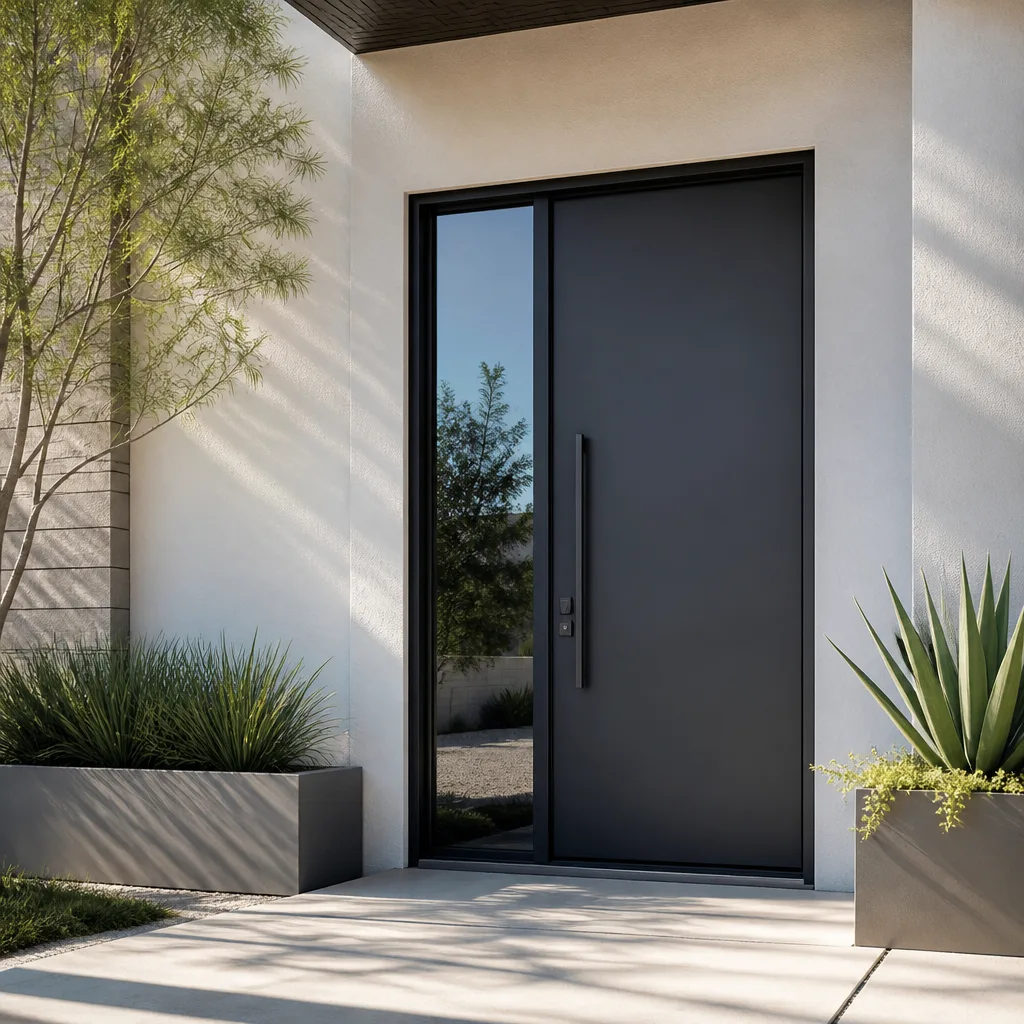
The insulating glass unit, or IGU, is the sealed double- or triple-pane assembly. When its perimeter seal fails, moisture gets between the panes and you see fogging or condensation you can’t wipe away. Winter is the right time for this check because the temperature difference between inside and outside makes a failing seal visible.
- Look for fog between the panes, not on the interior glass surface. Interior surface condensation that wipes away is humidity, not seal failure.
- Check at the coldest part of the day. A weakened seal often only shows fogging when the outside-to-inside temperature difference is largest.
- Note any hazy or milky film that won’t clean off. That’s often the first sign of seal failure before full fogging.
- Record the window location and date in your photo log. IGU seal failure is progressive, and dated evidence supports a manufacturer claim.
Most manufacturer glass warranties run for a set number of years against seal failure, so the date your fogging started matters. Photograph it the day you first notice it, not the day you finally call someone. A failing IGU isn’t a repair you can do yourself; it’s a unit replacement.
How to Measure Whether Your Sealant Has Years Left or Needs Replacing Now
You can judge sealant condition without calling anyone, using two measurements: bead width and flexibility.
Width. A healthy exterior sealant bead between frame and stucco should be roughly 3/8 inch to 1/2 inch wide and bond to both surfaces with a slight curve. A bead that’s pulled back to a thin line, or that has a visible gap on either side, has already failed the width test. If the gap between frame and wall is wider than the bead can bridge, the sealant needs replacement with a backer rod behind it.
Flexibility. Press a fingernail into the bead. Healthy silicone or polyurethane should dent and recover, and stretch when you pull a small piece gently. Sealant that’s hard, brittle, or cracks when you flex it is done. In Summerlin’s UV environment, expect exterior sealant to reach end of life in roughly 5 to 7 years on sun-facing elevations, less on a west-facing wall that bakes all afternoon.
When either test fails, remove the old bead fully before re-sealing. Caulk laid over failing caulk traps moisture and speeds the next failure. Use an exterior-grade silicone or polyurethane rated for high UV exposure, and don’t skip the backer rod in any gap wider than 3/8 inch.
The Weep Hole Inspection: Water Damage Cost vs. the 10-Minute Fix
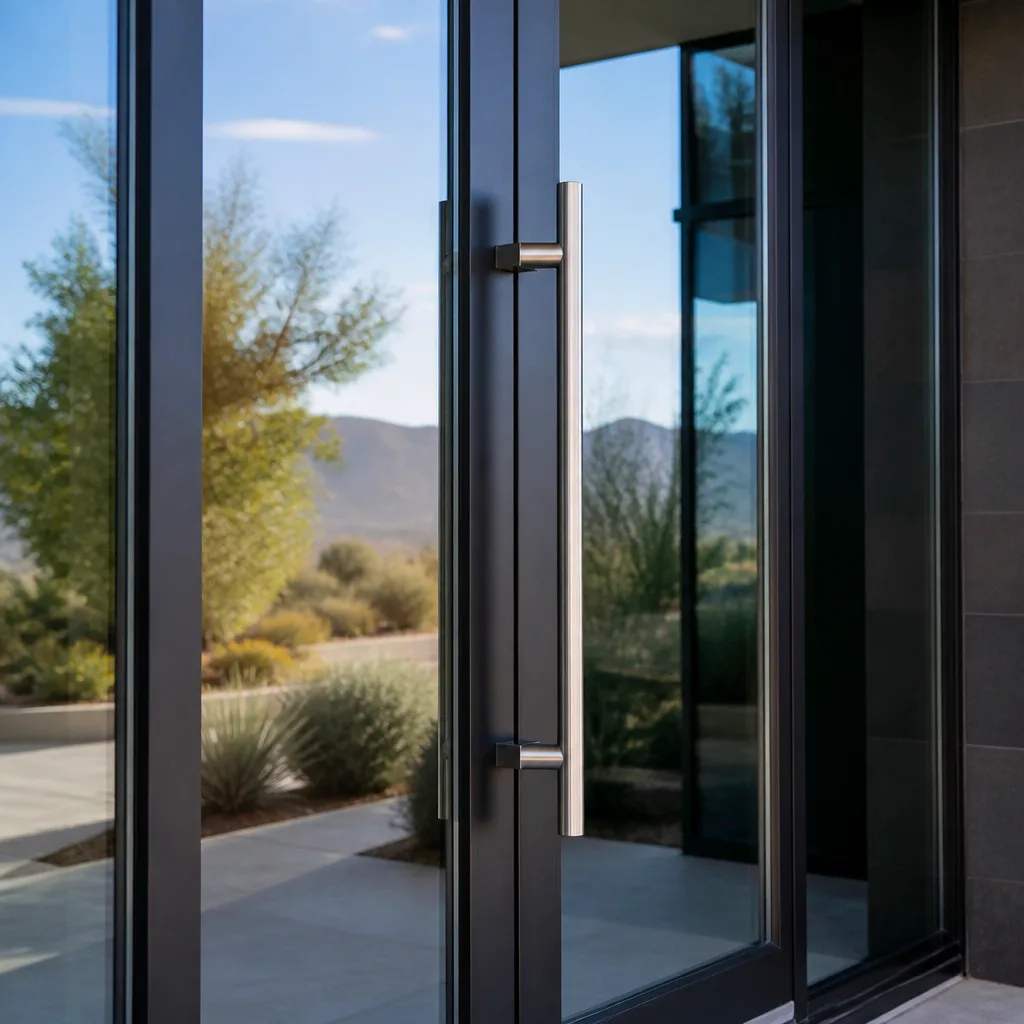
Weep holes are the small drainage slots at the bottom of a window frame that let trapped water escape to the outside. When they clog, water sits in the sill track, works into the frame, and eventually reaches the wall cavity. The cost gap is stark: clearing weep holes takes about 10 minutes with a stiff wire or a straightened paper clip, while repairing the rot, drywall, and framing damage from a forgotten blocked weep hole can run into the thousands.
The inspection procedure:
- Locate every weep hole along the bottom of each frame. Most windows have two or more.
- Probe each one gently with a wire. You should feel it pass through to the outside.
- Flush the sill track with water from a cup; if water doesn’t drain out the weep holes, they’re blocked.
- Clear any debris and re-flush to confirm flow.
- Photograph the clear hole and draining water for your log.
Never seal over a weep hole while caulking. It’s the most common mistake we find during a Summerlin survey, and it turns a drainage feature into a water trap.
Building a Year-Over-Year Photo Log for Warranty Evidence
A documented photo record is what separates a warranty claim that gets approved from one that gets denied. When you later need to show a manufacturer or installer what condition a window was in and when, dates and labeled photos are the evidence. Build the log on your phone, sorted by year, using these steps:
- Photograph each window from the same angle at the same time each year, so changes are comparable.
- Label every photo with the window’s location (room, elevation) and the date.
- Include one wide shot and one close-up of the sealant bead and weep holes per window.
- Note any repair you make, with the product used and the date.
- Keep the log in cloud storage so it survives a device change.
This is the same evidence-first approach we apply on every job: the measured survey you keep, the written scope, and the photo record when the work is done. If a factory defect or installation issue does surface, documented evidence is what makes the claim straightforward. For a broader look at how installation quality itself affects long-term performance, see our Window Installation in Summerlin guide.
Common Mistakes to Avoid
- Caulking over old caulk. It traps moisture and fails within a season in Summerlin’s heat.
- Sealing the weep holes. The most expensive tiny mistake on a window; it turns drainage into a water trap.
- Using petroleum-based lubricant on vinyl. WD-40 and similar products swell and degrade vinyl seals.
- Waiting for fogging to clear on its own. IGU seal failure only gets worse, and the warranty clock runs from when it started.
- Ignoring sun-facing elevations. West and south walls need checking first and most often.
- No dated photo record. Without evidence you’ll struggle to prove a claim later.
- Skipping the post-monsoon inspection. Monsoon water finds damage that a dry-season check never sees.
When to Call a Professional
Most of this schedule is homeowner work: clear the weep holes, check the sealant, lubricate the hardware, and log the photos. Call a professional when the schedule turns up a real failure. A failed IGU with fogging between the panes needs unit replacement, not a wipe-down. A frame that’s pulling away from the wall, water staining on interior drywall, or a sliding door that no longer tracks true all point to problems beyond a maintenance bead. And any check that involves climbing to a second-story window on a ladder is a job for a trained technician, not a homeowner. Sightline Windows & Doors Summerlin offers free estimates in Summerlin – call (844) 560-5201.
Frequently Asked Questions
Check exterior sealant twice a year in Summerlin: once in spring before UV load peaks and once after monsoon season. The southern Nevada climate degrades silicone roughly 30% faster than temperate-climate guidance assumes, so annual checks aren’t enough on west- and south-facing walls. Call (844) 560-5201 for a free assessment if you’re unsure.
Fog between panes means the sealed insulating glass unit has lost its perimeter seal and moisture has entered the space between the panes. It can’t be wiped away because it’s inside the sealed unit. The fix is IGU replacement. Call (844) 560-5201 for a free estimate on a replacement unit.
Use a silicone-based or dry PTFE (Teflon) lubricant on vinyl window hardware. Never use petroleum-based products like standard WD-40 on vinyl seals; the solvents soften and swell the weatherstripping over time. Aluminum and fiberglass frames tolerate different products, so match the lubricant to the material.
Clearing a blocked weep hole costs almost nothing and takes about 10 minutes with a stiff wire. The repair for the water damage a blocked weep hole causes, including rotted framing and drywall, can run into the thousands. The gap is why weep hole inspection is the highest-value item on the schedule.
You can re-seal exterior beads on ground-level windows using an exterior-grade silicone or polyurethane rated for high UV exposure. Leave second-story windows and any sign of frame separation or interior water staining to a trained technician. Call (844) 560-5201 for a free estimate on anything beyond routine sealing.
Window lifespan in Summerlin depends on frame material, elevation exposure, and installation quality; high-UV elevations see faster sealant and weatherstripping wear. Well-installed windows from lines like ES Windows or ECO Window Systems can perform for years with consistent maintenance, while neglected seals shorten life. Our Window Replacement in Summerlin guide breaks down when replacement beats continued repair.
The Bottom Line
Window maintenance in Summerlin isn’t an annual box to tick; it’s a seasonal sequence. Inspect and re-seal in spring before the heat peaks, clear weep holes and check drainage after monsoon rains, lubricate hardware by frame material in fall, and check for IGU fogging in winter. Test sealant by width and flexibility, not by eye alone. Log dated photos every year so a warranty claim later has evidence behind it. Most of the work is yours, done in an afternoon. The moment a seal fails between the panes, water stains interior drywall, or a frame pulls away, that’s a professional call. Explore more in our Sightline Windows & Doors Summerlin home.
If your Summerlin windows are past the point of maintenance, or you’re rebuilding the written spec from scratch, start with a measured survey you keep and a written price before any work starts. That’s been Sightline’s principle under the Haven Standard since 2012, across 18,000+ windows and doors installed with a written price before work and a documented photo record when it’s done. Call (844) 560-5201 for a free estimate in Summerlin.
Written by the team at Sightline Windows & Doors Summerlin.
Six Reasons Homeowners Choose Sightline Windows & Doors Summerlin
Laminated glass and reinforced frames hold up to wind-driven rain, hail and flying debris, so your openings stay sealed when the weather turns.
Low-E insulated impact glass from our manufacturer lines commonly cuts monthly cooling bills 20-30%.
Laminated impact glass shuts out up to 40% of outside noise - traffic, neighbors, weather.
Monitoring services run $30-90 a month. Laminated impact glass resists forced entry around the clock, with no subscription.
Tighter seals and insulated glass even out hot and cold rooms and stop the drafts at the frame.
A full impact package upgrades curb appeal, buyer confidence and appraised value in one project.
Other Sightline Windows & Doors Summerlin Services
What Neighbors Say About Sightline Windows & Doors Summerlin