Last updated November 17, 2026
New windows and doors improve comfort, cut energy bills and add long-term value to your home. Sightline Windows & Doors Summerlin pairs proven product lines with a local vetted installing partner for lasting performance - and a price put in writing.
Choose your installer
The unit is half the job - the install is the other half. Background-checked local installers measure, set, seal and insulate every opening, and they know the lines we quote inside and out.
Select the right products
Compare styles, materials and glass packages side by side until the fit is right for your rooms, your budget and your goals. The product-line comparison below is the place to start.
Prepare your home for install
Before install day we walk you through a short checklist - furniture pulled back, treatments down, a clear path to each opening - so install day is watch-it-happen, not scramble.
Compare the Lines We Quote
Every project is priced on the same lines, side by side - the price indicators below are relative, and your consultant shows exact numbers on your actual openings.
PGTThe line homeowners arrive naming - the most impact certifications in the industry$$$
- More impact certifications than any other line we quote
- WinGuard, EnergyVue and ClassicVue Max systems built for every wind zone
- 99% on-time delivery keeps your install date on the calendar
CGIThe heavyweight impact line$$$$$
- Large-missile impact ratings for the strictest wind zones
- Architectural-grade aluminum with commercial-depth frames
- The line we quote when protection is the whole point
CWSThe value pick$$
- Vinyl systems built to strict wind codes
- Strong energy packages at the friendliest price point
- The smart start for whole-home replacements on a budget
ESWSlim lines, big glass$$$$
- Narrow-sightline aluminum for modern elevations
- Oversized openings and floor-to-ceiling glass
- Impact-rated without the bunker look
ECOThe aluminum impact workhorse$$$
- Factory-built aluminum impact systems
- A strong price-to-protection ratio for coastal homes
- Proven lines with short lead times
Seasonal Windows & Doors Care for Summerlin: Year-Round Homeowner’s Guide
October in Summerlin is not fall in any traditional sense. Daytime temperatures can reach 95°F while overnight lows drop to 55°F, a 40-degree daily swing that cycles window frames through expansion and contraction faster than any other month of the year. That thermal shock period, not winter, is when frame fasteners loosen and sealant cracks first appear. Most national maintenance calendars tell you to “winterize in November” and move on, which is roughly two months late for a Mojave climate. This guide organizes care around the four stress events Summerlin actually experiences, not the four seasons printed on a calendar, and shows you what to check before each one arrives.
Quick Answer
In Summerlin, windows and doors need attention tied to four real stress events: UV peak (May – August), monsoon humidity (July – September), thermal shock from rapid temperature cycling (October), and cold-morning condensation (December – February). The three highest-value tasks are re-torquing loose sill anchor screws before monsoon season, probing the perimeter sealant joints during the October swing, and distinguishing surface condensation from a failed insulated glass seal in winter. Doing those three on schedule prevents most of the water intrusion and seal failures we see in Summerlin homes.
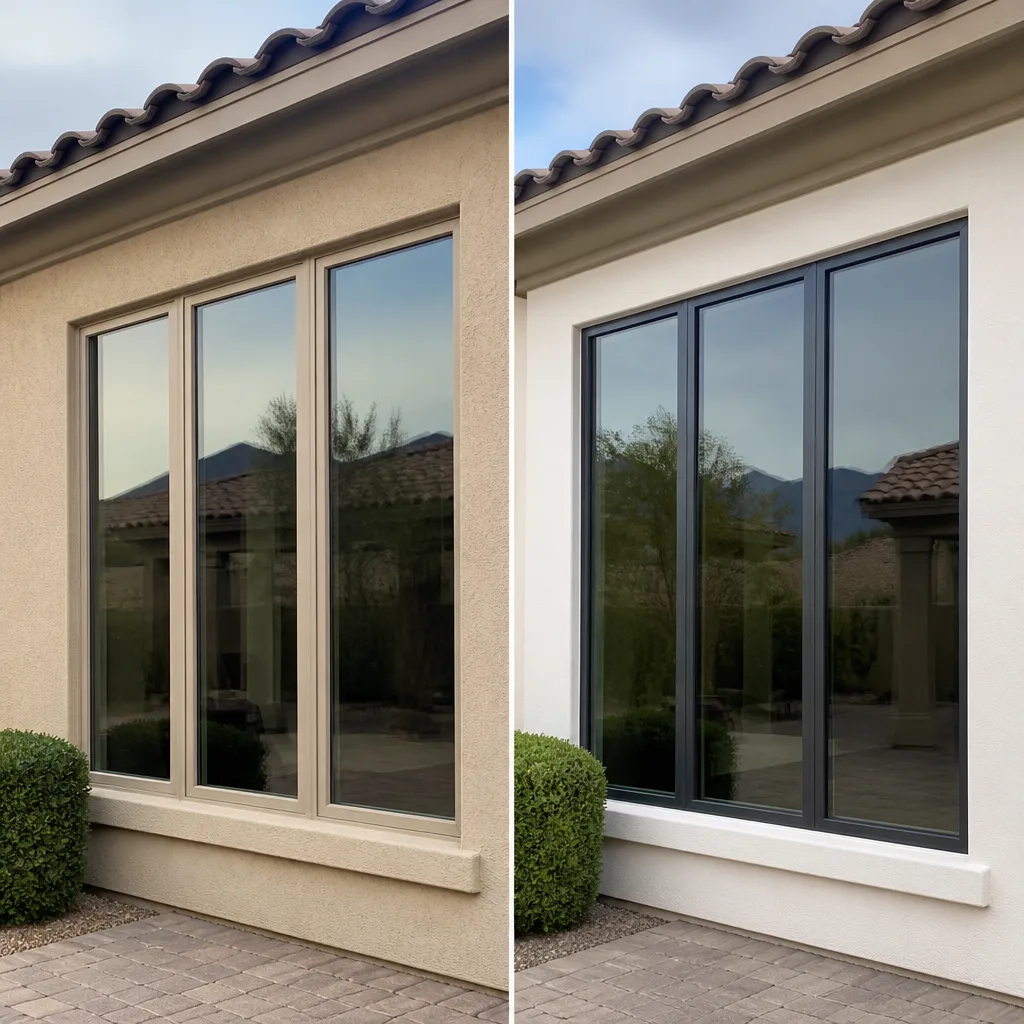
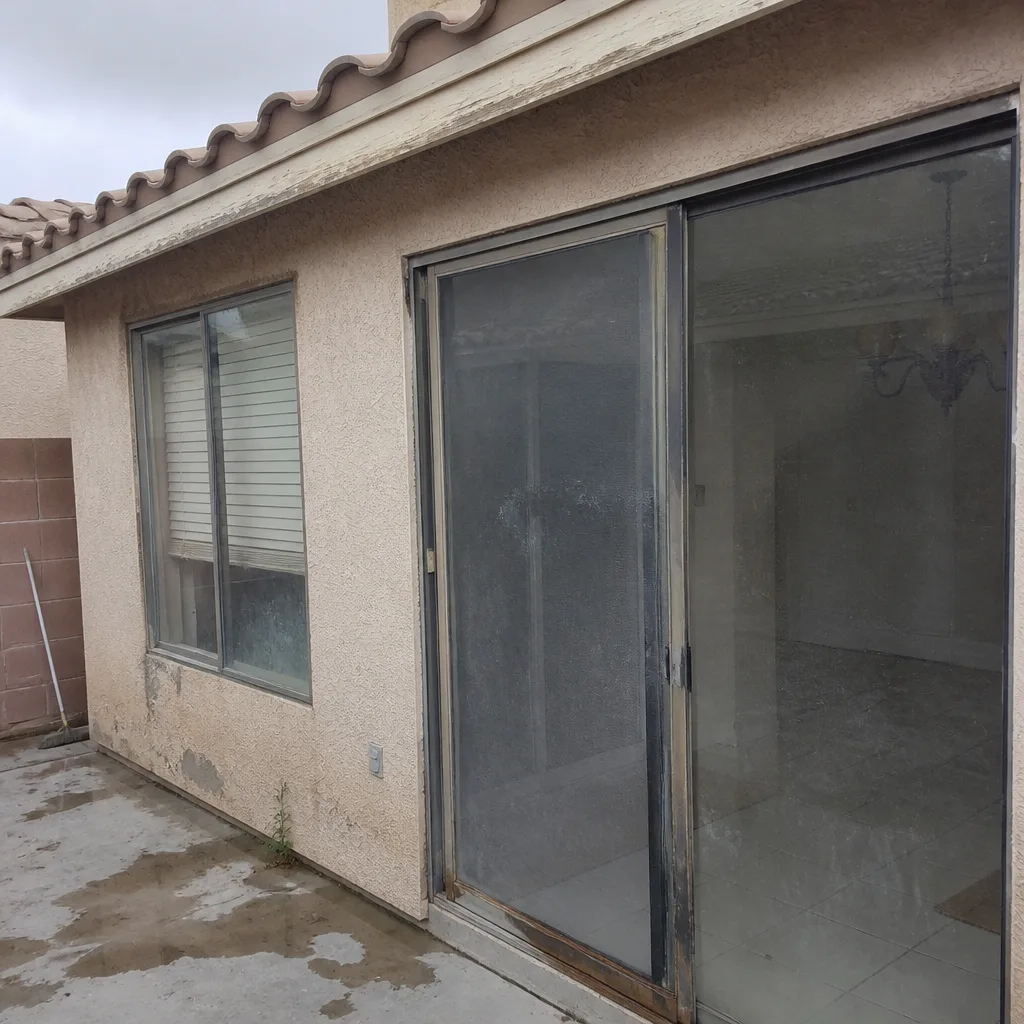 Before
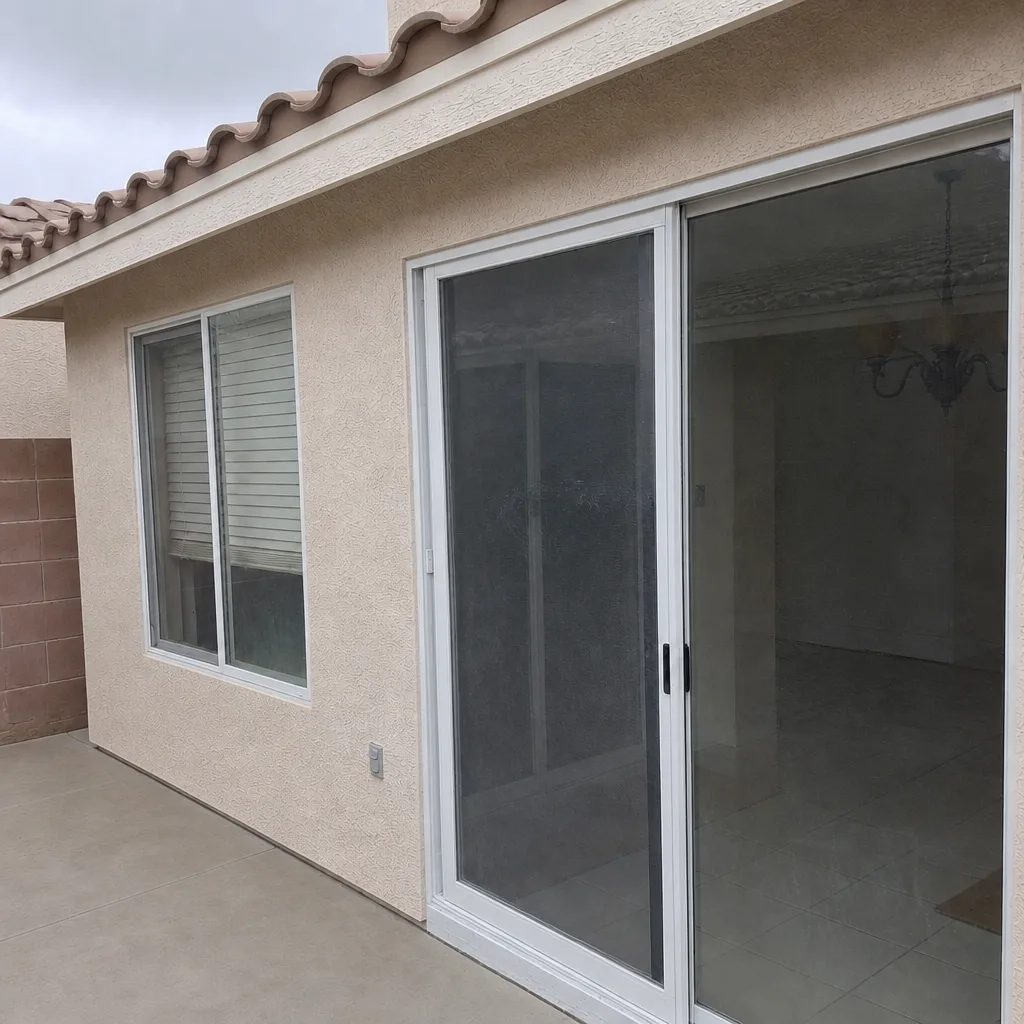 After
Table of Contents
- Why the Calendar Misleads You in Summerlin
- June: Pre-Monsoon Prep
- May – August: UV Peak and Hardware Degradation
- September: Post-Monsoon Inspection
- October: Thermal Shock Season
- December – February: Cold-Morning Condensation
- Reading the Readings: A Plain Glossary
- Common Mistakes to Avoid
- When to Call a Professional
- Frequently Asked Questions
Why the Calendar Misleads You in Summerlin
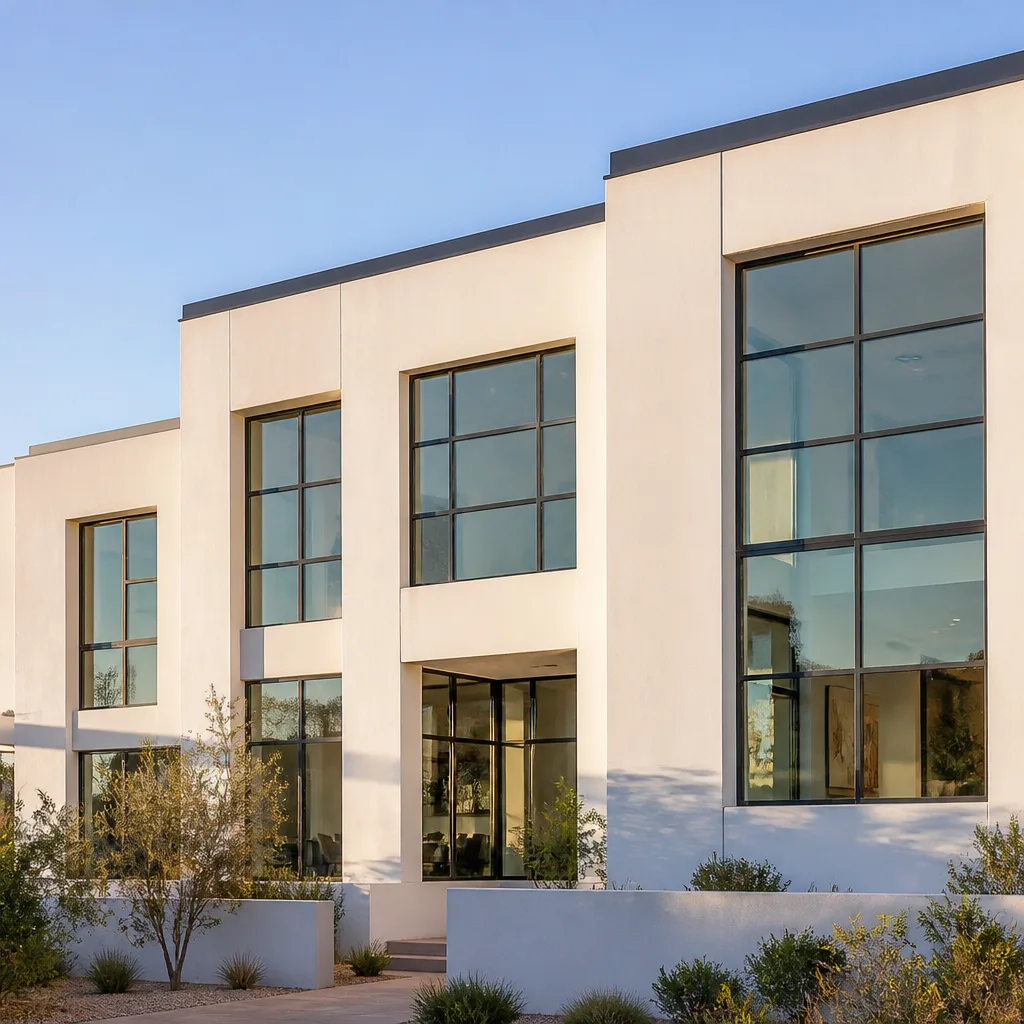
Most homeowner maintenance guides are written for climates with a long, cold winter and a mild summer. Summerlin doesn’t work that way. Here, the two biggest loads on your windows and doors are ultraviolet intensity and rapid temperature cycling. Cold is barely a factor. That means the tasks that matter most are the ones national guides skip or bury under “optional” advice.
The physics is straightforward once you see it. A vinyl frame expands and contracts with temperature like most materials. In a climate where a single October day can move 40 degrees, your frame pushes against the rough opening, pulls back, and repeats, hundreds of times across the month. Concrete and stucco respond at a different rate. The place where the two meet, the perimeter sealant joint, is where the movement gets absorbed. When one side moves faster than the material between them can flex, that material eventually cracks or debonds.
Add the sun. Summerlin faces roughly 4,000 hours of sunshine a year, and the southern and western elevations of most homes take the worst of it. Gaskets on sliding door tracks, glazing seals, and sealant on those faces fail years before the same components on the shaded side of the house. This is why we ask “which elevation?” before quoting any repair. The answer changes the price range and the schedule.
So budget about 20 minutes per elevation, four times a year, timed to the events below. That’s the whole program. The first item below is the one most Summerlin homeowners miss.
June: Pre-Monsoon Prep
Monsoon season in Southern Nevada runs roughly July through September, and it shows up fast. Days before the first rain, the practical work is checking two things: whether the frame fasteners have worked loose through the spring’s warming cycle, and whether the weep holes at the bottom of each window are clear. Skipping the June check means you find water intrusion in August, which is the worst time to fix it.
On the anchor screws, the concept is simple. Sill anchors hold the frame to the rough opening. Over spring, the frame has warmed and expanded, and some screws loosen. Check them with a screwdriver for finger resistance. If the screw turns without resistance, it’s loose and needs re-torquing to the manufacturer’s spec. Don’t overtighten. Your job in June is to identify looseness, not fix it blind.
On weep holes, here’s a numbered walkthrough:
- Locate the small holes at the bottom outside edge of each window frame. There’s usually at least one per sill.
- Look for debris, insect nests, or paint blocking the opening.
- Use a soft-brush or compressed air to clear visible debris, working in the direction the weep hole is designed to drain.
- Note any hole that appears warped, has a missing cover, or has debris that won’t clear. Flag those as items for a professional before the first storm.
- Repeat on every south-and-west-facing window first, since those dry out hardest.
Professional re-torquing of sill anchors, including the necessary weather-seal checks afterward, runs roughly $120 – $250 per window in the Summerlin market depending on frame type and access. If you’re not sure how to identify the anchors on your window make, that’s a reasonable reason to bring a technician in for the June pass.
May – August: UV Peak and Hardware Degradation
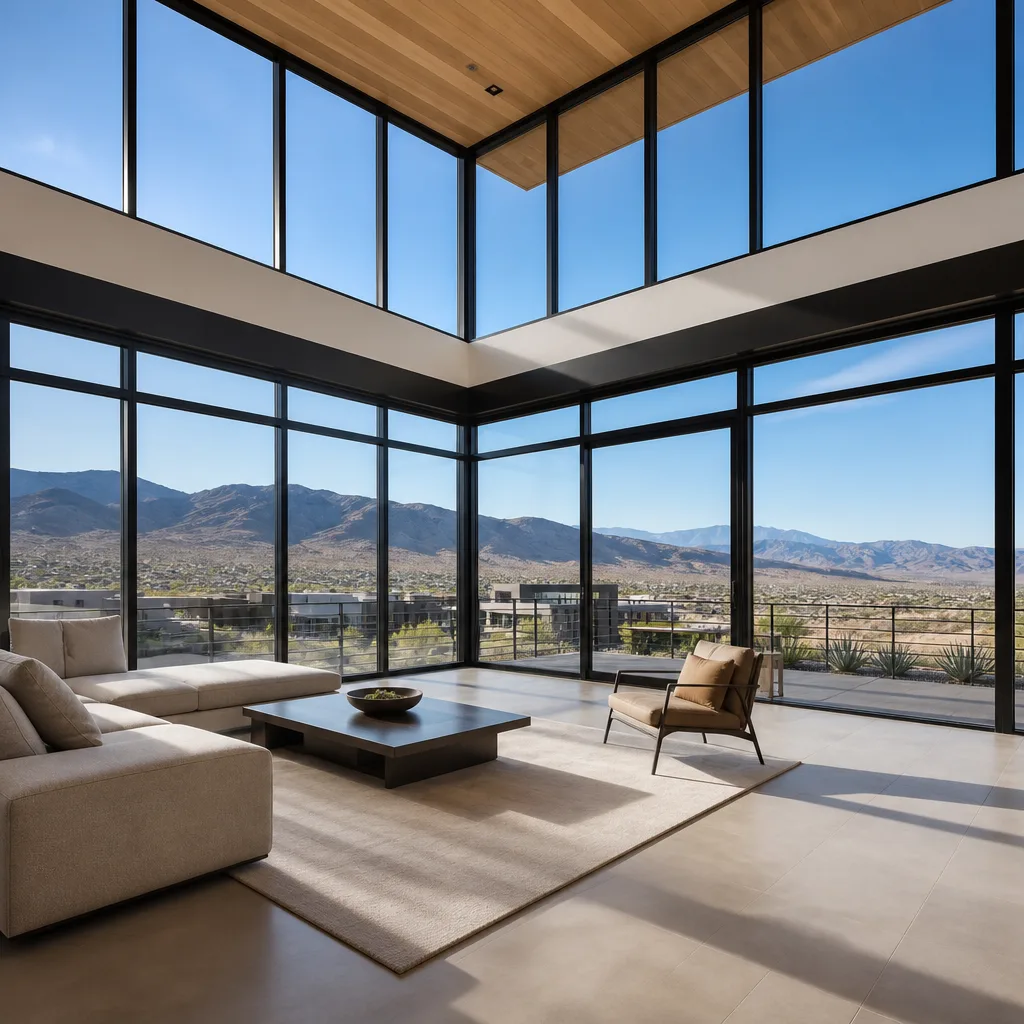
Summerlin’s UV peak is the four-month stretch when the most damage is done and the least is visible. The frames look fine. The glass looks fine. What’s aging is the hardware: neoprene gaskets on sliding door tracks, thermal breaks in frames, and the glazing seals that sit against the glass edge.
The number to remember is 60%. Neoprene gaskets on sliding door tracks lose roughly 60% of their compression resistance after three summers of direct southern exposure. Once they lose that compression, the door gets harder to roll, drafts start at the edges, and the track becomes the source of the “sticky door” complaint we hear most in July. If your sliding patio door has crossed three Summerlin summers on the south or west wall, it’s overdue for a hardware check, not necessarily a replacement.
What to do in the UV peak cycle:
- Feel the gasket, don’t just look. Press it with a fingernail. If it doesn’t spring back, it’s degraded.
- Check the rollers on sliding doors. Look for flattened spots and excess play in the roller housing.
- Wipe down tracks and keep them clean. Sand and fine dust work into the track and accelerate gasket wear. A dry brush every six weeks helps.
- Note any door that needs a nudge. A door that needs a nudge in June is a door that doesn’t close in August.
- Inspect the exterior glazing gasket at the glass edge for cracking, chalky residue, or gaps.
This is also the season when sun-exposed cladding and trim turn brittle. If you’re planning a repair, we usually advise holding structural work to the edges of this window (May or late August) and doing hardware-only checks in the middle of the summer.
September: Post-Monsoon Inspection
Monsoon season ends and most homeowners assume the danger is over. The opposite is true. This is the week to look at the sill pan because water intrusion that happened during the monsoon often won’t present as visible damage until it dries out behind the drywall, usually two to four weeks after the storm ends. By then, you’re looking at remediation, not repair.
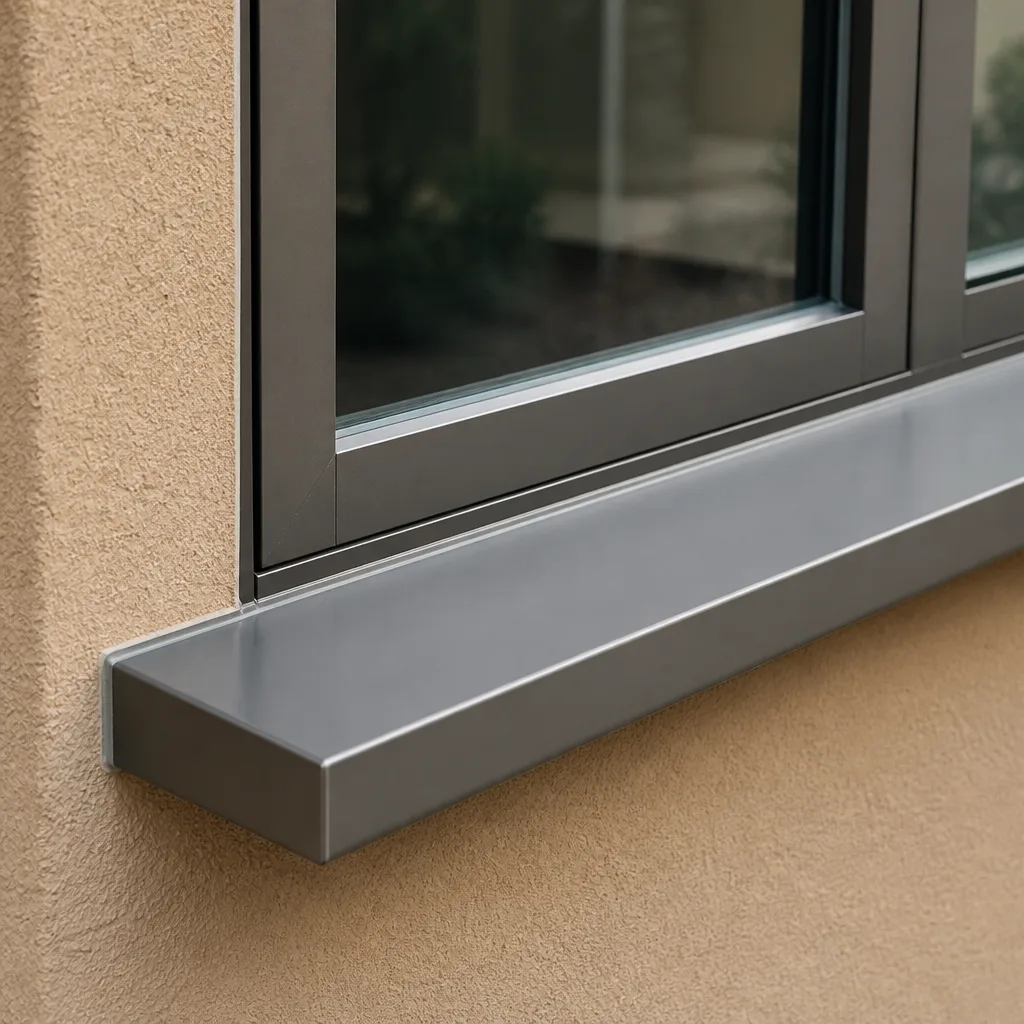
The sill pan is the flashing assembly under the window that catches and redirects any water that gets past the frame. When it fails, water weeps down inside the wall cavity. The visible signs come late: a soft spot at the interior sill, a faint water stain on the drywall below and outside the window’s footprint, or a musty smell in a room that’s been closed through the summer. In Summerlin, we see the classic case on the east- and south-facing walls of homes in The Ridges and Red Rock Country Club, where mature trees on the adjacent slopes shed debris that holds moisture against the frame for hours after a storm.
September inspection, in order:
- From inside, look at the drywall below and outside each window’s footprint. Any discoloration, bubbling, or soft paint is a flag.
- From outside, press gently on the caulk bead at the sill and frame. Any place it separates from the frame or the stucco is a suspect joint.
- Check for efflorescence (white powdery residue) on the exterior stucco directly below sills. That’s moisture pushing salt out of the masonry.
- Smell test any room closed during the summer. A faint musty odor is more reliable than visual inspection.
- Document each suspect window with a dated photo. If you end up needing a Window Replacement in Summerlin, the photo timeline is what a good installer uses to determine what can be saved and what can’t.
October: Thermal Shock Season
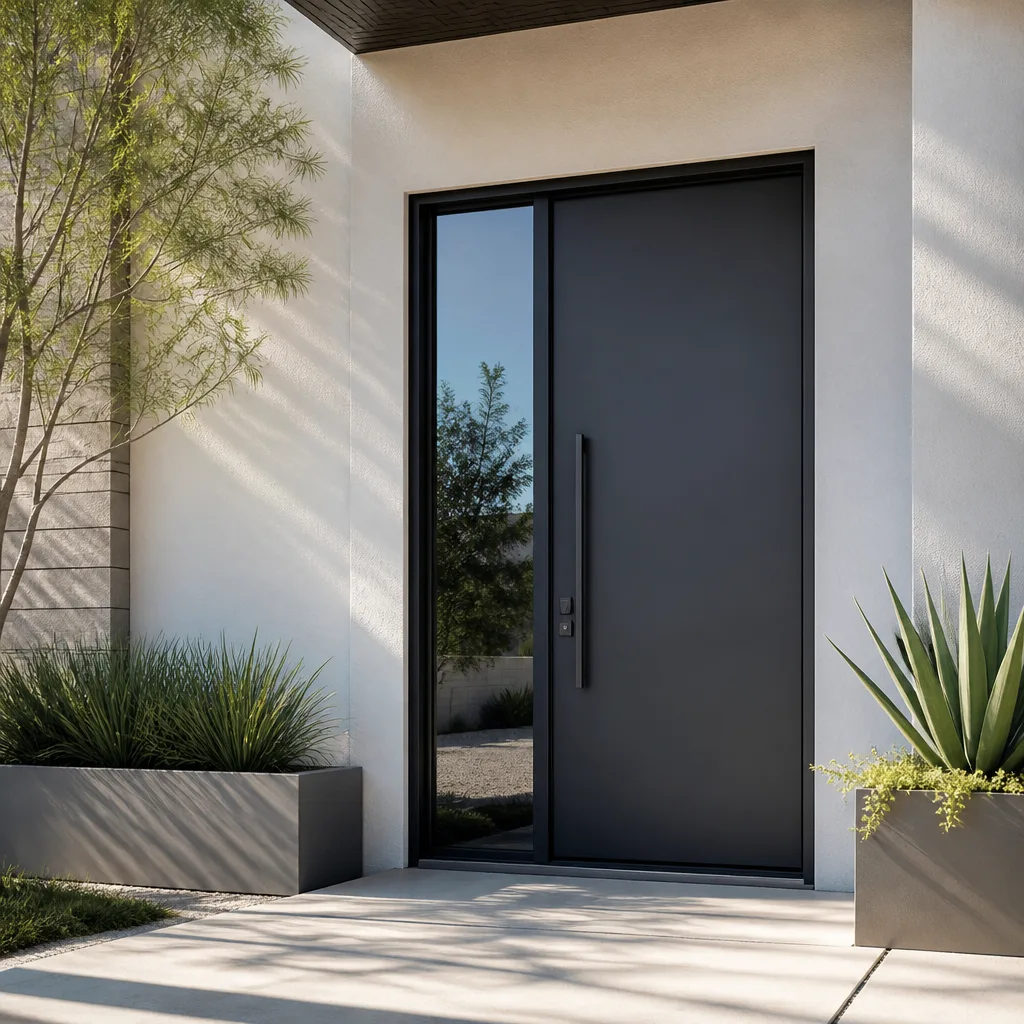
October is the highest-stress month of the year for windows and doors in this climate, and the specific reason is the 40-degree daily temperature swing. As frames warm and cool, the sealant joint at the perimeter takes every bit of that movement. Certain joints fail first, and knowing which ones lets you check them before they open to weather.
The joints that fail first during rapid cycling, in order of likelihood:
- The perimeter sealant at the frame-to-stucco interface, especially on the west elevation. The thermal load on the west wall in October is the year’s worst, because morning sun hits it cold then warms it hard.
- The head and sill joints, not the sides. Horizontal joints move more than vertical joints under temperature cycling, and they’re also the exposed surface for water.
- Any joint where sealant was applied over the wrong substrate (for example, over masonry paint rather than bare masonry). The bond is only as good as what’s under it.
Here’s how to probe them with a dental pick or the tip of a plastic knife. This is a diagnostic, not a repair. Don’t dig out sealant you intend to keep.
- Run the tip gently along each joint at a shallow angle. What you want is the pick to ride the surface.
- If the pick catches or drops into a crack, you’ve found a failing joint. A short crack (under 1/8 inch) is early failure. A longer one is a leak path.
- Look for sealant that pulls away from either side. The pull-away line is the failure line.
- Write down the location, elevation, and length of each failing joint. Take a photo with a coin next to the crack for scale.
- Probe every south- and west-facing window in one pass, then the rest of the house. Don’t skip the shaded side entirely; shaded joints fail on a slower timeline.
Resealing a perimeter joint professionally in the Summerlin market generally costs $90 – $180 per window when done as part of a maintenance pass, more if the joint must be fully cut out and rebuilt. Doing the pick test first means you pay for only the joints that need it, which is the whole point of Haven Clause 1: the measurement and the price are the same document. When a joint is failing badly enough that the sill pan itself is compromised, it’s worth understanding whether window replacement is more cost-effective than repeated repair.
December – February: Cold-Morning Condensation
Summerlin winter mornings drop into the high 30s and low 40s sometimes, and that’s enough to create condensation on windows. The important distinction is where the condensation forms. It tells you which component has failed, if any, and how much service life the unit has left.
Surface condensation (on the interior face of the glass) is normal in winter and generally not a defect. Warm indoor air meets a cold glass surface and moisture condenses, the same way a cold glass of iced tea sweats in July. Wipe it, keep interior humidity under control, and move on.
Between-glass condensation (inside the sealed cavity between the panes) is a failed glazing seal. That indicates the Insulated Glass Unit, or IGU, has lost its seal and drawn in moisture. Once moisture is in that cavity, it doesn’t come out. The desiccant that lines the perimeter of the unit is exhausted, and the unit will start to visibly fog from the edges inward.
What each means for remaining service life:
- Surface condensation with no fogging: the unit is performing normally. No action beyond humidity checks.
- Between-glass condensation at the edges only: the seal has begun to fail. The unit typically has 1 – 3 more seasons before the visible fogging spreads across the whole pane. Get a quote in the off-season.
- Between-glass fog across the unit: the seal is fully failed. The unit’s U-factor has degraded noticeably, and it will continue to get worse. Replace the IGU, not the whole window, if the frame is intact.
- Fog that turns milky or cloudy at the glass edges: hard water and mineral deposit inside the cavity. Same conclusion, replace the IGU.
Replacing an IGU in Summerlin generally runs $180 – $380 per unit depending on size and whether it’s impact-rated. The full window replacement price, if the frame is also compromised, is a separate question best answered with a measured survey.
Reading the Readings: A Plain Glossary
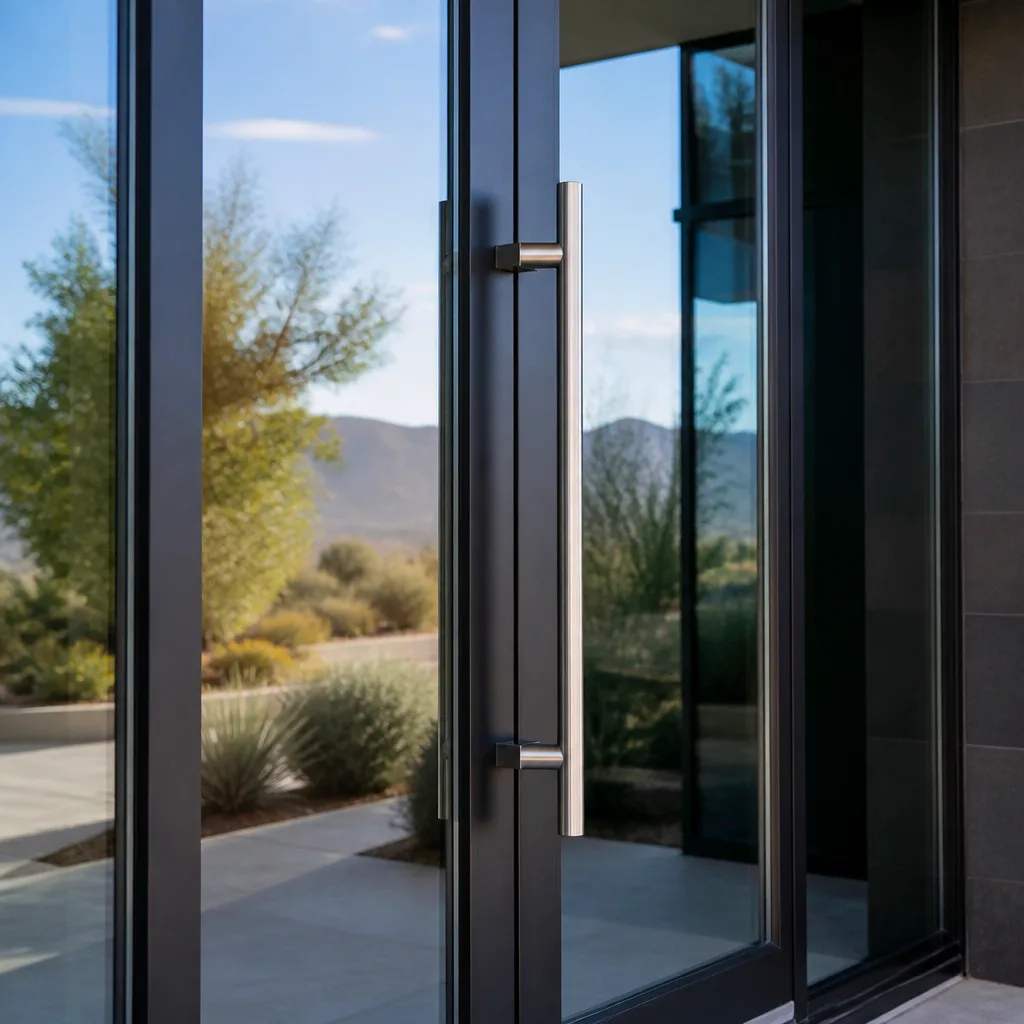
Window and door care involves some trade vocabulary. Here are the terms we use most, explained in one clause each, so you can read the rest of this guide without a translator.
- U-factor is how much heat moves through a product. Lower U-factor means a better insulator.
- SHGC (Solar Heat Gain Coefficient) is how much of the sun’s heat ends up inside the house. Lower SHGC means less solar heat entering. In Summerlin, you want this low on west-facing glass.
- Sightline is the visible edge of glass where it meets the frame. Sightline measurements determine frame visibility and often come up in replacement decisions.
- Impact-rated glazing is glass built to resist flying debris and storm loads, tested to specific standards.
- IGU (Insulated Glass Unit) is the sealed glass sandwich. When it fails, you replace the unit, not always the window.
- Weep hole is the small opening at the sill that lets water out of the frame assembly.
- Sill pan is the flashing under the window that catches and redirects water.
- Rough opening is the framed opening the window or door sits inside.
If you’re comparing product lines, ask for the U-factor and SHGC on paper. Sightline’s Window Installation in Summerlin is specified by what the opening requires, not what’s in the truck: impact-rated for the west elevation, energy-efficient for the south, and custom or geometric lines for the architectural openings you see in many Summerlin elevations. We work with PGT, CGI, CWS, ES Windows, ECO Window Systems, and ViewLux across the categories this climate actually demands.
Common Mistakes to Avoid
- Winterizing on a national schedule in November. Winterizing in November is roughly two months late for a Mojave climate. October thermal shock has already done its work by then. Move your sealant check to early October.
- Treating all condensation as a defect. Surface condensation on a winter morning is normal. Panic-replacing windows over surface fog wastes money. Knowing the between-glass vs. surface difference is the whole game.
- Ignoring the east elevation because it’s shaded. The east wall gets direct morning UV in Summerlin, and the thermal gradient on east-facing glazing in October is the steepest on the house. When checking hardware and sealant, do east and west before north and south.
- Cleaning weep holes with high-pressure water. A pressure washer forces water past the weep hole and into the frame cavity. That’s the wrong direction. Use a soft brush or compressed air.
- Caulking over a failed joint without diagnosing it. Caulk applied over a bond that has already broken from the substrate will fail again within a season. If the pick test says the sealant has pulled away from the stucco, it needs to be cut out and redone, not patched over.
- Skipping the June anchor check. Loose sill anchors show up as a soft spot under the sill during monsoon. Checking them in June is far cheaper than remediation in September. In Summerlin, we routinely see 10 – 20% of sill anchors slightly loose after a dry, hot spring.
- Assuming a “window replacement” is the only fix for aging hardware. A sliding door with degraded gaskets at the track often needs hardware only. Replacing the door when a hardware fix would do is a common overspend in Summerlin homes built between 2015 and 2023.
When to Call a Professional
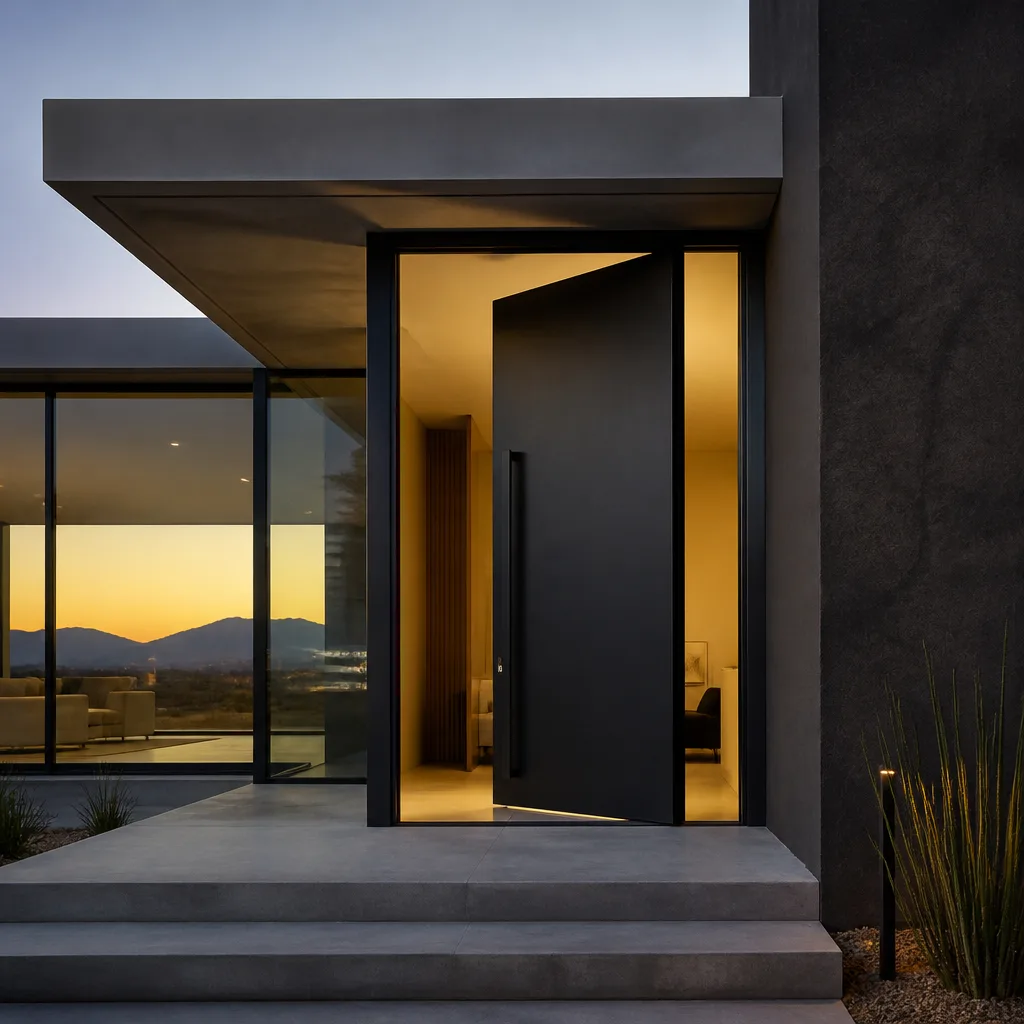
Some of this work is reasonable to do yourself: cleaning tracks, wiping weep holes, wiping surface condensation, checking for loose screws. The steps below are where care turns into a professional call. If you find a cracked or debonded perimeter sealant joint during the October pick test, especially on the west or south elevation, that’s a call. If you identify between-glass condensation, that’s a call for an IGU quote, not a cleaning. If you find soft drywall below a sill or smell mustiness that appeared after monsoon, that’s a call before remediation cost climbs. If you’re unsure whether a sliding door needs gaskets or replacement, that’s a call for a diagnostic. And if a window takes water during a storm and you can’t trace where, that’s a call. Sightline Windows & Doors Summerlin offers free estimates in Summerlin. Call (844) 560-5201, and we’ll bring the measured survey and the written price with us. For Door Installation in Summerlin, the same rules apply to patio and sliding doors.
Frequently Asked Questions
Four times a year, timed to the real stress events rather than the calendar. The highest-value checks are in June (pre-monsoon, anchor and weep hole check), September (post-monsoon, sill pan inspection), October (thermal shock, perimeter sealant pick test), and January (condensation classification). UV hardware checks are a spring-and-summer thing best done in May and July. Call (844) 560-5201 to schedule a free maintenance assessment if you’d rather have a documented record than a DIY list.
No, usually the IGU needs to be replaced, not the whole window. If the frame is intact and the gaskets aren’t degraded, a failed IGU is a sealed-unit replacement, typically $180 – $380 per unit in Summerlin before any discount. Full window replacement makes sense when the frame or sill pan is compromised. Call (844) 560-5201 for an exact written price after a measured survey.
Because the gaskets on the track have lost compression resistance after UV exposure. Neoprene gaskets on south- or west-facing sliding doors lose roughly 60% of their compression resistance after three summers of direct sun. The door hangs harder on the track and feels stuck. Hardware replacement usually fixes it; replacing the door doesn’t need to be the first call. Call (844) 560-5201 for a free estimate on hardware or a full door.
Anchor tightness and weep hole clearance, in that order. Loose sill anchors let water wick into the frame cavity, and a blocked weep hole traps it there. Do the June check on every window before the first storm, then repeat on any window you find loose. If you find more than a couple, bring a professional in for the September inspection, because that’s when the intrusion shows up as a real problem.
They change the maintenance profile, but they don’t eliminate it. Impact-rated glass is specified for wind-borne debris and storm loads, which is relevant in parts of Summerlin that face open exposure. The gaskets, sealant, and sill pan still need the same seasonal care. What impact-rated products do is add a layer of protection during a monsoon event and often let a homeowner skip shutters. Call (844) 560-5201 to talk through whether impact-rated is the right product for your specific elevation.
Yes. That’s Haven Clause 1, and it applies to any job, big or small. The measured survey customer keeps, and the written quote cannot differ from that document. We also offer a free second opinion on any written estimate from another installer: bring us their quote and we’ll review it at no charge. Call (844) 560-5201 for your Summerlin appointment.
The Bottom Line
Summerlin’s window and door care calendar doesn’t follow the national one. The relevant seasons are UV peak, monsoon, thermal shock, and cold-morning condensation. June is anchors and weep holes. September is the sill pan inspection. October is the perimeter sealant pick test. January is distinguishing surface from between-glass fog. The common thread is that the visible damage shows up two to four weeks after the event that caused it, which means the only way to prevent costly repair is to inspect on schedule, not on symptom. Do the four checks, keep a file of what you find, and when something calls for a professional, get a written price before anyone lifts a tool.
Contact
Window and door care in Summerlin starts with a measured survey and a written price, and that’s the standard we work to on every job. If this guide has flagged something on your windows or doors that needs eyes on it, or if you’d like the seasonal program run once by a professional so you have a documented baseline, we’ll be glad to help. Call Sightline Windows & Doors Summerlin at (844) 560-5201 for a free estimate. You can also start from the Sightline Windows & Doors Summerlin home, or review our window installation, window replacement, and door installation pages for the product lines and process details that apply to your elevation.
Written by the team at Sightline Windows & Doors Summerlin.
Six Reasons Homeowners Choose Sightline Windows & Doors Summerlin
Laminated glass and reinforced frames hold up to wind-driven rain, hail and flying debris, so your openings stay sealed when the weather turns.
Low-E insulated impact glass from our manufacturer lines commonly cuts monthly cooling bills 20-30%.
Laminated impact glass shuts out up to 40% of outside noise - traffic, neighbors, weather.
Monitoring services run $30-90 a month. Laminated impact glass resists forced entry around the clock, with no subscription.
Tighter seals and insulated glass even out hot and cold rooms and stop the drafts at the frame.
A full impact package upgrades curb appeal, buyer confidence and appraised value in one project.
Other Sightline Windows & Doors Summerlin Services
What Neighbors Say About Sightline Windows & Doors Summerlin