Last updated November 17, 2026
New windows and doors improve comfort, cut energy bills and add long-term value to your home. Sightline Windows & Doors Summerlin pairs proven product lines with a local vetted installing partner for lasting performance - and a price put in writing.
Choose your installer
The unit is half the job - the install is the other half. Background-checked local installers measure, set, seal and insulate every opening, and they know the lines we quote inside and out.
Select the right products
Compare styles, materials and glass packages side by side until the fit is right for your rooms, your budget and your goals. The product-line comparison below is the place to start.
Prepare your home for install
Before install day we walk you through a short checklist - furniture pulled back, treatments down, a clear path to each opening - so install day is watch-it-happen, not scramble.
Compare the Lines We Quote
Every project is priced on the same lines, side by side - the price indicators below are relative, and your consultant shows exact numbers on your actual openings.
PGTThe line homeowners arrive naming - the most impact certifications in the industry$$$
- More impact certifications than any other line we quote
- WinGuard, EnergyVue and ClassicVue Max systems built for every wind zone
- 99% on-time delivery keeps your install date on the calendar
CGIThe heavyweight impact line$$$$$
- Large-missile impact ratings for the strictest wind zones
- Architectural-grade aluminum with commercial-depth frames
- The line we quote when protection is the whole point
CWSThe value pick$$
- Vinyl systems built to strict wind codes
- Strong energy packages at the friendliest price point
- The smart start for whole-home replacements on a budget
ESWSlim lines, big glass$$$$
- Narrow-sightline aluminum for modern elevations
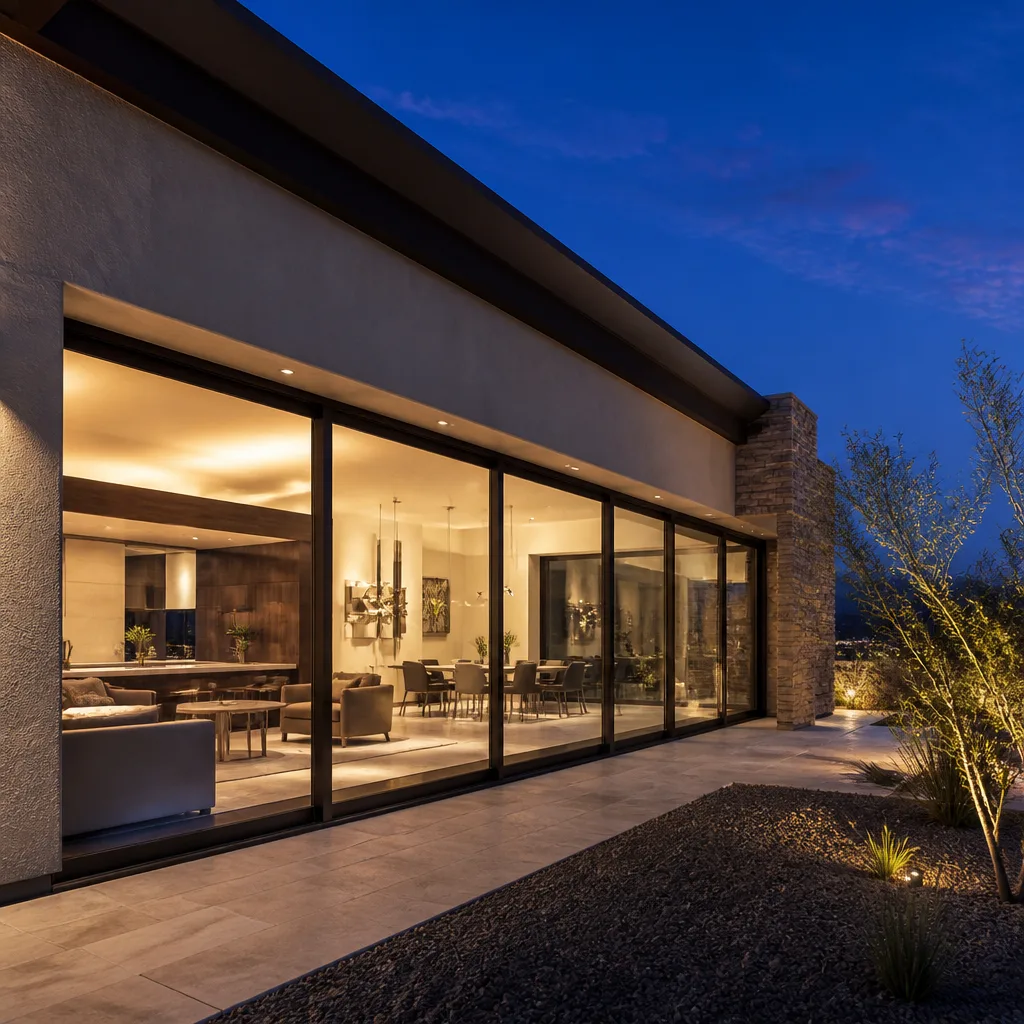
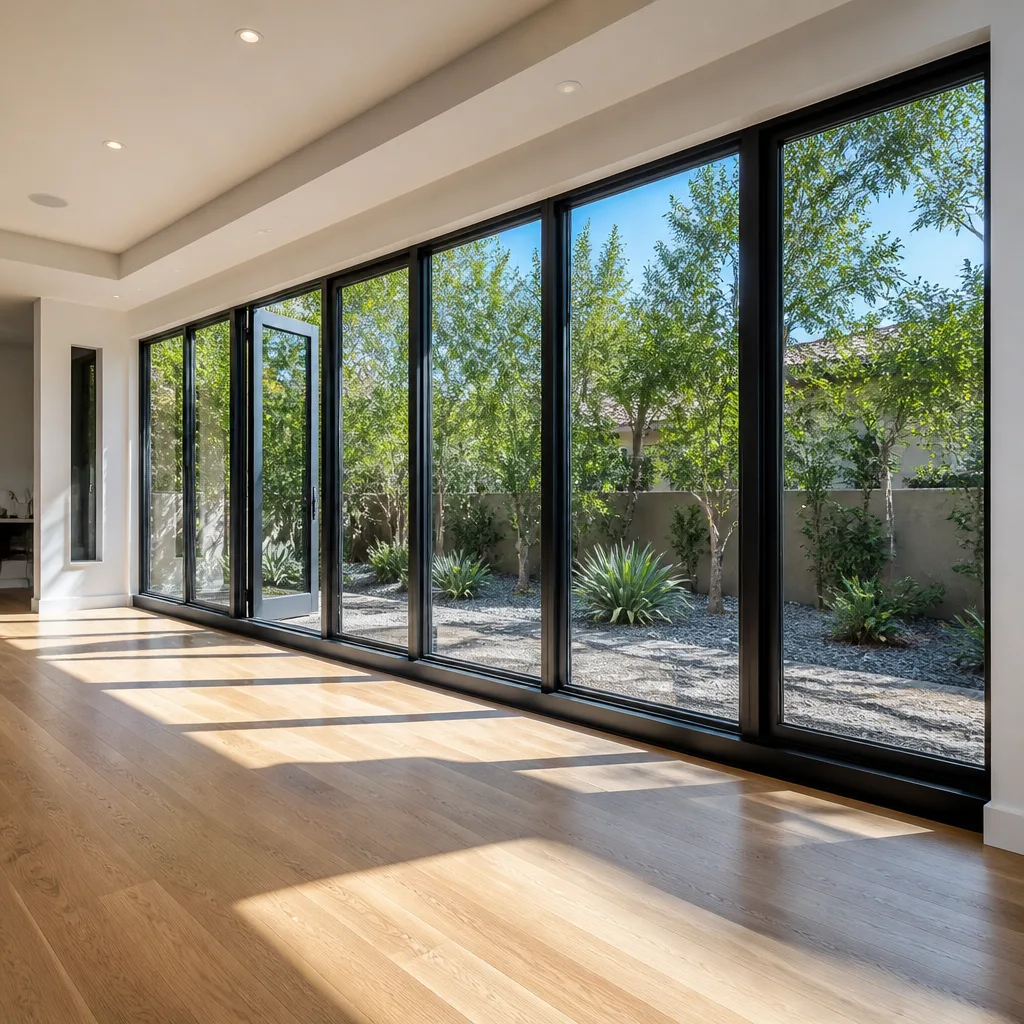
- Oversized openings and floor-to-ceiling glass
- Impact-rated without the bunker look
ECOThe aluminum impact workhorse$$$
- Factory-built aluminum impact systems
- A strong price-to-protection ratio for coastal homes
- Proven lines with short lead times
Window Installation Warning Signs Every Homeowner Should Know
Here is the counterintuitive part: most failed window installations in Summerlin do not fail because of the product. They fail because of the perimeter. In our experience across 18,000+ openings, the visible symptom almost never points to the component the homeowner blames first. A fogged pane and a sweating frame look nearly identical from across a living room, but one is a sealed-glass failure and the other is an installation failure. Different cause, different responsible party, different repair cost. This guide catalogs the symptoms in plain trade language, names the cause behind each, and tells you what to document before you call anyone.
Quick Answer
Bad window installation shows up as water staining the drywall near the sill, sealant lines that are thin or skipped at the exterior perimeter, sashes that bind or latches that won’t sit flush, and a summer cooling bill that climbs in one specific room. Those are installation symptoms. Fogging between the panes is a product symptom. The distinction decides who pays and what the fix actually is.
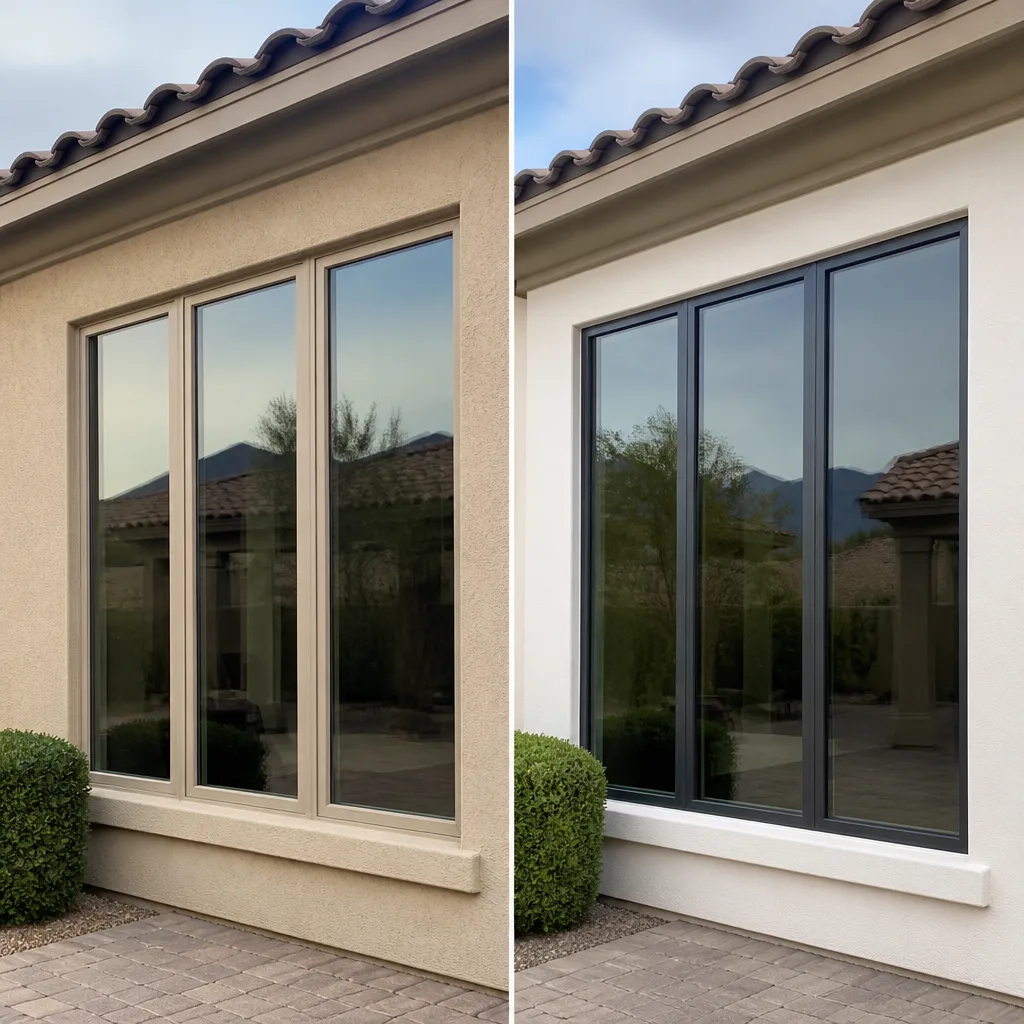
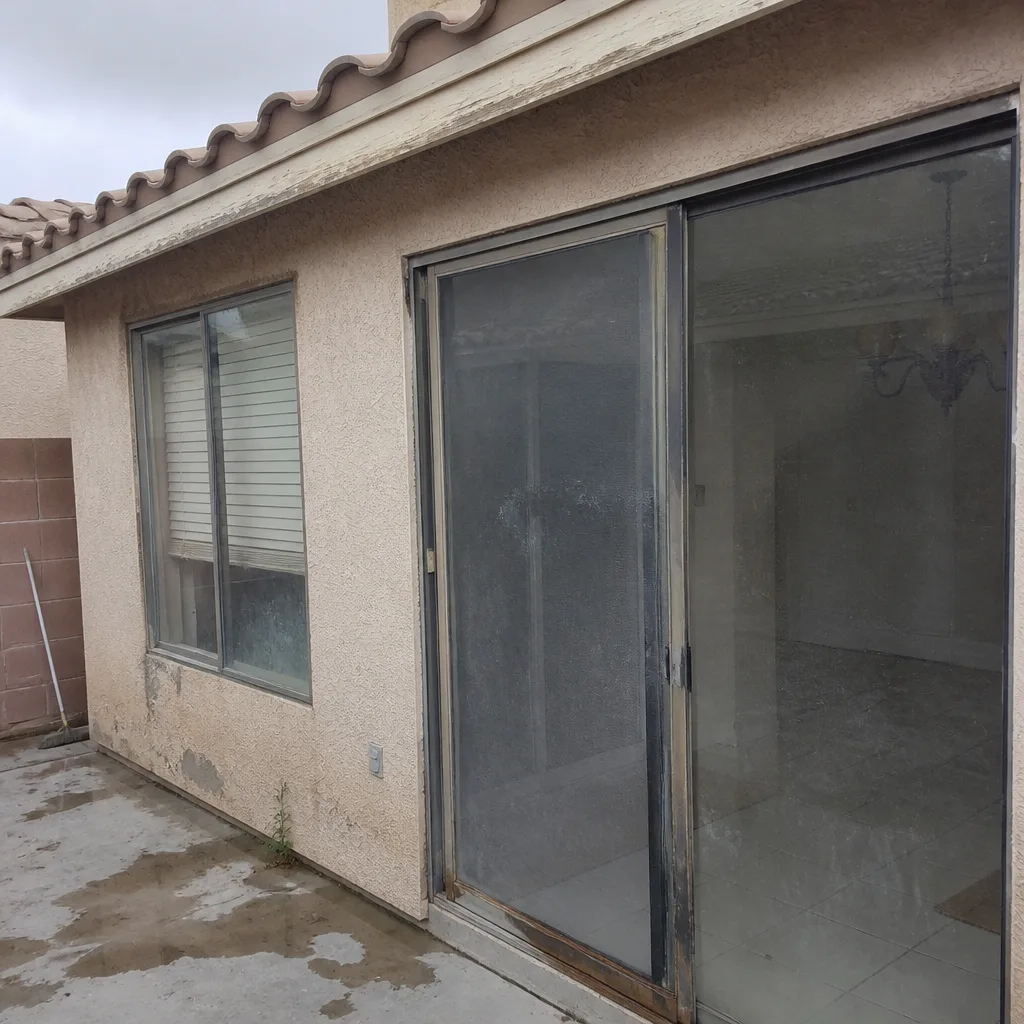 Before
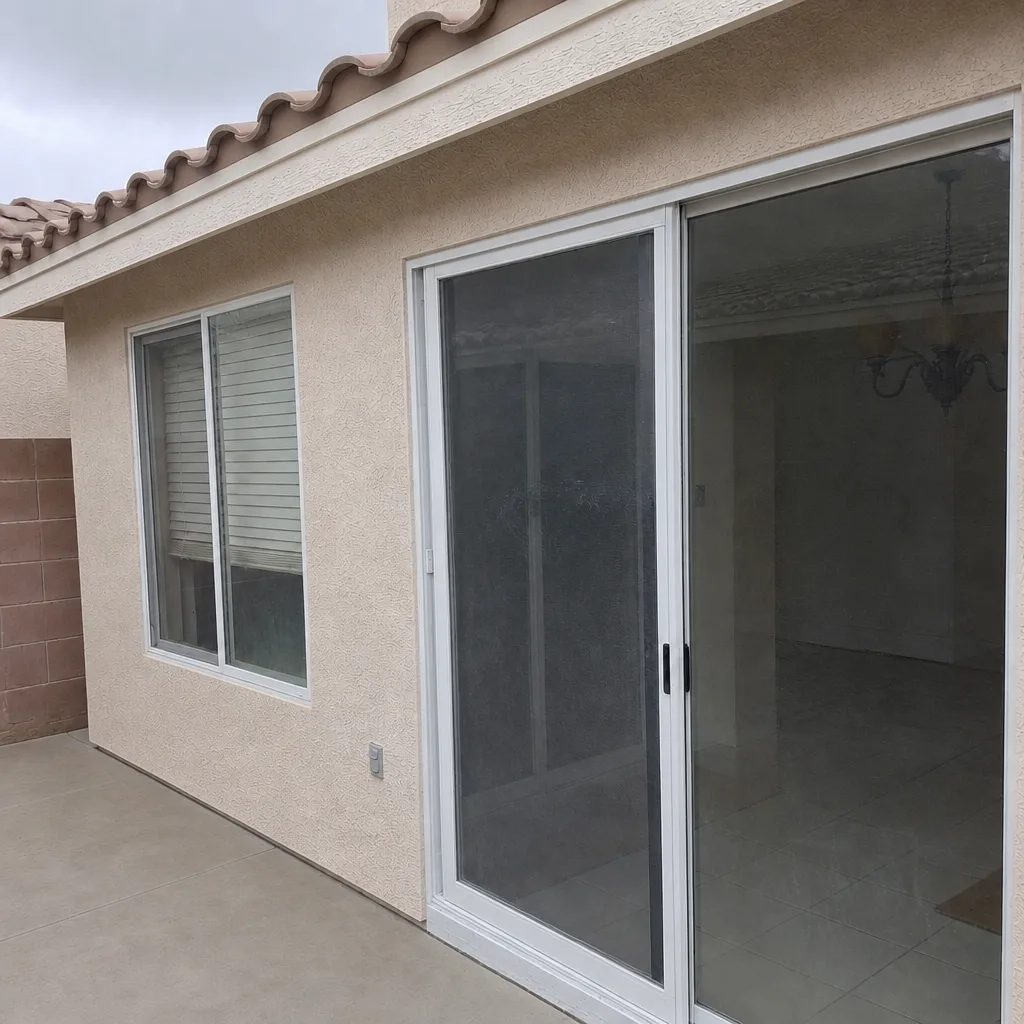 After
Table of Contents
- Fog Between the Panes vs. Sweating at the Frame
- The Exterior Inspection Checklist
- Interior Staining Patterns That Point to a Failed Flashing Pan
- Detecting an Out-of-Plumb Window Without a Level
- The Energy Bill Signal You’re Probably Misreading
- What to Document Before You Contact Your Installer
- Common Mistakes to Avoid
- When to Call a Professional
Fog Between the Panes vs. Sweating at the Frame

Learn this distinction and you save yourself a wasted service call. A double- or triple-pane window is an insulated glass unit, or IGU, meaning two or more panes bonded to a sealed spacer. When the seal at that spacer breaks, moisture enters the cavity and condenses on the interior faces of the glass. That’s a product failure. The IGU gets replaced, and the warranty usually covers it if the unit is still in its coverage window.
Sweating at the frame is a different animal entirely. When condensation forms on the interior face of the vinyl, wood, or aluminum frame and pools at the perimeter, you’re looking at a thermal or air-seal problem. Either the unit was installed with an inadequate shim and foam package, or the frame itself is not thermally broken the way its spec required. That’s the installation talking.
- Fog in the cavity, no other symptom: failed IGU seal. Product issue. Call the manufacturer warranty holder.
- Moisture on the frame interior, pooling near the sill: perimeter air seal or thermal bridging. Installation issue. Call the installer.
- Both at once: document everything. Two failures can coexist, and the installer’s photo record from the day of install is your best evidence.
In Summerlin, where July surface temperatures on a west-facing wall routinely push past 150°F, we see perimeter condensation complaints spike in the two weeks after the first real heat wave of the season. That’s the climate loading the perimeter seal, not the glass. A correct install of a properly shimmed unit handles that load without complaint. If you want to understand what a correct install looks like before comparing quotes, our window installation in Summerlin page lays out the measured survey and installation process step by step.
The Exterior Inspection Checklist
The exterior tells the truth faster than the interior. Get a ladder – safely, with someone spotting you – and look at the perimeter of every window on the house. What you’re checking is the sealant profile: the bead of caulk where the window frame meets the wall. A correct sealant joint is continuous, adhered on both sides, and tooled so it forms a slight concave curve that sheds water. An incorrect one is a red flag you can spot from six feet away.
- Look for gaps. A properly sealed window has unbroken caulk at every perimeter edge. If you can put a fingernail under the bead, it has already failed.
- Check the adhesive profile. The bead should be adhered to both the frame and the wall surface. If it’s stuck to one and hanging off the other, it wasn’t tooled correctly and will peel within a season.
- Inspect the weep holes. Every window has small slots at the bottom of the sill that drain water. If they’re caulked over or blocked, water back-feeds into the wall cavity. This is one of the most common mistakes we find during a window replacement in Summerlin.
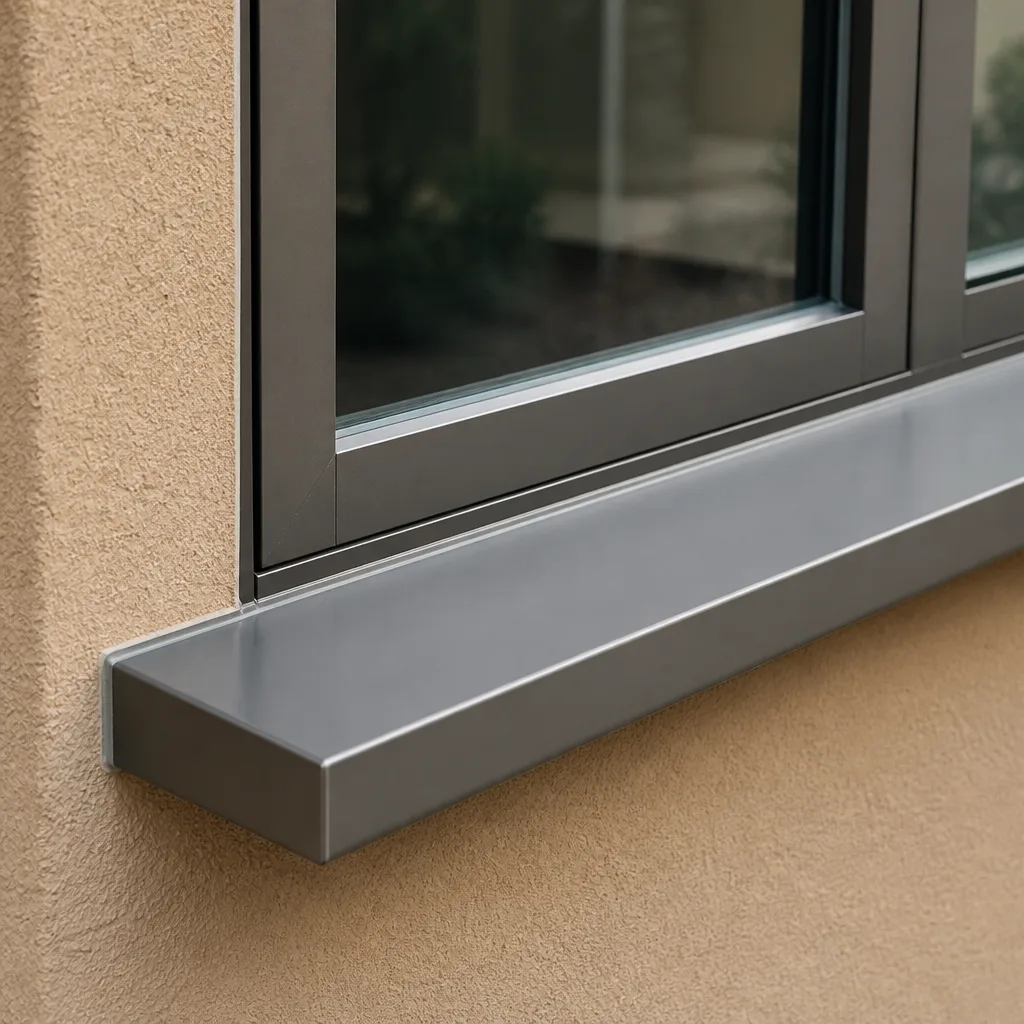
- Look at the sill slope. The exterior sill should have a positive slope away from the wall. A flat or reverse-sloped sill traps water against the sealant and starts the failure clock immediately.
- Check the flashing at the top. There should be a flashed head detail that laps over the window. If you see the sealant bead directly against stucco with no flashing behind it, the install skipped a critical step.
Summerlin’s stucco construction adds a wrinkle here. Stucco requires a proper weep-screed detail and a sealant joint that accommodates thermal movement. A window installed flush to bare stucco with no backer rod will crack at the first seasonal swing. Ask what your installer specifies for the stucco transition, and don’t accept “we caulk it” as the answer.
Interior Staining Patterns That Point to a Failed Flashing Pan
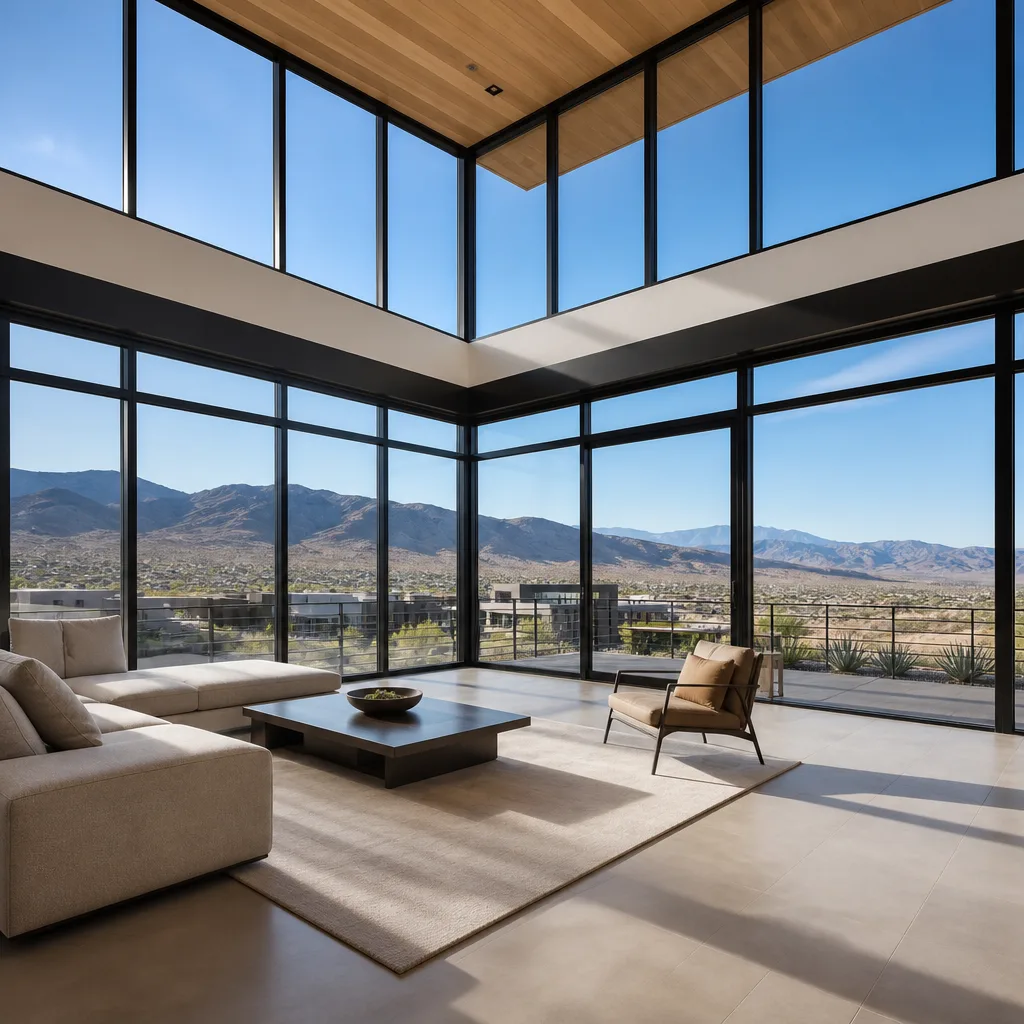
Interior water staining is the symptom most homeowners catch late. By the time a stain is visible, water has been traveling behind the drywall for weeks or months. The good news is that the pattern tells you where it entered and, usually, whether it’s an installation defect. Here is what to look for and photograph.
- Staining at the bottom corners of a window opening points to water running down the back of the wall sheathing and pooling at the corners, typical of a missing or reverse-lapped flashing pan at the sill.
- A stain that forms at the top of the trim and runs down points to a failed head flashing or a missing drip edge above the window.
- Mottled discoloration on the drywall around the sill is water pooling in the wall cavity, usually from the sill pan not draining or the weep holes being blocked.
- A stain that appears only during or after heavy rain and dries out is a flashing failure above. A stain that persists and grows after the rain stops is a pan failure below.
- Swollen baseboard directly beneath a window opening means water has reached floor level. This is the point to stop monitoring and start documenting.
The flashing pan is the piece every homeowner should understand: it’s a sill pan that sits behind the window’s exterior sill and catches any water that gets past the sealant, directing it back out through the weep holes. If the install skipped the pan, or installed it sloping the wrong way, that water goes inward instead of outward. In Summerlin, where monsoon season dumps heavy short-burst rain on a dry wall, that failure shows up fast. Photograph every stain with a tape measure in frame so the extent is documented, and note the date. Preserving the pattern matters, which is exactly why our crews leave a documented photo record on every job in Summerlin and hand you the original measured survey to keep.
Detecting an Out-of-Plumb Window Without a Level
You don’t need a spirit level to know a window was installed out of square. The window tells you every day. An out-of-plumb or out-of-square install loads the sash against the frame, and that shows up in a small set of unmistakable operational symptoms.
The first is a binding sash. Open and close each window slowly. A correctly installed window operates with even, low resistance through its full travel. If a sash binds at one point and frees up elsewhere, the frame is likely racked. The second is a latch or lock that won’t close flush. Run your finger along the meeting rail where the two sashes close. If the two halves sit even in one corner and gap in another, the frame is out of square. The third is the “widening gap” test: measure the gap between the sash and the jamb at all four corners of the opening. If the gaps are not equal on opposite sides, the window was set out of plumb.
You can run a fifth check with the tools you already have. A 4-foot level is the correct tool, but a smartphone with an angle app held against the frame face will get you close enough to see a problem. If the reading is off by more than a quarter degree across the height of the frame, it’s worth asking the installer to check it with a real level. In Summerlin, we routinely find single windows set out-of-plumb in homes where the rest of the house is square, which points to the install rather than the structure. If your goal is a clean baseline before a reinstall, our door installation in Summerlin page covers the same square-and-plumb checks applied to door openings.
The Energy Bill Signal You’re Probably Misreading
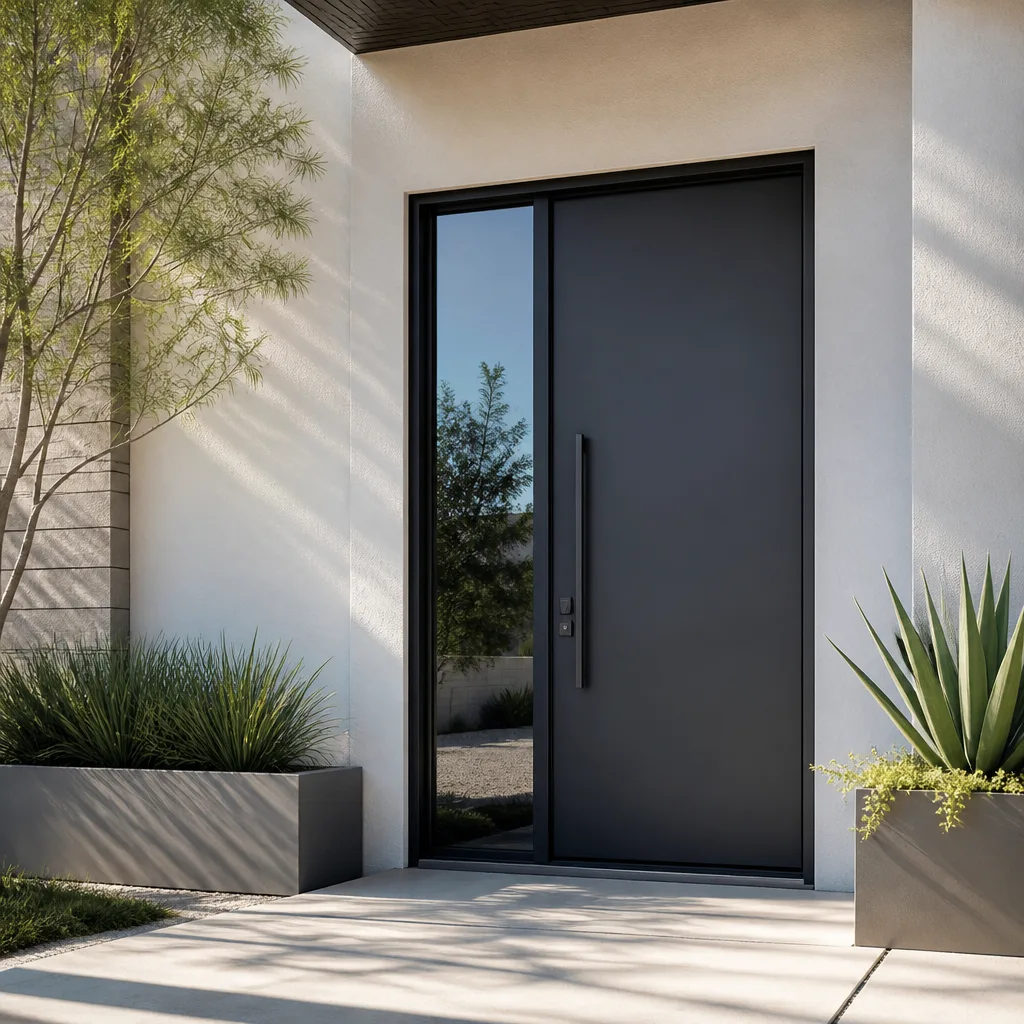
When a cooling bill climbs, the first call is usually to the HVAC company. But there’s a specific pattern that points to glass rather than mechanicals: a summer cooling cost increase that concentrates in rooms with a single wall of west- or south-facing glass, while the rest of the house performs normally. If your HVAC tech has already confirmed the system is running correctly and your ducts are intact, the next thing to examine is the glass specification.
Two numbers on the window label explain everything. U-factor measures how fast heat flows through the glass; lower is better. SHGC, or solar heat gain coefficient, measures how much solar heat the glass lets through; lower is better in a cooling climate. In Summerlin, where cooling load dominates, an install that used a general-purpose or northern-climate product can produce exactly this pattern: the room feels warm to the touch even with the AC running, and the bill climbs quarter over quarter.
- Check the label. Every window has a temporary label with U-factor, SHGC, and the manufacturer’s model number. Photograph it before it falls off. It’s the single best record you’ll have.
- Compare rooms. If west-facing rooms climb and east-facing ones don’t, you’re looking at SHGC, not HVAC.
- Ask about specification, not brand. On a reinstall, the question is not “which brand” but “which glass build for this opening’s exposure.” We specify by performance tier, not by what’s on the shelf.
This is where product lines matter in a way most homeowners don’t expect. An impact-rated unit from a line like CGI or ES Windows carries a different glass package than an energy-first unit from ECO Window Systems or CWS. Summerlin is a cooling-dominated load, but it’s also a windborne-debris region, so the specification has to satisfy both. That’s a decision made at the measured-survey stage, not at the loading dock.
What to Document Before You Contact Your Installer
The single biggest reason workmanship claims get denied is the absence of a documented record. The second biggest is that the homeowner altered the window before anyone inspected it. Here’s what to capture before you make the call.
- Photograph every symptom, wide and close. Wide shots show the room; close-ups show the stain, the gap, the blocked weep hole. Include a tape measure or a coin for scale.
- Date every photo. Timestamp metadata is your evidence. Note the weather on each date.
- Keep the original paperwork. The written quote, the product specification sheet, any permit paperwork, and the manufacturer’s warranty. If your installer provided one, the measured survey and photo record from the day of install are your strongest evidence.
- Note the operational symptoms in plain language. “Sash binds at the lower left corner, gap of 3/16 inch at the top right” beats “window feels wrong” every time.
- Leave it alone. Don’t caulk, don’t adjust latches, don’t remove trim. Any of these can be used to deny the claim.
Now the part most homeowners don’t know: workmanship warranties on installation typically run one to ten years, depending on what’s written into the contract. Manufacturer warranties on the glass and frame run separately. The most common triggers for a denial are missing paperwork, alteration of the window, an expired labor window, or an exclusion for impact damage or improper maintenance. Read the warranty with a highlighter before you call, and be ready to produce the date of install. A company operating under the Haven Standard’s 365-Day Done Right Promise is defined by the document it hands you, not by a verbal assurance, so ask for the warranty in writing at the time of install, not after the problem shows up.
Common Mistakes to Avoid
- Blaming the glass for a frame problem. Fogging inside the panes is a glass seal; condensation on the frame is an install. Diagnosing the wrong component sends the claim to the wrong party and wastes months.
- Caulking over the symptom before you photograph. A bead of caulk hides the failure long enough to deny the workmanship claim. Document first, then call.
- Skipping the weep holes at inspection. We find blocked weep holes on a regular basis in Summerlin reinstall assessments, and they’re often the whole cause of interior sill staining.
- Accepting a quote without a measured survey. If the number isn’t attached to measurements, it will drift once the crew opens the wall. The quote and the survey should be the same document.
- Choosing a window by brand instead of by specification. The right line for a west-facing Summerlin opening is not the same line for a shaded north wall. Specify by exposure and load.
- Assuming a stucco home can take a flush window install. Summerlin’s stucco construction requires the correct transition detail. A flush install with a caulk bead will crack at the first seasonal swing.
- Letting the product label fall off. The U-factor and SHGC label is your cheapest future diagnostic tool. Photograph it the day the window goes in.
When to Call a Professional
Call a professional if you see active water staining that grows after rain stops, a flashing pan that’s clearly wrong from the exterior, more than one out-of-plumb window, or a summer cooling bill climbing in one room with confirmed glass exposure. Call sooner if you see baseboard swelling beneath a window. The failure modes on this list all share a trait: they get worse, and the repair scope widens with each passing season. A trained technician with a level, a moisture meter, and a thermal camera can pinpoint the failure in a single site visit, where the homeowner is guessing. Sightline Windows & Doors Summerlin offers free estimates in Summerlin. Our technicians have up to 14 years of experience, all are background-checked and uniformed with license numbers documented before they arrive, and we’ll review any competitor’s written estimate under our free second-opinion policy. Call (844) 560-5201 to schedule your free estimate.
Frequently Asked Questions
The most common installation-specific sign is water staining on interior drywall near the bottom corners of the window opening, which points to a failed flashing pan or blocked weep holes. Fogging between the panes is a different issue entirely (a failed IGU seal, product-side), so look at the frame first. If you see staining and you’re in Summerlin, call (844) 560-5201 for an exact quote on an inspection. Estimates are free.
Yes. A binding sash, a latch that won’t close flush, and gaps that widen at one corner are all operational symptoms of an out-of-plumb install. Measure the gap between sash and jamb at all four corners; unequal opposite-side gaps confirm the diagnosis. For an exact assessment, call (844) 560-5201.
Interior frame sweating in Summerlin is usually a perimeter air-seal or thermal bridging issue, not a glass problem. The extreme temperature swing between a conditioned interior and a 150°F-plus exposed frame drives condensation onto any perimeter that wasn’t correctly shimmed and foamed. It’s an installation symptom and often resolves with a perimeter reseal. Call (844) 560-5201 for an exact quote.
A diagnostic inspection is typically included as part of a free estimate. If the scope expands into a reinstall, expect a written line-item quote tied to a measured survey, and expect the quote to be the same document as the survey. Sightline’s written price is delivered before any work starts. Call (844) 560-5201 – estimates are free.
Installation workmanship warranties typically run one to ten years depending on the contract, and they may not reset when a repair is performed. Manufacturer warranties on the sealed glass are separate and usually longer. Read your warranty before filing a claim, and keep the photo record from the day of install. Call (844) 560-5201 to review any estimate before you sign.
A written price tied to a measured survey should not change, and that’s the whole discipline behind the Haven Standard: the measurement and the quote are the same document. If a contractor wants to re-quote after opening the wall, ask for the survey the number was based on. Call (844) 560-5201 to schedule your free estimate.
The Bottom Line
Fogging between panes is a product issue; sweating at the frame, water staining below the sill, blocked weep holes, a binding sash, and a single-room summer cooling spike are installation issues. Each has a specific repair and a specific responsible party. The homeowner who can name the symptom correctly is the homeowner who gets the claim resolved. Before you call anyone, photograph everything, date it, and leave the window alone. Then ask for the written warranty and the survey that produced the number. In Summerlin, the climate will test the perimeter within a single season; a correct installation is the only thing that passes.
Contact
If any symptom in this guide looks familiar, the fastest way to know for sure is a site visit with a level, a moisture meter, and a thermal camera. We’ll bring a written price, a documented photo record, and a review of any competitor’s quote you’ve already received. Call (844) 560-5201 to schedule your free estimate.
Written by the team at Sightline Windows & Doors Summerlin.
Six Reasons Homeowners Choose Sightline Windows & Doors Summerlin
Laminated glass and reinforced frames hold up to wind-driven rain, hail and flying debris, so your openings stay sealed when the weather turns.
Low-E insulated impact glass from our manufacturer lines commonly cuts monthly cooling bills 20-30%.
Laminated impact glass shuts out up to 40% of outside noise - traffic, neighbors, weather.
Monitoring services run $30-90 a month. Laminated impact glass resists forced entry around the clock, with no subscription.
Tighter seals and insulated glass even out hot and cold rooms and stop the drafts at the frame.
A full impact package upgrades curb appeal, buyer confidence and appraised value in one project.
Other Sightline Windows & Doors Summerlin Services