Last updated November 17, 2026
New windows and doors improve comfort, cut energy bills and add long-term value to your home. Sightline Windows & Doors Summerlin pairs proven product lines with a local vetted installing partner for lasting performance - and a price put in writing.
Choose your installer
The unit is half the job - the install is the other half. Background-checked local installers measure, set, seal and insulate every opening, and they know the lines we quote inside and out.
Select the right products
Compare styles, materials and glass packages side by side until the fit is right for your rooms, your budget and your goals. The product-line comparison below is the place to start.
Prepare your home for install
Before install day we walk you through a short checklist - furniture pulled back, treatments down, a clear path to each opening - so install day is watch-it-happen, not scramble.
Compare the Lines We Quote
Every project is priced on the same lines, side by side - the price indicators below are relative, and your consultant shows exact numbers on your actual openings.
PGTThe line homeowners arrive naming - the most impact certifications in the industry$$$
- More impact certifications than any other line we quote
- WinGuard, EnergyVue and ClassicVue Max systems built for every wind zone
- 99% on-time delivery keeps your install date on the calendar
CGIThe heavyweight impact line$$$$$
- Large-missile impact ratings for the strictest wind zones
- Architectural-grade aluminum with commercial-depth frames
- The line we quote when protection is the whole point
CWSThe value pick$$
- Vinyl systems built to strict wind codes
- Strong energy packages at the friendliest price point
- The smart start for whole-home replacements on a budget
ESWSlim lines, big glass$$$$
- Narrow-sightline aluminum for modern elevations
- Oversized openings and floor-to-ceiling glass
- Impact-rated without the bunker look
ECOThe aluminum impact workhorse$$$
- Factory-built aluminum impact systems
- A strong price-to-protection ratio for coastal homes
- Proven lines with short lead times
Window Replacement Maintenance Schedule: What to Do and When
Most window warranties require documented maintenance to stay valid. The warranty language usually says “clean and inspect annually,” which sounds simple until you try to act on it. Which surfaces? Which cleaners? Which hardware points? A vinyl slider and an aluminum-clad casement don’t share a maintenance calendar, and treating them the same is how homeowners end up voiding a finish warranty without realizing it. What follows is a schedule built from the material spec up, with tasks precise enough to complete yourself. It’s written for Summerlin homeowners who want to protect a recent window replacement, and it separates what you can do from what genuinely needs a trained hand.
Quick Answer
Window maintenance intervals are set by frame material, not by season. Vinyl and fiberglass frames need cleaning and hardware checks every six months, aluminum-clad frames need annual finish inspection plus semi-annual hardware lubrication, and wood-clad frames need the same plus a yearly check of every sealed joint. Every window, regardless of material, needs weep holes cleared before and after Summerlin’s monsoon season and sealant inspected once a year.
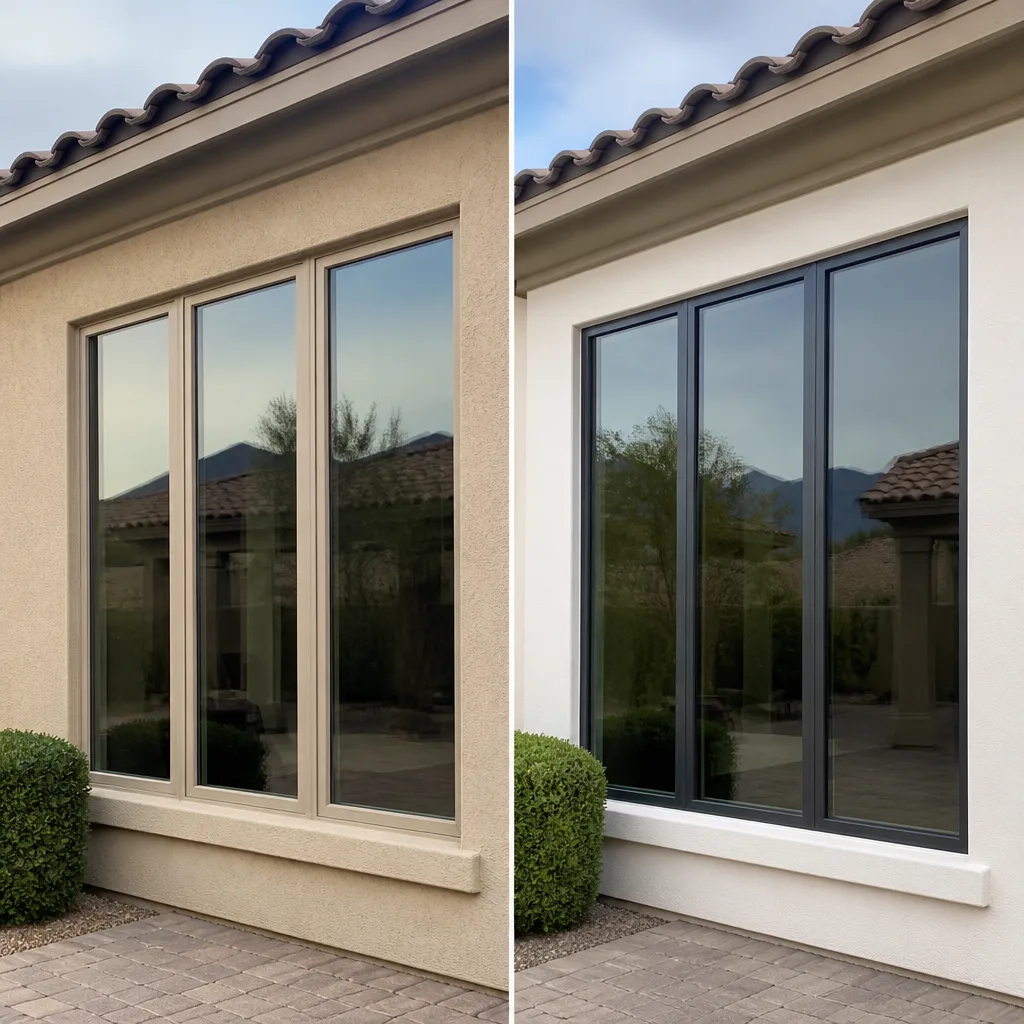
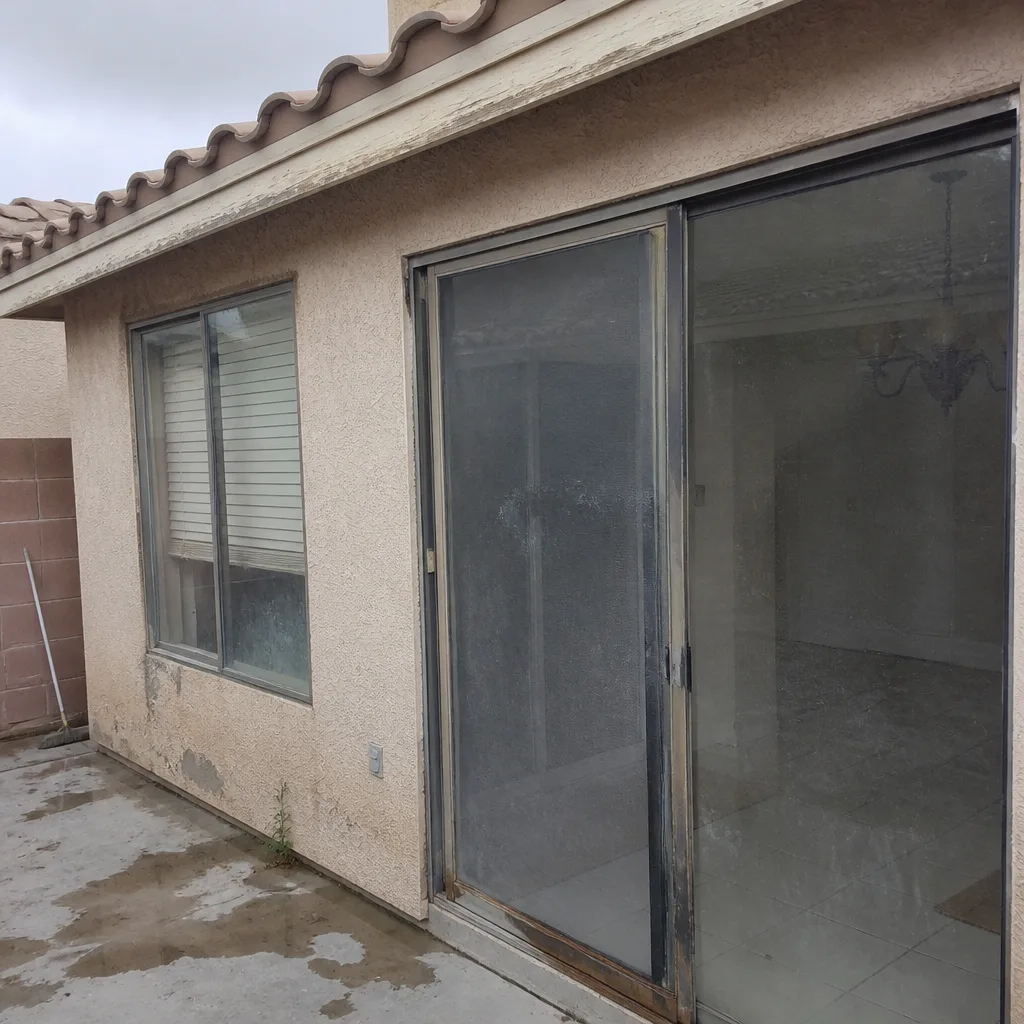 Before
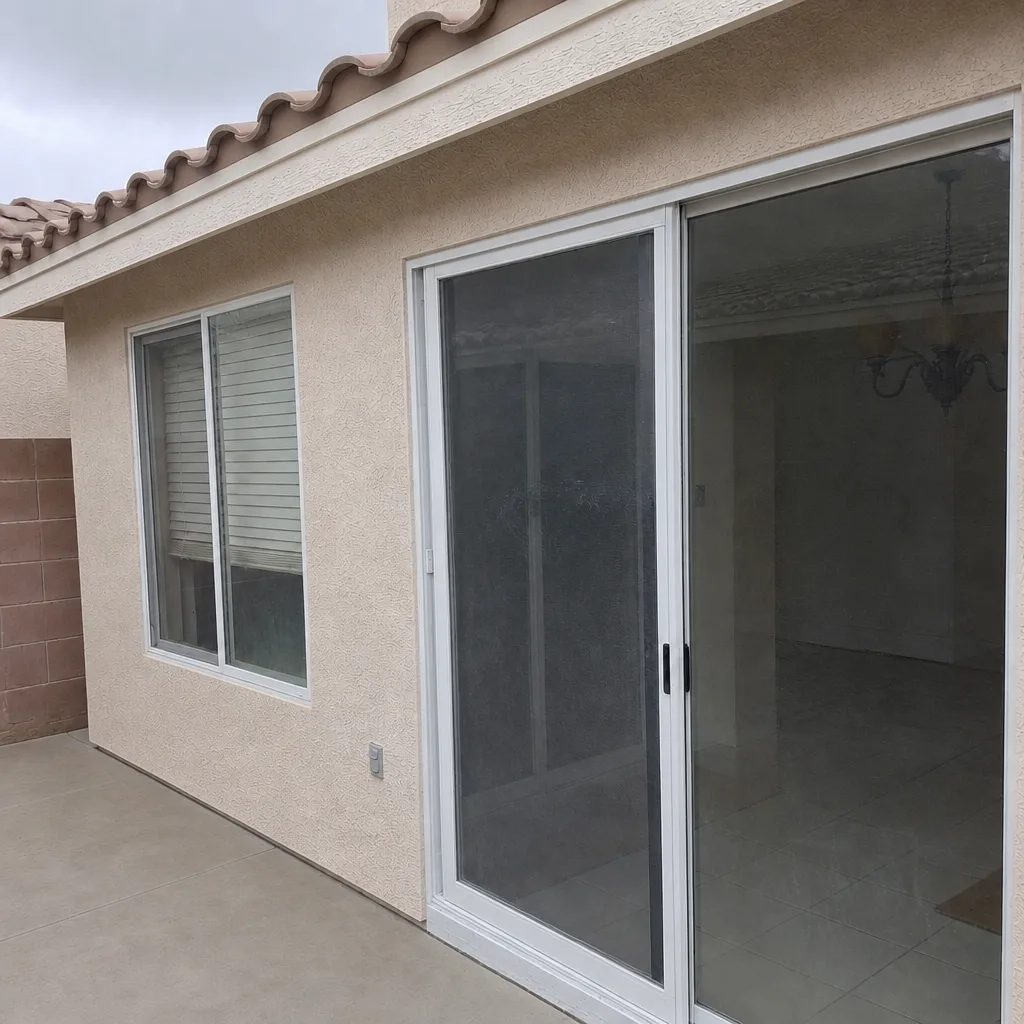 After
Table of Contents
- Why Your Maintenance Calendar Starts With the Frame Material
- Material-Specific Cleaning Intervals and Approved Cleaners
- Weep Hole Maintenance in Summerlin’s Monsoon Climate
- Hardware Lubrication by Component Type
- Sealant Inspection: Hairline Cracking vs. Full Separation
- Building a Maintenance Log That Works as Warranty Evidence
- The Seasonal Checklist, Condensed
- Common Mistakes to Avoid
- When to Call a Professional
- Frequently Asked Questions
Why Your Maintenance Calendar Starts With the Frame Material

Two windows installed on the same day, in the same Summerlin house, can carry two different maintenance schedules. A vinyl frame from CGI and an aluminum-clad frame from PGT look similar from across the room, but they age differently. Vinyl is a solid extrusion with a printed or co-extruded finish; aluminum-clad is a wood core wrapped in a painted aluminum skin. The vinyl can be cleaned with a mild solvent without harm. The aluminum skin cannot, because aggressive cleaners strip the factory finish and that’s exactly the kind of damage a finish warranty excludes.
In our experience across thousands of Summerlin installations, the failures we see are rarely structural. They’re finish failures and hardware failures, and both trace back to a maintenance routine that ignored the material. Here’s how the schedules split:
- Vinyl frames (CGI, CWS, ECO Window Systems): Clean every six months. Lubricate hardware every six months. Inspect sealant annually.
- Fiberglass frames: Clean every six months. Lubricate hardware every six months. Inspect sealant annually. Fiberglass holds a finish better than vinyl but still dislikes abrasive pads.
- Aluminum-clad frames (PGT, ViewLux): Clean every six months with a pH-neutral product only. Inspect the painted skin annually for chalking or nicks. Lubricate hardware every six months.
- Wood-clad frames (Therma-Tru entry systems, wood-interior units): Everything above, plus a yearly check of every sealed joint on the wood face and a finish inspection on any exposed wood.
If you don’t know what’s in your walls, the frame’s interior surface usually tells you. Pull the manufacturer label from the head jamb or check the documentation from your install. When we replace windows, the measured survey and the written scope both name the product line, so you keep a record of exactly what material you’re maintaining. That document is the starting point for everything below. You can read more about how we handle the process on our Window Replacement in Summerlin page.
Material-Specific Cleaning Intervals and Approved Cleaners
Cleaning is where most warranty claims die. The wrong product on the wrong finish is a self-inflicted wound, and manufacturers check. Here’s what to use on each frame type, and what to keep away from it.
Vinyl frames. A mild dish soap solution in warm water, applied with a soft cloth or sponge, is all a vinyl extrusion needs. Rinse with clean water and dry. Avoid acetone, lacquer thinner, and any solvent-based cleaner; they soften the surface and can dull the finish permanently. Abrasive pads leave micro-scratches that trap dust. Clean twice a year, and immediately after any visible dust buildup from nearby construction or Summerlin’s spring winds.
Aluminum-clad frames. pH-neutral car wash soap is the safest choice. The painted aluminum skin is durable but not indestructible. Acidic cleaners (some bathroom products) and alkaline degreasers (some kitchen products) both attack the finish. Never use steel wool. Inspect the skin after each cleaning; a small nick that exposes bare aluminum will oxidize if left alone. Touch-up paint from the manufacturer closes it.
Fiberglass frames. Same mild soap solution as vinyl. Fiberglass tolerates a slightly wider range of cleaners than vinyl, but stick to mild and rinse well. Avoid abrasive pads for the same reason.
Wood-clad frames. Damp cloth only on the wood face. No soaking, no spray bottles aimed at joints. The factory finish on clad wood is protective; if you see bare wood, that’s a refinish job, not a cleaning task.
Glass, all types. A standard ammonia-free glass cleaner or soapy water works. Avoid razor blades on any glass with a low-E coating; the coating sits on the surface and a blade will score it. If you’re not sure whether your glass has a coating, check your product documentation; PGT and ViewLux both print coating details on the label.
Weep Hole Maintenance in Summerlin’s Monsoon Climate

Weep holes are the small openings at the bottom of a window frame that let water drain out of the sill pan. When they’re clear, water that gets past the glass or the exterior seal exits the frame and runs down the exterior wall. When they’re blocked, that water has nowhere to go but inward, into the wall assembly and the sill pan.
Summerlin’s monsoon pattern makes this urgent in a way that a wetter, gentler climate doesn’t. A single July or August storm can drop more rain in an hour than the area sees in a typical month. If your weep holes are clogged with dust, pollen, or debris from spring landscaping, that hour of water sits in the sill pan. One blocked monsoon season is often enough to show it: staining on the interior sill, soft drywall below the window, or efflorescence on the exterior wall under the opening. By the time you see any of those, the sill pan has been holding water for months.
Clear weep holes on this schedule:
- Before monsoon season (late June). Walk every window on the exterior face and check each weep hole for visible blockage.
- After monsoon season (late September). Clear again; the storms deposit grit and debris that settles in the openings.
- After any exterior work. Stucco repair, painting, and landscaping all produce debris that finds weep holes.
To clear them, use a stiff-bristle brush, a pipe cleaner, or a toothpick. Never enlarge a weep hole or poke a screwdriver through it; the opening is sized to drain at a specific rate. To verify drainage, pour a cup of water into the sill track and watch that it exits the exterior weep holes within a few seconds. If water pools in the track or exits slowly, the hole is partially blocked or the internal drainage path is compromised. That’s a call-a-professional situation, not a repeat-and-hope situation.
Hardware Lubrication by Component Type
Window hardware almost never breaks because it’s cheap. It breaks because it runs dry. Metal-on-metal contact without lubrication wears faster, and in Summerlin’s summer heat, the thin factory lubricant on new hardware dries out within a couple of seasons. Lubricating on schedule is a fifteen-minute job that prevents a repair bill. The correct product for nearly every window component is a dry silicone spray or a PTFE (Teflon) spray; both attract less dust than oil and won’t gum up moving parts.
Component by component:
- Balance shoes and spiral balances (double-hung and single-hung). Lubricate every six months. Apply a short burst of silicone spray where the shoe meets the jamb channel; work the sash up and down a few times to distribute it. Wipe off excess.
- Tilt latches. Lubricate every six months. A drop of silicone on the latch mechanism and a light spray on the pivot pins. Check that the latch engages the jamb fully when the sash is tilted back into place.
- Crank operators (casement and awning). Lubricate every six months. Spray the crank arm threads and the operator’s visible gear housing. Open and close the window fully twice after applying.
- Hinges (casement, awning, and door-hinged products). Lubricate every six months. Spray each hinge pin. For doors, once a year is enough, but more often is harmless.
- Rollers and tracks (sliding windows and patio doors). Clean tracks first with a vacuum and damp cloth, then apply silicone spray lightly to the track surface. Never use grease or oil; both attract grit and cause roller failure.
If a component is already dry and stiff, the first lubrication pass may take two applications a week apart. If it’s stiff after that, the hardware has worn past what lubrication can rescue. That’s when you call. Our technicians have up to 14 years of experience with these components, and the first thing we check on a stiff window is whether the hardware has been run dry. You can see the range of products we install on our Window Installation in Summerlin page.
Sealant Inspection: Hairline Cracking vs. Full Separation
Every window has exterior sealant around its perimeter, and that sealant is the first line of defense against water intrusion. It’s also a wear item. Summerlin’s UV load and the daily thermal swing break sealant down faster than most of the country, so a yearly inspection is not optional here. The good news is that resealing a window is cheap. Replacing a failed insulated glass unit (IGU) caused by water intrusion is not.
Here’s what you’re looking for, and what each finding means:
- Hairline cracking. Fine lines in the sealant surface, no gap between sealant and frame. This is normal aging. Clean it and monitor; plan to reseal within the next year.
- Surface chalking or a dull, powdery finish. The sealant is losing flexibility. Reseal before winter.
- Full separation. A visible gap between the sealant and the frame, or the sealant pulling away from the stucco. Water is getting in already. Reseal now, and check the interior for staining.
- Bubbling or blistering. Moisture is trapped under the sealant. Cut it out and reseal fully.
- Mold or mildew on the sealant. Reseal; the sealant has lost its water resistance.
On cost: resealing a single window with a quality exterior sealant is a modest dollar job, typically in the low hundreds when done as part of a routine maintenance visit. A failed IGU, by contrast, is a glass replacement order, and in the Summerlin market that runs into the several-hundred-dollar range per unit before freight and labor, and the interior water damage that caused it can add more. Reseal annually and you almost never pay for that IGU. The math is not subtle.
Inspect sealant every year in late spring, before the summer heat sets it. Run a fingertip along the exterior perimeter of each window; your finger finds separation faster than your eye does. We include a sealant check in our post-install documentation, but once the job is done, the yearly inspection is yours to own.
Building a Maintenance Log That Works as Warranty Evidence
If a warranty claim ever comes up, the manufacturer will ask what maintenance was performed and when. A shoebox of receipts won’t answer that. A maintenance log will. It takes five minutes per task and it’s the difference between a claim approved and a claim denied on documentation grounds.
Build the log like this:
- One page per window. Identify each window by location and product line (north bedroom, PGT casement; kitchen slider, CGI vinyl).
- Log each task with a date. Cleaning, lubrication, weep hole clearing, sealant inspection. Note the product used.
- Photograph the exterior perimeter of each window once a year and the sealant close-up if you see cracking. Photos are the strongest evidence a manufacturer can receive.
- Photograph any damage you find before you repair it, and photograph the repair after.
- Store the log both ways: paper in a home file, and a digital copy in cloud storage. A cloud copy survives a house fire; a paper file does not.
- Attach the original documentation from your installation: the measured survey, the written scope, and the product labels. When we replace windows, the customer keeps the measured survey, and it doubles as the starting page of the log.
If you’ve had a competitor’s quote and you’re weighing products, our Sightline Windows & Doors Summerlin home page explains the Haven Standard and what we hand over on every job. The documentation discipline is the same one that makes a log work.
The Seasonal Checklist, Condensed
Pulled into a single calendar, this is the schedule most Summerlin homeowners should run:
- Every six months (spring and fall): Clean frames with the approved cleaner for the material. Lubricate balance shoes, tilt latches, crank operators, hinges, and tracks.
- Late June: Clear all weep holes. Verify drainage with the water test.
- Late September: Clear all weep holes again after monsoon. Check interior sills for staining.
- Annually (May or June): Run a fingertip along the exterior sealant perimeter of every window. Photograph any cracking or separation.
- Annually (fall): Update the maintenance log. Recheck sealant after the summer heat.
- After any exterior work: Clear weep holes, inspect sealant, log the check.
Set calendar reminders for the June and September weep-hole checks. Those two dates carry most of the water-management value in this climate. The rest is straightforward.
Common Mistakes to Avoid
- Using the wrong cleaner on aluminum-clad frames. An acidic or alkaline product strips the painted finish, and that finish damage is typically excluded from the warranty. Stick to pH-neutral car wash soap.
- Ignoring weep holes through one monsoon. One blocked summer can saturate a sill pan enough to stain interior drywall. The fix is a toothpick; the failure is a repair.
- Oil instead of silicone on hardware. Oil attracts dust and grits up the balance channel. Dry silicone or PTFE spray is the right product, every time.
- Razor blades on low-E glass. The coating is on the surface. A blade scores it and the scratch is permanent. Use a soft cloth and glass cleaner only.
- Skipping the log. A documented maintenance record is a warranty claim’s best friend. A homeowner who cleaned every surface but wrote nothing down is at a documentation disadvantage.
- Caulking over a failed sealant without cleaning. Fresh sealant over old, contaminated sealant fails early and hides the underlying water issue. Remove the old bead fully before resealing.
- Assuming one schedule covers the whole house. A house with mixed product lines (say, CGI vinyl in one wing and PGT aluminum-clad in another) needs the more demanding schedule for each window, not the average.
When to Call a Professional

Most of this schedule is a homeowner job. A few items are not. Call a professional if you see interior staining on a sill or drywall near a window (water is entering somewhere the weep holes can’t drain), if a balance shoe or crank operator is stiff after a two-pass lubrication, if the glass has fogged between the panes (failed IGU, warranty territory), or if sealant separation has already allowed water to reach the wall assembly. Anything involving the glass itself, the balance mechanism under tension, or the sill pan’s internal drainage path is a trained-hand job. Attempting a glass or balance repair without the right tools and training risks injury and can void the warranty. Sightline Windows & Doors Summerlin offers free estimates in Summerlin; call (844) 560-5201 to schedule one, and bring a competitor’s written quote if you have one for a free second opinion.
Frequently Asked Questions
Twice a year for cleaning and hardware lubrication, with an annual sealant inspection and two weep-hole clears each year timed around monsoon season. Summerlin’s UV load and thermal swing wear sealant faster than milder climates, so the annual sealant check is the item you don’t skip. Call (844) 560-5201 for an exact quote on any repair you’re not comfortable doing yourself; estimates are free.
Abrasive cleaners, acidic or alkaline products on aluminum-clad frames, and steel wool or abrasive pads are the usual culprits. So is failing to document maintenance. Read your manufacturer’s finish warranty for the specific exclusions; PGT, CGI, and ViewLux all spell out which cleaners are approved. Call (844) 560-5201 if you’re unsure what product line you have; a free second opinion on any written estimate includes a product identification.
Because a single monsoon storm can drop more water in an hour than the area sees in a typical month, and a blocked weep hole forces that water into the sill pan and the wall. Clear them in late June and late September. If you see interior staining after a storm, call (844) 560-5201 for an estimate; that’s not a weep-hole-clearing job anymore.
Resealing a single window with a quality exterior sealant typically runs in the low hundreds done as part of a maintenance visit. Replacing a failed IGU caused by water intrusion runs into the several-hundred-dollar range per unit before interior water damage. The gap is the entire argument for annual sealant inspection. Call (844) 560-5201 for an exact quote on either.
Yes, for balance shoes, tilt latches, crank operators, hinges, and sliding tracks, using dry silicone or PTFE spray every six months. Anything involving glass, the balance mechanism under tension, or the sill pan’s internal drainage is a professional job. Call (844) 560-5201 if a component stays stiff after two lubrication passes.
You should keep one, because warranty claims are documentation claims. Log each task with a date, photograph the exterior perimeter annually, and store copies both in paper and in the cloud. Our Door Installation in Summerlin page describes the documentation we hand over on every job; the same discipline applies to the log you keep after.
The Bottom Line
The maintenance schedule for a replacement window is set by its frame material, not by the season. Vinyl and fiberglass need six-month cleaning and hardware lubrication plus an annual sealant check. Aluminum-clad frames need the same but with pH-neutral cleaners only. Wood-clad frames add a yearly wood-face inspection. Everyone clears weep holes twice a year around Summerlin’s monsoon, and everyone runs a fingertip along the sealant perimeter in late spring. Keep a dated log with annual photos and you’ll have the evidence a warranty claim needs. The rest is a calendar reminder and fifteen minutes twice a year.
When something falls outside the homeowner schedule, call (844) 560-5201 for a free estimate. Sightline Windows & Doors Summerlin writes the price before any work starts, documents every visit with a photo record, and backs the work with the 365-Day Done Right Promise. Bring a competitor’s written quote if you want a free second opinion. Live phone coverage answers around the clock.
Written by the team at Sightline Windows & Doors Summerlin.
Six Reasons Homeowners Choose Sightline Windows & Doors Summerlin
Laminated glass and reinforced frames hold up to wind-driven rain, hail and flying debris, so your openings stay sealed when the weather turns.
Low-E insulated impact glass from our manufacturer lines commonly cuts monthly cooling bills 20-30%.
Laminated impact glass shuts out up to 40% of outside noise - traffic, neighbors, weather.
Monitoring services run $30-90 a month. Laminated impact glass resists forced entry around the clock, with no subscription.
Tighter seals and insulated glass even out hot and cold rooms and stop the drafts at the frame.
A full impact package upgrades curb appeal, buyer confidence and appraised value in one project.
Other Sightline Windows & Doors Summerlin Services