Last updated November 17, 2026
New windows and doors improve comfort, cut energy bills and add long-term value to your home. Sightline Windows & Doors Summerlin pairs proven product lines with a local vetted installing partner for lasting performance - and a price put in writing.
Choose your installer
The unit is half the job - the install is the other half. Background-checked local installers measure, set, seal and insulate every opening, and they know the lines we quote inside and out.
Select the right products
Compare styles, materials and glass packages side by side until the fit is right for your rooms, your budget and your goals. The product-line comparison below is the place to start.
Prepare your home for install
Before install day we walk you through a short checklist - furniture pulled back, treatments down, a clear path to each opening - so install day is watch-it-happen, not scramble.
Compare the Lines We Quote
Every project is priced on the same lines, side by side - the price indicators below are relative, and your consultant shows exact numbers on your actual openings.
PGTThe line homeowners arrive naming - the most impact certifications in the industry$$$
- More impact certifications than any other line we quote
- WinGuard, EnergyVue and ClassicVue Max systems built for every wind zone
- 99% on-time delivery keeps your install date on the calendar
CGIThe heavyweight impact line$$$$$
- Large-missile impact ratings for the strictest wind zones
- Architectural-grade aluminum with commercial-depth frames
- The line we quote when protection is the whole point
CWSThe value pick$$
- Vinyl systems built to strict wind codes
- Strong energy packages at the friendliest price point
- The smart start for whole-home replacements on a budget
ESWSlim lines, big glass$$$$
- Narrow-sightline aluminum for modern elevations
- Oversized openings and floor-to-ceiling glass
- Impact-rated without the bunker look
ECOThe aluminum impact workhorse$$$
- Factory-built aluminum impact systems
- A strong price-to-protection ratio for coastal homes
- Proven lines with short lead times
Impact Windows & Doors Maintenance Schedule: What to Do and When
Impact glass is rated to take a 2×4 fired at 50 mph without breaking. The butyl tape sealing that glass to its frame is not, and in Summerlin it degrades faster under sustained 110°F ambient heat than any manufacturer’s national warranty language was written to account for. That gap between what the glass can survive and what the seal around it can survive is where most of our callback work comes from – not shattered panels, but gaskets, perimeter seals, and hardware that quietly gave out between inspections. This guide lays out a calendar-anchored maintenance schedule built for the Mojave climate: what to check in spring before the heat locks in, what to check in fall before the cold swings, and how to document both so a warranty or insurance claim has something to stand on.
Quick Answer
Inspect impact windows and doors twice a year, with the spring inspection completed before June 1 in Summerlin – that timing matters more than the inspection itself, because perimeter sealant and glazing gaskets cure and crack under summer heat, and catching degradation before the 110°F stretch prevents the water intrusion that shows up in monsoon season. Fall inspection covers hardware, locks, weep holes, and weatherstripping before the temperature swings of winter. Every inspection should be photographed and dated, and stored alongside your original installation record.
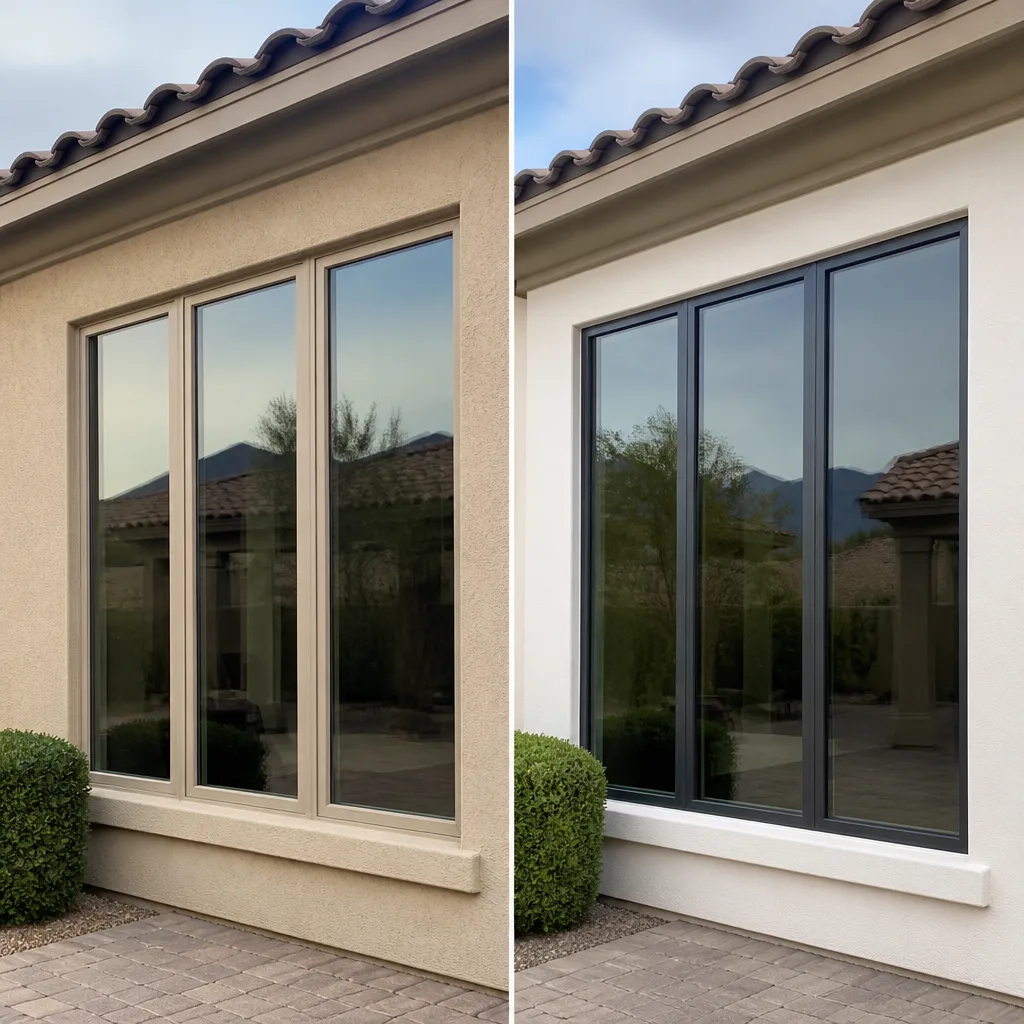
 Before
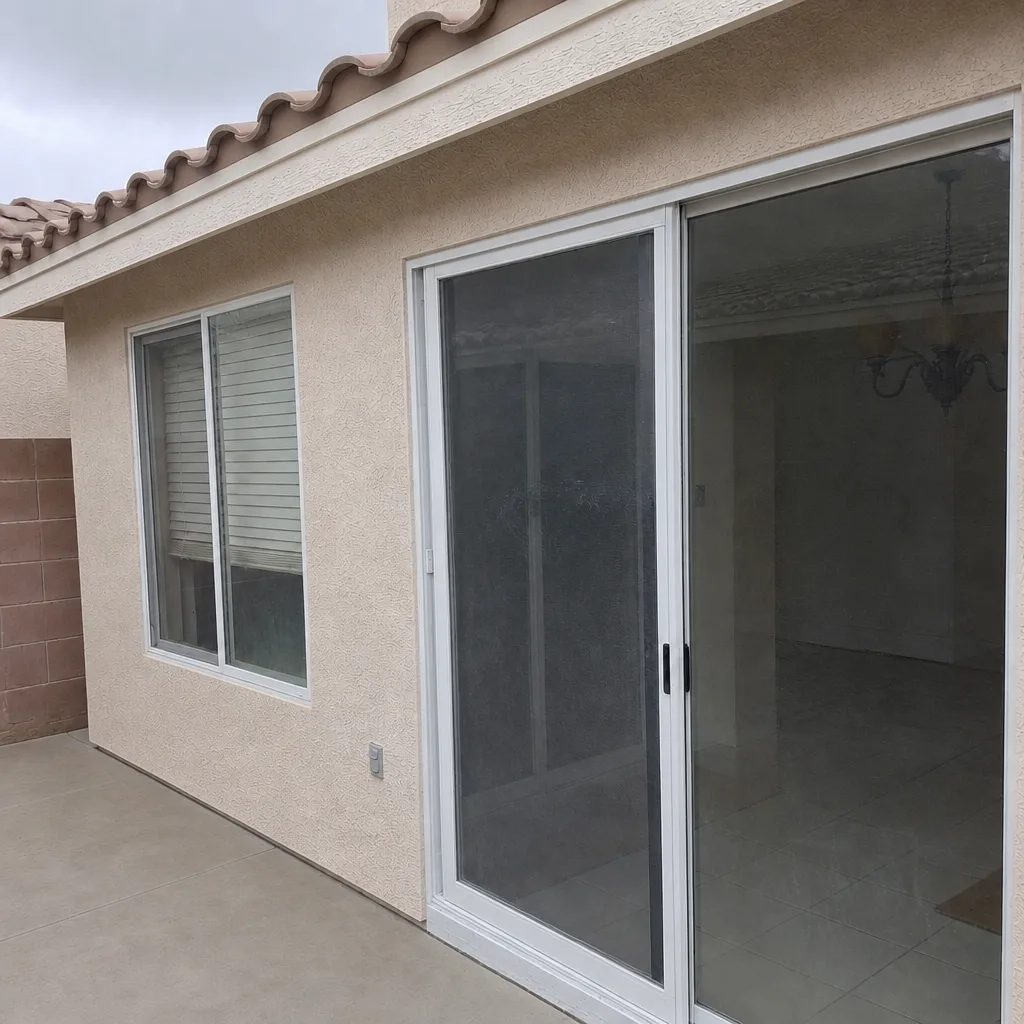 After
Table of Contents
- Why Summerlin’s Climate Breaks the Generic “Twice a Year” Rule
- The Spring Inspection: What to Do Before June
- The Fall Inspection: Hardware and Weatherstripping
- The Four Wear Points on Impact Assemblies
- The Condensation Shadow Test: Catching a Failed Seal From Inside
- What Preserves the Impact Rating and What Voids It
- Documenting Each Inspection: Building a Chain of Evidence
Why Summerlin’s Climate Breaks the Generic “Twice a Year” Rule

Most manufacturer maintenance guides say “inspect twice yearly” and leave it there. That advice was written for a national average, and Summerlin is not average. The UV index here crosses 11 on summer afternoons, and the daily swing between a shaded patio and direct west-facing sun on the same wall can run 40°F or more. Every one of those swings expands and contracts the frame, the glazing bead, and the sealant bead at slightly different rates. Multiply that by 200-plus days of clear sky per year and the cumulative stress on a perimeter seal is real.
What we’ve found in Summerlin callbacks is consistent: the failures that bring a homeowner to the phone aren’t glass failures. Impact glass from ECO Window Systems or PGT holds up. It’s the sealant that failed, or the glazing gasket that separated at a corner, or a multi-point lock that stopped engaging because the strike plate shifted a sixteenth of an inch after two summers of thermal movement. That’s why we time the primary inspection to the calendar rather than the mood. The window has to be checked before heat cycling starts, not during.
Spring here means March through May. Once June arrives, daytime temps sit above 100°F and surface temperatures on west-facing glass can run 30 to 40 degrees hotter than ambient. Sealant applied or inspected during that window cures wrong, cures fast, and gives you a false reading. The inspection has to happen earlier.
The Spring Inspection: What to Do Before June
The spring inspection is the important one. It happens in the window between the last cold snap and the first sustained heat, and it’s aimed at the seal. Here’s the sequence:
- Walk the exterior on a dry, overcast morning. Direct sun hides sealant cracking. Overcast light shows it.
- Run a fingertip along the perimeter sealant bead at each window and door. Look for gaps where the bead has pulled away from the frame, hairline cracks, or a chalky, crumbly texture. Any of those means the bead needs replacement before June.
- Check the glazing bead and gasket. The glazing bead is the trim holding the glass in the frame; the gasket is the rubber strip between glass and frame. Press gently along the bead. If it moves, if you can see daylight through a corner joint, or if the gasket has pulled out of its channel, that’s a documented finding, not a “keep an eye on it.”
- Clear weep holes. Weep holes are the small slots at the bottom of the frame that let water drain out. In Summerlin, they collect dust and fine grit fast. A blocked weep hole means water pools inside the frame during a monsoon downpour and finds the path of least resistance – usually into the wall.
- Photograph every finding with a date. Frame a shot that includes the window and the defect in the same image, and note the room and the compass orientation.
Our technicians have up to 14 years of experience with this sequence, and the two items we see most often skipped at the homeowner level are the glazing bead press-check and the weep hole cleaning. Both take under a minute per opening. Both are the direct cause of most water intrusion calls we get in July and August. If you’re planning a wider look at frame condition across a larger set of openings, the same inspection logic applies whether your glass came from our window replacement Summerlin work or another installer.
The Fall Inspection: Hardware and Weatherstripping

Fall is the hardware inspection. Glass doesn’t care much about the cold swing in Summerlin, but the mechanisms do. Multi-point locks, hinges, rollers on sliding doors, and the weatherstripping gaskets that seal against air all tighten or loosen with temperature. What felt crisp in August can feel stiff by November.
- Lubricate multi-point locks every 6 months, at the spring and fall inspections. Use a dry-film or PTFE lubricant on the lock mechanism and strike plates – not a wet oil, which attracts dust. In Summerlin’s dust load, wet oil becomes a grinding paste by the second season.
- Test every lock position. A multi-point lock should engage at all points with the handle throw. If the top or bottom point hangs or requires a shove, the door has shifted in its frame – a thermal movement issue, not a lock issue. Flag it for a technician rather than forcing the handle.
- Check weatherstripping compression. Close the door on a strip of paper. If the paper slides out with no resistance, the weatherstrip has lost its set. Repeat at the top, middle, and bottom of the door.
- Inspect sliding door tracks and rollers. Clear grit from the track, then test that the panel rolls without binding through the full opening.
- Photograph the hardware state and note any lock that didn’t engage smoothly.
The November-to-February stretch in Summerlin brings overnight lows that can drop into the 30s. That’s not extreme, but it’s the swing that exposes weak weatherstripping as a draft and exposes a shifted door as a lock that no longer seats.
The Four Wear Points on Impact Assemblies
Every impact window and door in Summerlin has four consistent wear points. Knowing what they are and what month to check each one turns a vague “maintain your windows” task into a checklist.
1. Weep holes. Cleared at every spring inspection, and rechecked after any monsoon event that produced visible water pooling on the sill. Blockage causes interior water damage more often than sealant failure does.
2. Glazing bead and gasket separation. Checked at spring inspection with a press-test. This is the wear point most likely to lose the impact certification without the homeowner noticing, because the glass itself is still intact and looks fine.
3. Perimeter sealant bead. Checked at spring; replaced if cracked, pulled, or chalky. In Summerlin, a UV-exposed bead on a west or south elevation may need replacement more frequently than a north elevation. Orient and note each window when you document.
4. Multi-point lock and hardware lubrication. Every 6 months, at spring and fall. Measured in months, not “periodically.” Lift-and-slide doors and any door with a multi-point lock are the priority.
If your openings were installed through our door installation Summerlin service, a copy of the measured survey that governed the install is on file with the written scope – and the wear points above are the same ones our technicians record during the final photo documentation on every job.
The Condensation Shadow Test: Catching a Failed Seal From Inside
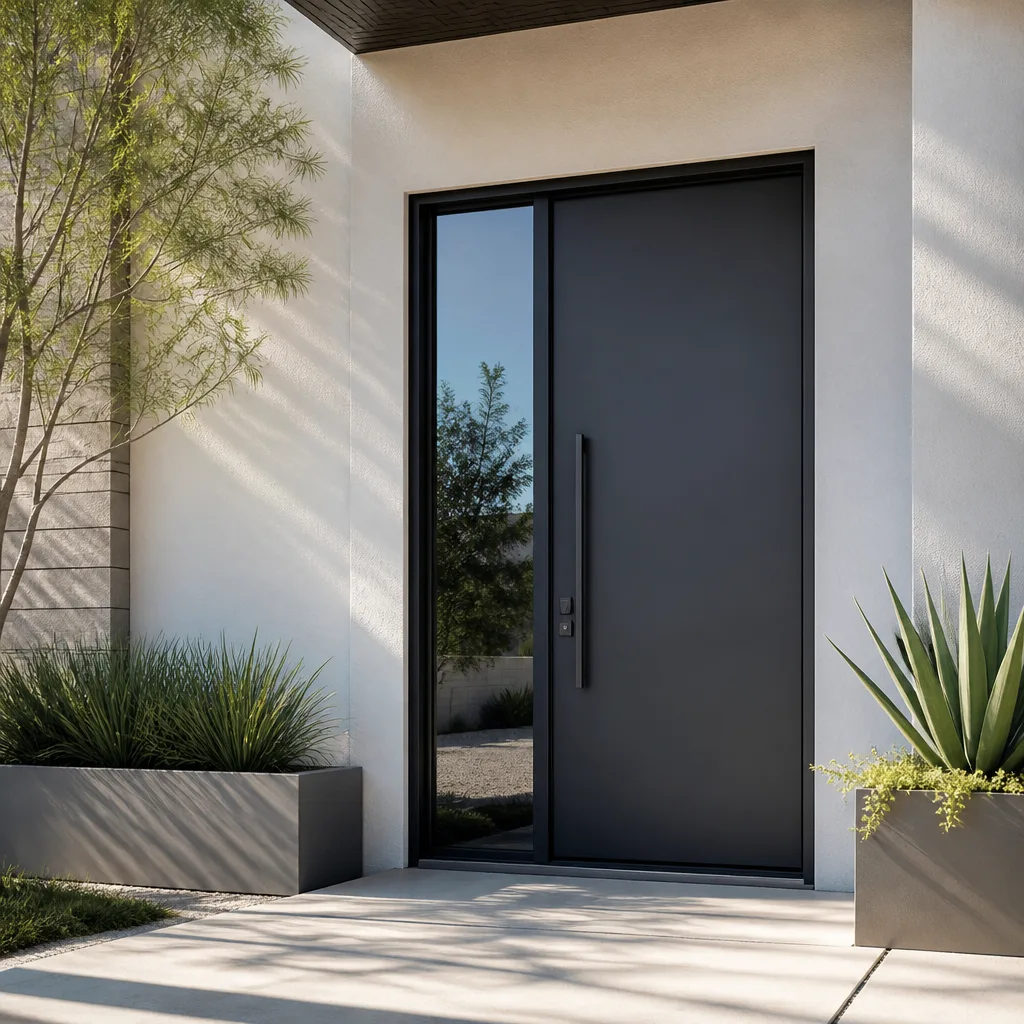
Perimeter seal failures don’t announce themselves. They show up as water inside the wall cavity weeks or months after the seal actually failed. There’s a test that surfaces the problem early, and it takes about two minutes per opening.
- Pick a morning when the outside temperature is at least 15°F cooler than inside – a winter morning or a summer morning before the sun hits the elevation. The temperature differential is what makes the test work.
- Stand inside, close to the glass, and look at the perimeter of the glass where it meets the frame. Use a flashlight angled along the edge, not straight at it.
- Look for a faint shadow or a narrow band of uneven condensation along one edge, or a slight fogging at a corner of the glass where the frame meets the gas fill. That fog is the tell. It means the seal between the glass unit and frame has opened enough to let moisture in.
- Compare edges. A uniform clear perimeter is healthy. A condensation shadow confined to one corner or one edge is the early warning. Photograph it with the date, and note the orientation of that window.
This is the test that catches a seal failure before water reaches drywall. In Summerlin, we’ve seen it show up most often on the west elevation of a Summerlin home after a hot summer followed by a cold winter – the swing is what opens the joint, and the shadow is what the swing leaves behind. A technician can confirm with a moisture meter at the frame, but the shadow is the homeowner’s early signal.
What Preserves the Impact Rating and What Voids It
Impact-rated windows and doors meet a certification standard – ASTM E1996 is the one most often cited for impact and cycle testing. The glass carries the rating. The assembly around the glass carries the rating too. That’s the part most homeowners don’t realize, and it’s where well-meant maintenance becomes a liability.
These tasks preserve the rating:
- Cleaning glass with a non-abrasive cleaner and a soft cloth or squeegee.
- Clearing weep holes with a soft brush or a low-pressure air burst.
- Lubricating hardware with a dry-film lubricant.
- Replacing weatherstripping with the same specification as the original.
- Replacing perimeter sealant with a UV-rated exterior sealant rated for the substrate.
- Replacing a glazing gasket with the manufacturer’s specified part.
These tasks risk voiding or undermining the certification:
- Replacing a glass unit with non-impact glass, or with a unit whose thickness or interlayer differs from what the label specifies. The label in the corner of the glass carries the performance data – check it before authorizing any glass replacement.
- Sealing over weep holes to “stop the drafts.” Weep holes are part of the water management system, not the air-seal system.
- Altering the frame, drilling through it for a fixture, or removing the glazing bead on a certified assembly unless the replacement follows the manufacturer’s procedure.
- Painting or coating a frame with a product that changes its thermal expansion behavior or its ability to shed water.
- Adding screws, brackets, or fasteners to the frame for any reason not in the installation instructions.
The plain-English version: if the change touches the glass, the glazing, or the frame’s structural profile, ask for the manufacturer’s procedure in writing first. If it touches the sealant, the weatherstripping, or the hardware, and it uses the specified parts, you’re within the maintenance envelope. You can review our broader window installation in Summerlin scope for the specification each assembly was installed against.
Documenting Each Inspection: Building a Chain of Evidence
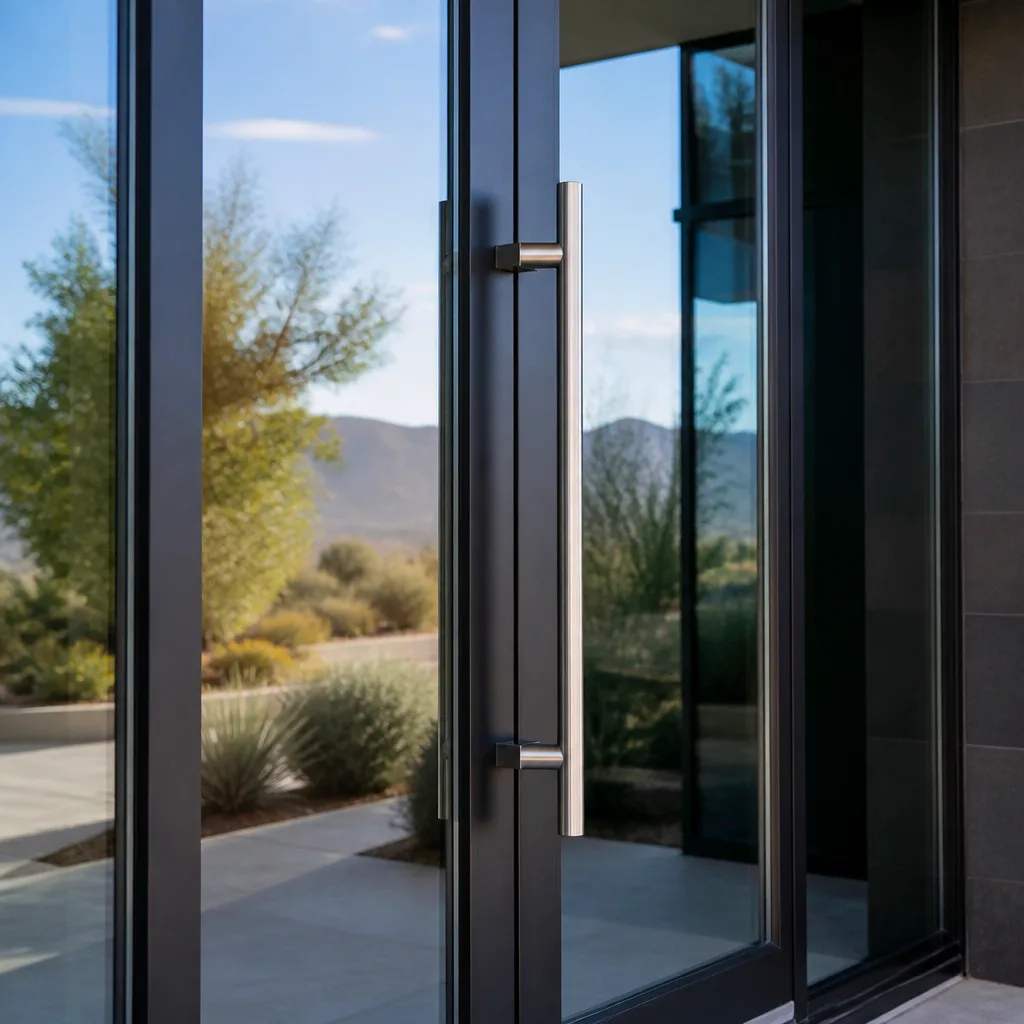
This is the part most homeowners skip, and it’s the part that pays off if you ever file a warranty or insurance claim. Photograph each finding, date each photo, and store it in the same file as your original installation record. The original installation record includes the measured survey you kept from the install, the written scope, and the photo documentation from completion day. The two sets of photographs together – install day and each inspection – form a documented timeline. A warranty administrator or an adjuster can read through it in order and see what state the assembly was in when, and what changed.
Structure the record this way:
- One folder per year, named by inspection date.
- One photo per opening per inspection, framed to include the whole assembly and the room context.
- Any defect photo separately cropped, with the room and orientation in the filename.
- A one-line written note per opening: “No findings,” or “Weep hole cleared; bead intact,” or “Glazing gasket separation at lower-left.”
- The dates and times the technician visited, if a technician performed the inspection.
Every job we complete carries this same record as standard – the documented photo record on every job is part of the Haven Standard, not an upsell. If you’re ready to have a technician perform the spring inspection and add to your file, see our Sightline Windows & Doors Summerlin home for the schedule and the written price before any work starts.
Common Mistakes to Avoid
- Skipping the spring inspection and doing it “sometime in summer.” By the time you get to it in July, the sealant has already been stressed through a month of 110°F days. The inspection is meant to run before the heat, not alongside it.
- Sealing over weep holes. We’ve seen this on Summerlin patios where a homeowner was chasing a draft. Weep holes manage water; sealing them means water finds the wall cavity instead. Water damage from a blocked weep hole is more expensive than any draft.
- Using wet oil on multi-point locks. In the dusty Mojave air, wet oil becomes grinding paste. Use a dry-film or PTFE lubricant, and use it every 6 months – not once a year, not “when it feels stiff.”
- Replacing glass without checking the label. The impact certification label sits in the corner of the glass. If a non-impact unit goes in, the assembly no longer carries the ASTM E1996 rating, even though the frame is unchanged. Insurance may not cover a replacement assembly that no longer matches the original certification.
- Assuming the installation warranty covers wear parts. Hardware, weatherstripping, sealant, and gaskets wear by design; they are not defects. The 365-Day Done Right Promise covers anything we installed wrong. But a gasket that aged out at year four is maintenance, not a callback. Know the split before you file.
- Taking photos that don’t establish the date and the location. A photo of a cracked sealant bead is worthless in a claim if the room and the date aren’t in the file. The photograph and the note should travel together.
- Waiting for the condensation shadow to become a water stain. The shadow is the early signal. A stain on the interior drywall below the window is the late signal, and by then the frame cavity has been wet through at least one rain cycle.
When to Call a Professional
Most of this guide is homeowner-level work – a flashlight, a soft brush, a dry-film lubricant, a camera. A few things are not. Call a technician if you find glazing bead separation, a perimeter sealant bead that has pulled from the frame on more than one elevation, a condensation shadow that spans more than a corner, or a multi-point lock that won’t engage at all three points after lubrication. Call immediately if you see water staining inside the frame at any weep hole location, or if a frame has moved in a way that requires re-shimming. Frame re-shimming and glazing replacement on an impact-rated assembly are not homeowner tasks; they touch the certification. Our technicians have up to 14 years of experience on these repairs and confirm the work against the manufacturer’s procedure. Sightline Windows & Doors Summerlin offers free estimates in Summerlin – call (844) 560-5201.
Frequently Asked Questions
Twice a year, with the spring inspection completed before June 1 and the fall inspection done in October or November. The spring timing matters more than the count – sealant and gaskets need to be checked before the sustained 110°F stretch, not during it. Call (844) 560-5201 for an inspection and written pricing on any recommended repair.
A faint shadow or a narrow band of uneven condensation along one edge or one corner of the glass, usually visible on a morning when the outside temperature is at least 15°F cooler than inside. Look along the glass-to-frame edge with a flashlight angled sideways. A uniform clear perimeter is healthy; a shadow confined to one corner is the early warning. Photograph it with the date and call (844) 560-5201 for a moisture-meter confirmation.
Replacing impact glass with non-impact glass, or with an impact unit whose thickness or interlayer differs from the label specification, does void the rating. Replacing a glazing gasket with the manufacturer’s specified part does not. The distinguishing test is whether the change alters the glass performance data on the label or the frame’s structural profile. Check the label in the corner of the glass before authorizing any glass replacement, and call (844) 560-5201 with the label data so we can confirm the specification matches before the work starts.
The exact price depends on the assembly, the number of openings, and whether the glazing gasket or the perimeter bead is the failure – and it’s written before any work starts, not estimated afterward. Call (844) 560-5201 for a measured survey and a written price you keep. The survey and the quote are the same document.
Manufacturer guides are written for a national average UV exposure and temperature range. Summerlin’s UV index, sustained heat, and daily thermal swings stress sealant and gaskets harder than that average, which is why the spring inspection is timed to the calendar rather than the seasons in general. The four wear points are the same everywhere; the frequency of checking them is what changes here.
The inspection itself is a walk-and-record, and the findings come back to you as a dated photo record with a written note per opening. Every completed job in this line of work carries that record as standard, and any recommended repair is quoted in writing before it starts. Call (844) 560-5201 to schedule.
The Bottom Line
Impact-rated windows from ECO Window Systems, Mr-Glass, ViewLux, or any of the other lines we install hold up to the storms they’re rated for. The seal around them holds up to Summerlin only if it gets checked on a schedule built for this climate – spring before June for the seal, fall for the hardware, and a documented photo record stored with your installation file so a warranty claim has evidence behind it. Skip the spring inspection and the glue fails before the glass. Do the spring inspection, run the condensation shadow test, lubricate the locks every 6 months, and photograph everything. That’s the calendar. That’s the whole guide.
Call (844) 560-5201 to schedule a free estimate or a technical inspection in Summerlin. Before any work starts, you get a written price, a measured survey you keep, and the photo record when the job is done – the Haven Standard, on every opening.
Written by the team at Sightline Windows & Doors Summerlin.
Six Reasons Homeowners Choose Sightline Windows & Doors Summerlin
Laminated glass and reinforced frames hold up to wind-driven rain, hail and flying debris, so your openings stay sealed when the weather turns.
Low-E insulated impact glass from our manufacturer lines commonly cuts monthly cooling bills 20-30%.
Laminated impact glass shuts out up to 40% of outside noise - traffic, neighbors, weather.
Monitoring services run $30-90 a month. Laminated impact glass resists forced entry around the clock, with no subscription.
Tighter seals and insulated glass even out hot and cold rooms and stop the drafts at the frame.
A full impact package upgrades curb appeal, buyer confidence and appraised value in one project.
Other Sightline Windows & Doors Summerlin Services