Last updated November 17, 2026
New windows and doors improve comfort, cut energy bills and add long-term value to your home. Sightline Windows & Doors Summerlin pairs proven product lines with a local vetted installing partner for lasting performance - and a price put in writing.
Choose your installer
The unit is half the job - the install is the other half. Background-checked local installers measure, set, seal and insulate every opening, and they know the lines we quote inside and out.
Select the right products
Compare styles, materials and glass packages side by side until the fit is right for your rooms, your budget and your goals. The product-line comparison below is the place to start.
Prepare your home for install
Before install day we walk you through a short checklist - furniture pulled back, treatments down, a clear path to each opening - so install day is watch-it-happen, not scramble.
Compare the Lines We Quote
Every project is priced on the same lines, side by side - the price indicators below are relative, and your consultant shows exact numbers on your actual openings.
PGTThe line homeowners arrive naming - the most impact certifications in the industry$$$
- More impact certifications than any other line we quote
- WinGuard, EnergyVue and ClassicVue Max systems built for every wind zone
- 99% on-time delivery keeps your install date on the calendar
CGIThe heavyweight impact line$$$$$
- Large-missile impact ratings for the strictest wind zones
- Architectural-grade aluminum with commercial-depth frames
- The line we quote when protection is the whole point
CWSThe value pick$$
- Vinyl systems built to strict wind codes
- Strong energy packages at the friendliest price point
- The smart start for whole-home replacements on a budget
ESWSlim lines, big glass$$$$
- Narrow-sightline aluminum for modern elevations
- Oversized openings and floor-to-ceiling glass
- Impact-rated without the bunker look
ECOThe aluminum impact workhorse$$$
- Factory-built aluminum impact systems
- A strong price-to-protection ratio for coastal homes
- Proven lines with short lead times
Impact Windows & Doors Warning Signs Every Homeowner Should Know
A hairline crack inside the glass of a laminated impact pane barely changes the view, so most homeowners never look for it. But that crack means the sealed unit will not behave as a rated assembly in the next wind event, and in our experience the homeowner usually finds out only when someone else points it out. In Summerlin, where summer highs push past 105°F and winter mornings still drop near freezing, the swing between those extremes works on frames, seals, and interlayers year after year. This guide covers the warning signs worth checking, how to separate the harmless ones from the urgent ones, and how to compare what you see today against a documented baseline instead of against memory.
Quick Answer
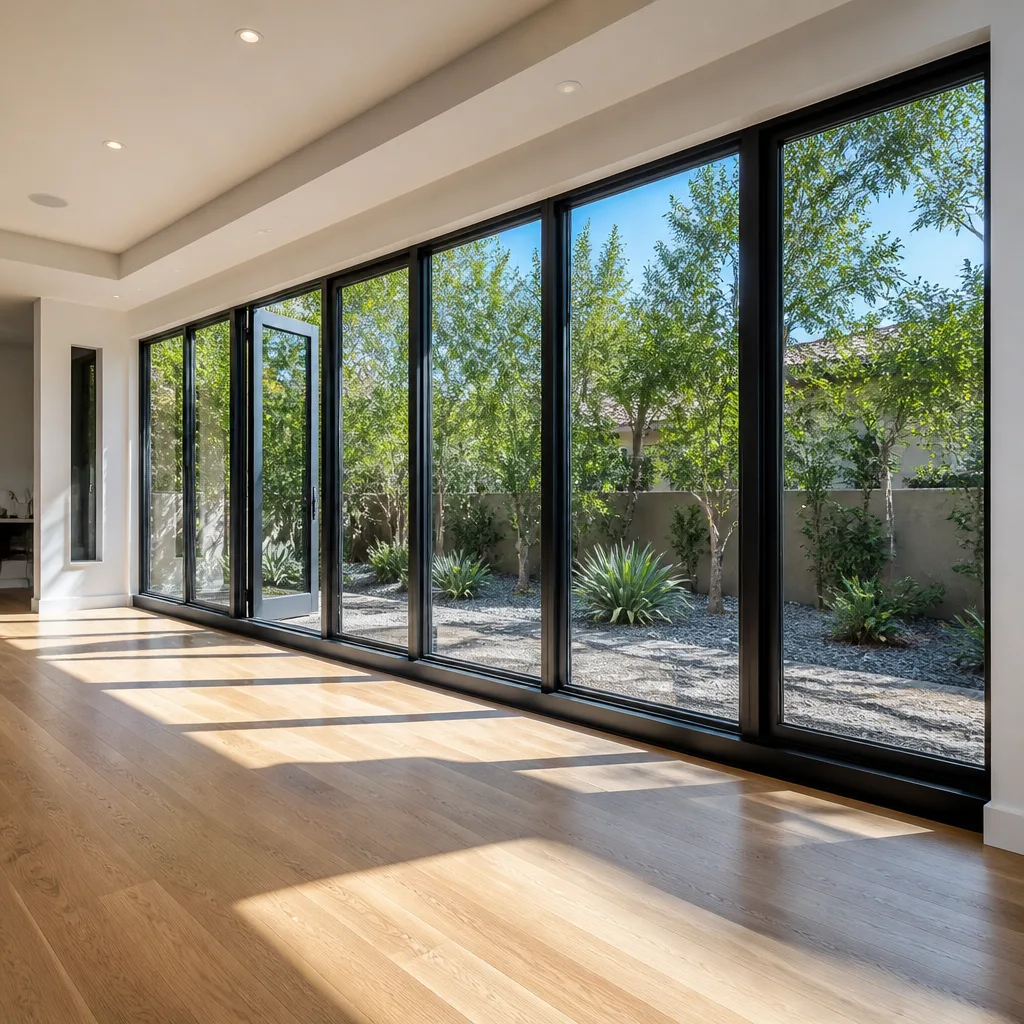
The warning signs that matter most on impact windows and doors are: cracks or milky haze developing inside a laminated pane, fogging trapped between the glass lites, a visible gap opening between the frame and the wall, locking points that no longer catch, and daylight showing around a closed door. Cosmetic nicks in the outer glass can wait on a schedule. Anything inside the glass, or any movement at the frame, should be documented and reviewed by a professional. Comparing current photos against your installation-day record is the fastest way to tell normal settling from progressive movement in Summerlin.
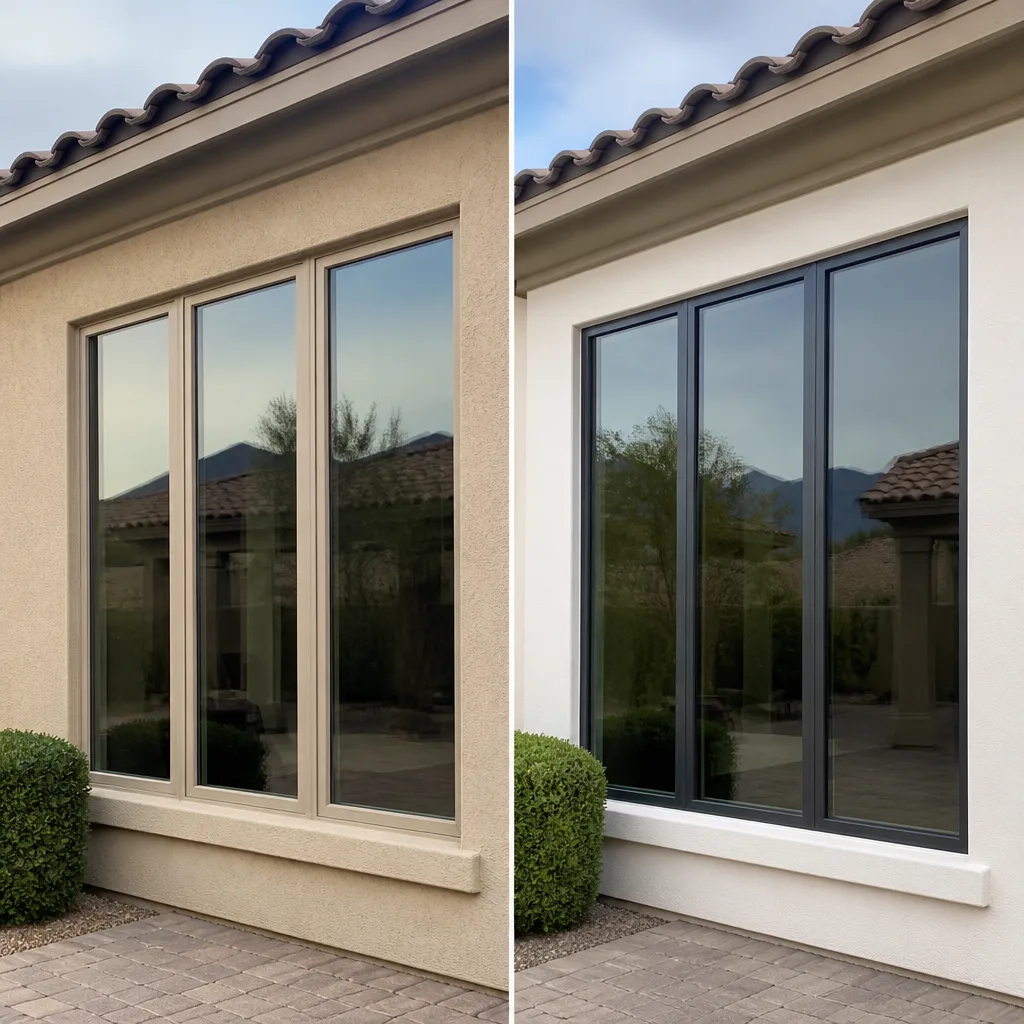
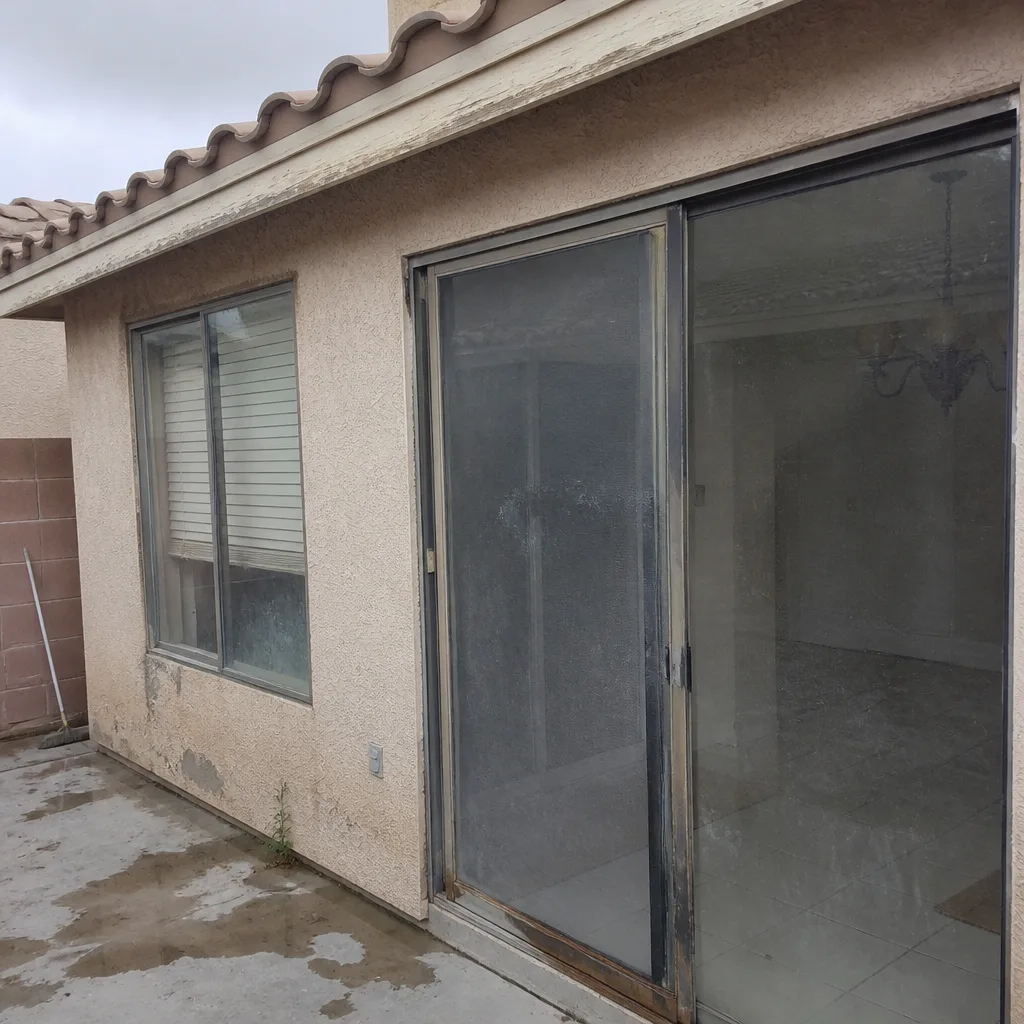 Before
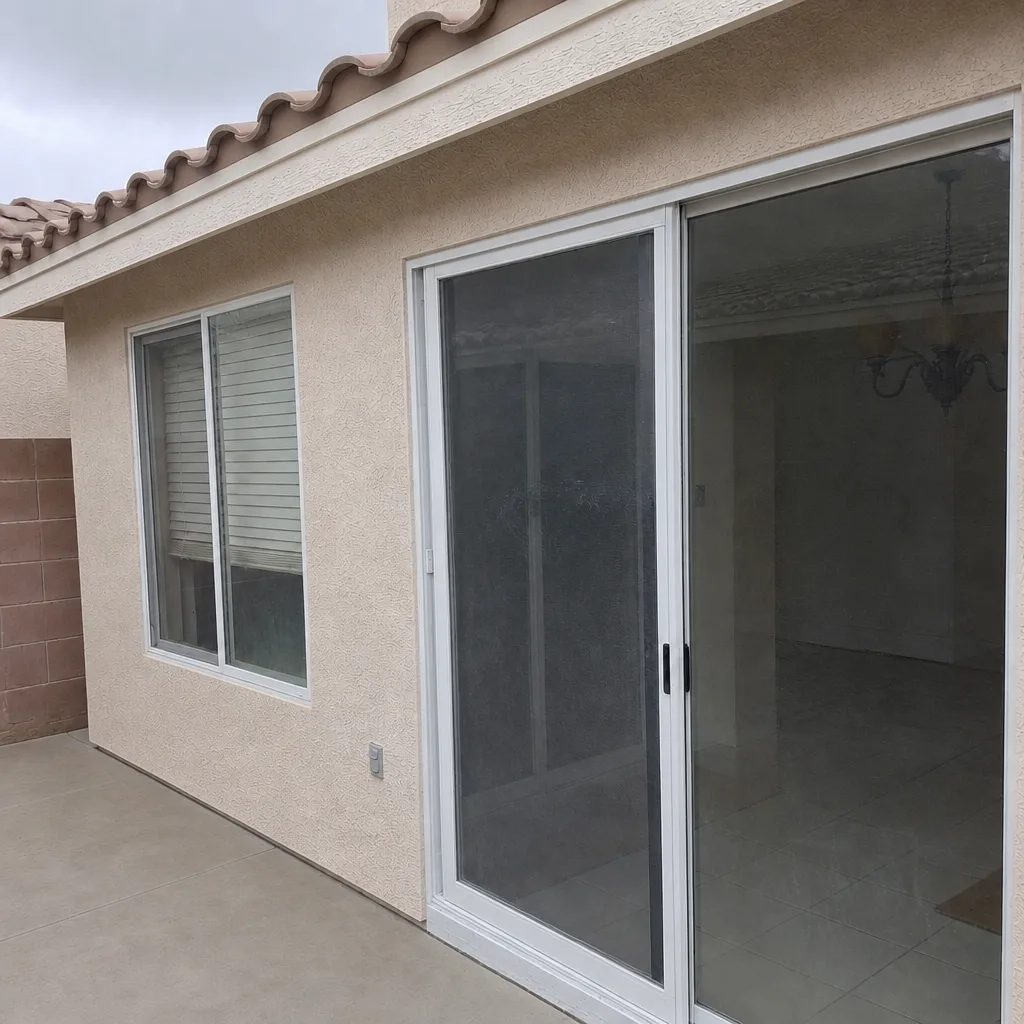 After
Table of Contents
- Cracks and Haze Inside the Glass: The Signal Most Homeowners Miss
- Fogging Between the Lites: Failed Seals vs. Ordinary Condensation
- Frame-to-Wall Separation: Reading the Gap in Summerlin’s Thermal Cycle
- Door Hardware Signals: Lock Points, Handle Play, and Daylight at the Threshold
- Using Installation-Day Photos as Your Baseline
- Outer Lite vs. Interlayer: How to Tell Them Apart From Inside the House
- A Seasonal Inspection Routine for Summerlin Homes
Cracks and Haze Inside the Glass: The Signal Most Homeowners Miss

An impact window is not ordinary glass. The rated version uses laminated glass, which bonds two or more lites around a clear plastic interlayer. That interlayer is what holds the pane together when something strikes it. It is also the part that fails quietly. A crack that starts inside the interlayer, or a milky haze spreading from an edge, can leave the outer surface perfectly smooth and the view essentially unchanged. The assembly looks fine and no longer performs as rated.
We’ve seen this pattern repeatedly in Summerlin, particularly on west- and south-facing openings that take the harshest afternoon sun. UV exposure and daily thermal expansion stress the interlayer over years. The first sign is often a faint white edge, then a haze that creeps inward like a slow spill.
What to check, from inside the house:
- Look along the glass edges at a low angle in daylight, not at night with interior lights on.
- Run a fingernail gently across any suspected line. If it catches, it’s surface damage. If the glass feels smooth and the line sits under the surface, you’re looking at the interlayer.
- Photograph the same corner from the same spot each season so a slow change becomes visible.
Surface scratches and chips in the outer lite can usually wait for a scheduled repair. Anything under the surface moves to replacement. If you’re unsure which category you’re in, a window replacement in Summerlin assessment will tell you in person, with the glass in front of you instead of a phone photo.
Fogging Between the Lites: Failed Seals vs. Ordinary Condensation
Impact windows are usually insulated glass units as well, meaning two panes separated by a sealed space, sometimes filled with argon. When that seal breaks, moisture gets in and fogs the space between the panes. The fog looks almost identical to household condensation. The difference matters, because condensation wipes off and a failed seal does not.
Here’s how to tell them apart without any tools:
- Wipe the inside face of the glass with a dry cloth. If the fog remains, it’s inside the unit.
- Check whether the fog appears on cool mornings and clears by afternoon. Seal failures typically stay put; condensation comes and goes.
- Look for a chalky or white residue near the bottom edge inside the sealed space. That deposit usually means the desiccant in the spacer has been saturated.
- Compare one pane to another in the same room. A single foggy unit while its neighbors are clear points to a failed seal, not humidity.
A failed insulated unit inside a laminated impact pane is a double problem: you lose the insulating value (measured as U-factor, the rate of heat transfer through the assembly) and the laminated layer is now working with compromised surroundings. In Summerlin, where the air conditioning runs hard from May through September, that loss shows up on the power bill before it shows up visually. PGT and CGI both warrant their sealed units for a set term, so dig out the paperwork before assuming you’re paying for a full replacement out of pocket.
Frame-to-Wall Separation: Reading the Gap in Summerlin’s Thermal Cycle

A thin line where the frame meets the drywall or stucco can be nothing, or it can be the start of a wind-load concern. The distinction is measurement and progression, not appearance. Summerlin’s climate drives this. Exterior surfaces can hit 150°F in direct July sun while the interior stays at 72°F. That temperature difference makes the frame and the wall expand and contract at different rates, every single day.
Small hairline separation at the interior trim is common in homes built between 2015 and 2025 and often harmless. The gap becomes a concern when it widens, when you can feel air moving through it, or when it opens at the corners rather than running evenly along the trim.
What to do:
- Slip a business card into the gap at the worst point. If it slides in more than an eighth of an inch with no resistance, note the measurement and the date.
- Check the same spot on the exterior if it’s safely reachable from the ground. Sealant that has pulled away from the frame or cracked through is a maintenance item; sealant missing entirely is a water-intrusion risk.
- Feel for air movement on a windy day. A draft at the frame means the opening is no longer sealed against weather.
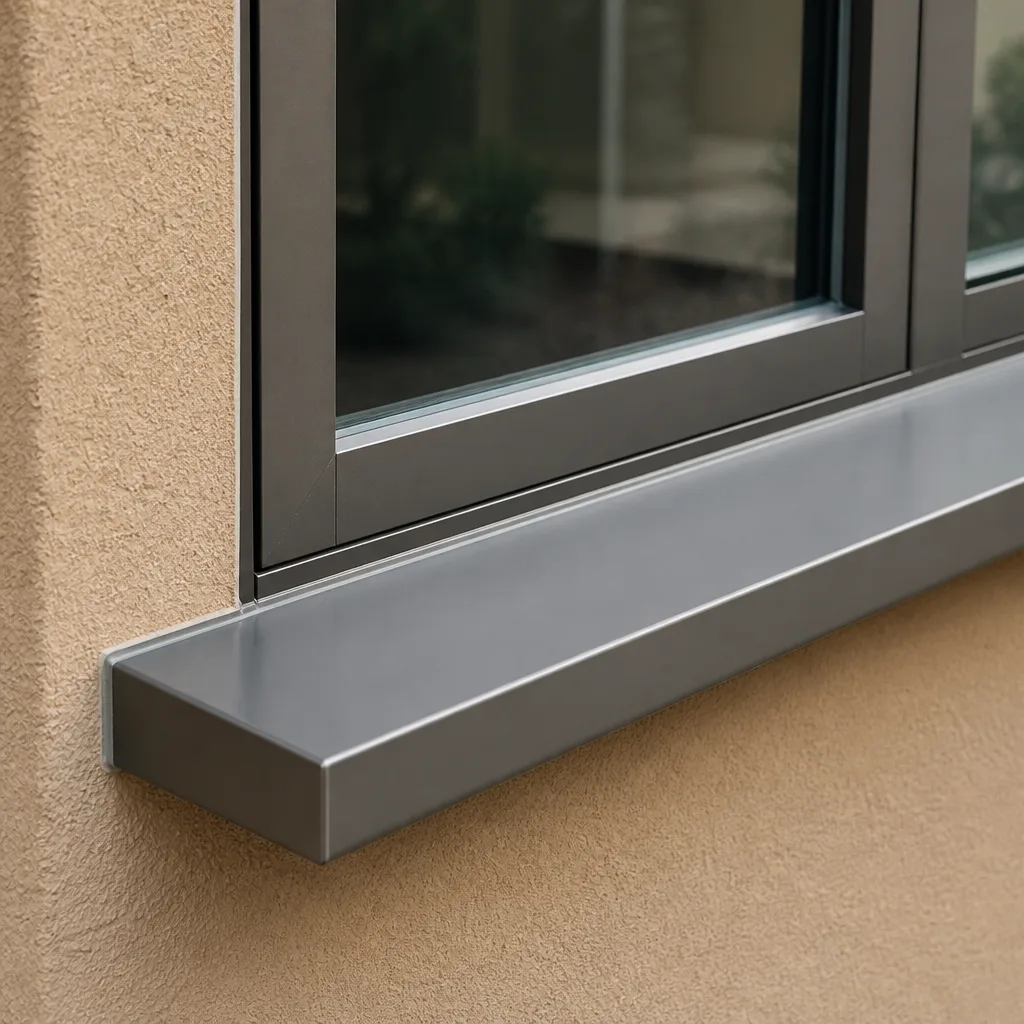
At the exterior, a gap allows water behind the stucco, and Southern Nevada’s occasional heavy monsoon rain finds every one of those paths. If the frame has visibly shifted or the gap exceeds a quarter inch, stop measuring and call. That’s beyond the reach of a tube of sealant, and it needs a proper look at how the unit is anchored. A window installation in Summerlin assessment covers anchoring and flashing, which is exactly what a widening frame gap puts in question.
Door Hardware Signals: Lock Points, Handle Play, and Daylight at the Threshold
Multi-point locking doors rely on several bolts engaging across the height of the door when you turn the handle. Each point has to seat flush in its keeper. When one stops catching, the door may still feel locked while only one or two points are actually holding. That’s the failure nobody notices until wind or a determined push tests it.
Check a door this way:
- Close the door and turn the handle as if locking. Listen for the click of each point. Fewer clicks than usual means a point has stopped engaging.
- With the door locked, push firmly against the frame near each lock point. Movement means the bolt isn’t seated.
- Wiggle the handle. A handle with new side-to-side play usually means loose internal fasteners or a failing mechanism.
- On a bright day, look at the bottom threshold. Daylight under a closed door means the sweep or seal is gone, and that lets in both weather and insects.
In Summerlin, where fine desert dust settles on every threshold, door seals wear faster than homeowners expect. Age-hardened weatherstripping stops springing back and starts letting dust and heat through. Therma-Tru and ES Windows both spec replaceable seals on many of their door lines, so a worn sweep doesn’t necessarily mean a new door. A door installation in Summerlin visit can tell you whether you’re looking at a seal, a mechanism, or an alignment problem at the hinges.
Using Installation-Day Photos as Your Baseline
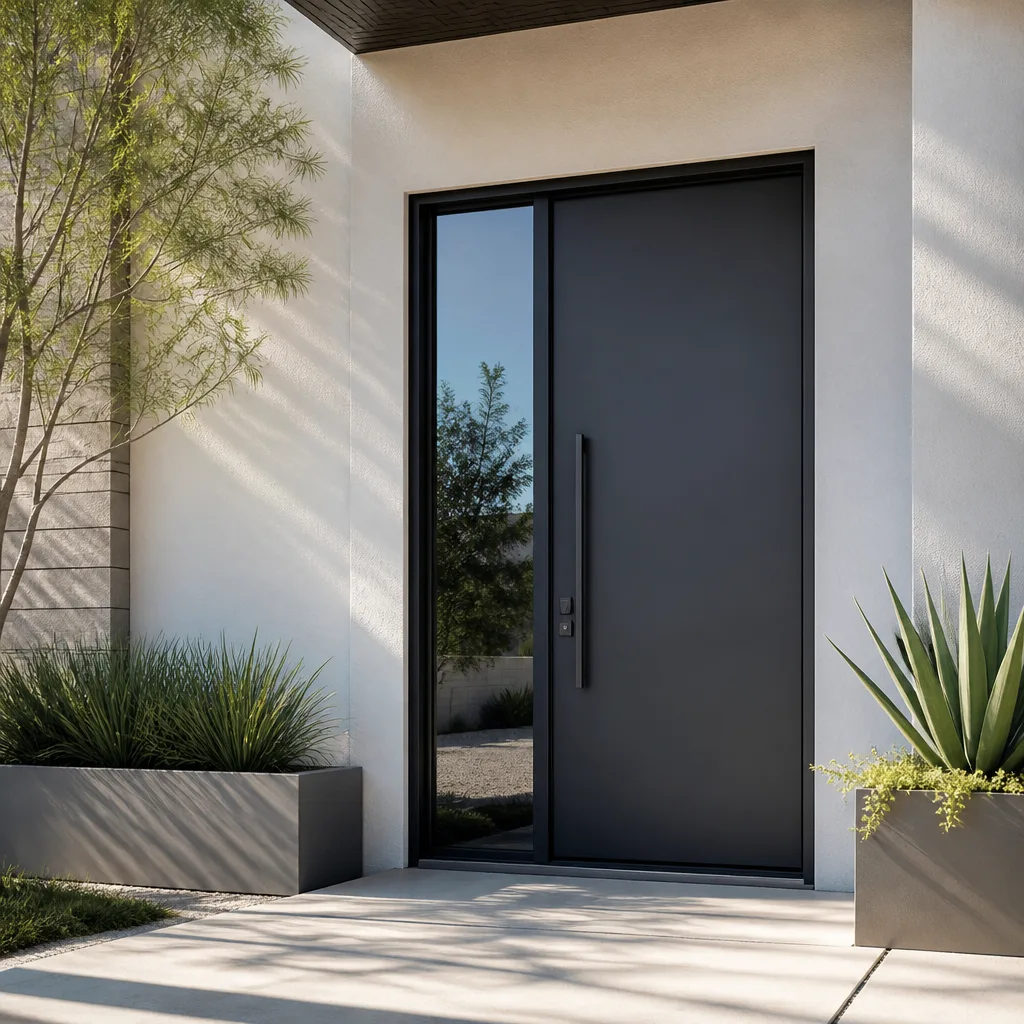
Memory is a poor inspector. A gap you noticed last spring and a gap you notice today look identical in your head, because you can’t compare a thing against a memory. A photograph from installation day turns a subjective concern into a data point: the same corner, the same angle, the same light, two dates.
This is why a documented photo record matters more than most homeowners realize. On every job, we leave a photo record as standard evidence, not as an add-on. The record shows the frame, the trim line, the hardware, and the sealant on the day the job closed out. It’s the most useful tool you have for spotting change.
How to build your own comparison set:
- Pick fixed reference points: every frame corner, every door threshold, every lock point. A dozen photos covers most homes.
- Stand in the same spot each time and note the date in the photo, either with a card in frame or your phone’s date stamp.
- Repeat every six months and right after any significant wind or storm event.
- Set the new photo next to the installation-day photo at the same zoom level. A gap that has grown by an eighth of an inch is obvious side by side and invisible from memory.
If you don’t have a baseline record from your install, start one now. Today’s photos are the reference for next year. For homeowners comparing window and door choices, our Sightline Windows & Doors Summerlin home page explains how the measured survey and the written quote stay tied to the same document.
Outer Lite vs. Interlayer: How to Tell Them Apart From Inside the House
Almost every homeowner we talk to conflates these two, and they have completely different consequences. An outer lite crack is surface damage to the outside pane. It’s a real problem, but it’s schedulable. An interlayer crack or delamination is structural: the laminated layer that holds the pane together under impact has begun to fail. That one requires replacement, and sooner than you’d like.
The tell is location, and you can usually find it from inside the house:
- Outer lite: the crack catches your fingernail from the exterior face. Viewed from inside, it sits at the very first plane of glass you’d touch.
- Interlayer: the surface feels smooth when you run a nail over it from inside. The crack or haze sits a millimeter or two below the surface. Look closely at the edge and you may see a cloudy band where the bond is releasing.
- Delamination: a milky or bubbly area spreading from the edge inward, often with a visible line where the bonded layers are parting.
In Summerlin, we see outer lite damage most often on lower windows facing yards where landscaping, kids, and windblown grit do their work. We see interlayer trouble more on the sun-scorched elevations. If you can’t tell which you have, get it in writing from someone who measures glass for a living. Wind-load ratings on impact products from CWS and other manufacturers only hold if the assembly is intact, so a compromised pane deserves an honest answer rather than a guess.
A Seasonal Inspection Routine for Summerlin Homes
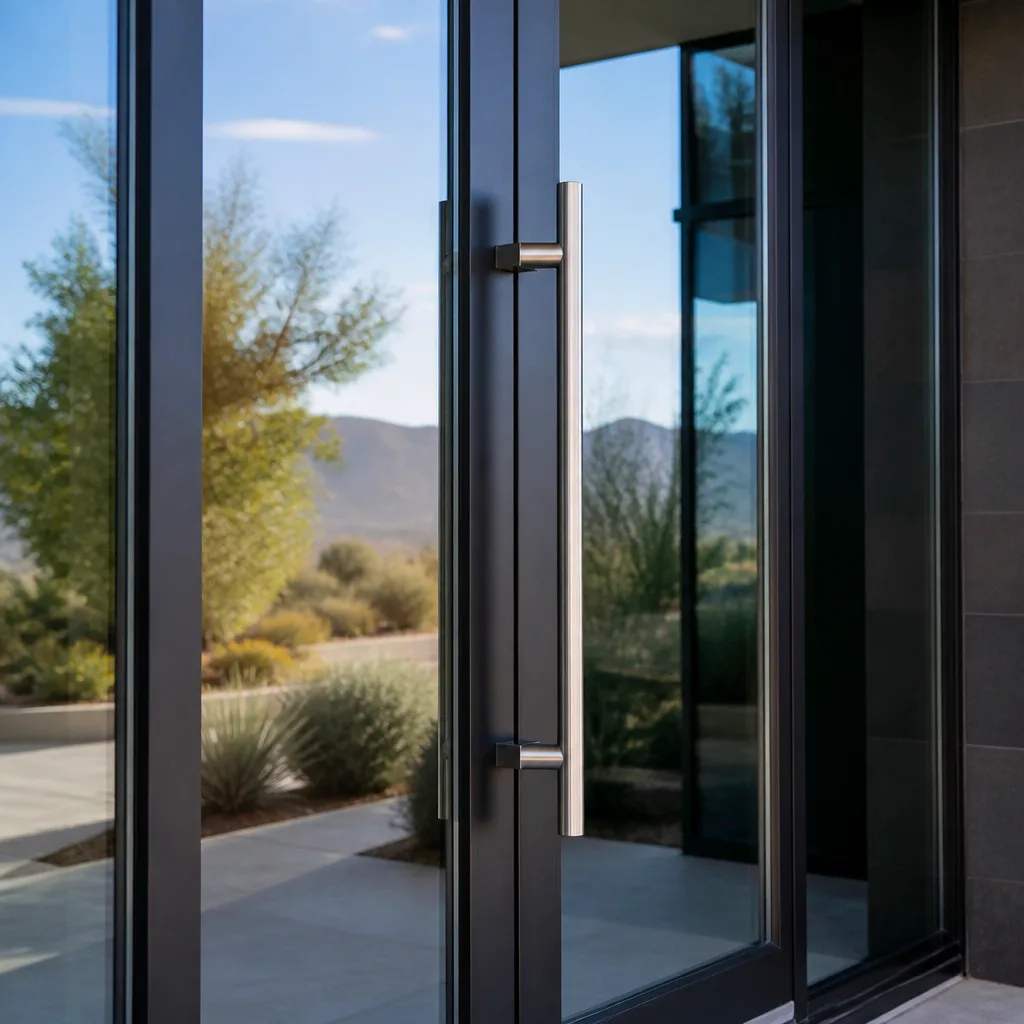
A fifteen-minute walk-through twice a year catches most of these problems while they’re still cheap to fix. Schedule one in spring, before the heat, and one in fall, before the cold snaps start.
Spring (March – April):
- Inspect every glass edge at a low angle for haze or interior cracks.
- Check the sealant line on south- and west-facing openings, where UV does the most damage.
- Test every door lock point and look for daylight at the threshold.
Fall (September – October):
- Repeat the card-in-the-gap check at every frame corner and compare to your spring photos.
- Feel for drafts at frames and doors on a cool morning.
- Confirm the fogging pattern hasn’t changed; new fog in a unit that was clear means a seal let go over the summer.
Keep the photos labeled by date. After two or three cycles you’ll have a real record of how your Summerlin home’s windows and doors behave through the year, which is worth more than any single inspection.
Common Mistakes to Avoid
- Treating interior glass damage as cosmetic. A crack under the surface of a laminated pane compromises the rated assembly, and it doesn’t announce itself. If it’s inside the glass, get it looked at.
- Assuming fog is always condensation. Wipe the inside face first. Fog that stays after the wipe is trapped between the lites and points to a failed seal.
- Caulking over a frame gap without measuring it. Sealant hides the evidence but doesn’t fix movement. Measure the gap first, then decide.
- Testing lock points by feel alone. A door that feels locked can be holding on a single point. Push against the frame at each point to confirm it’s actually seated.
- Trusting memory instead of a photo record. Progressive movement is invisible without a dated baseline. The installation-day photos exist for exactly this.
- Ignoring wind-load implications on Summerlin’s exposed elevations. Homes on the west edge of the valley take more sustained wind than sheltered interior streets, so frame and glass issues cost more there.
- Waiting for the next wind event to test a suspect window. The next wind event is not a diagnostic. Have questionable assemblies inspected before it arrives.
When to Call a Professional

Call when anything under the glass surface is cracked or hazing, when fog between the lites won’t wipe away, when a frame gap has visibly widened or exceeds a quarter inch, when you can feel air moving at a frame, or when a lock point stops catching. Also call if a door threshold shows daylight or a handle has developed play you can’t trace. These are all signs a trained eye can confirm in a single visit.
We install and replace impact windows and doors across the Las Vegas valley, and the same good habits apply here. Sightline Windows & Doors Summerlin offers free estimates in Summerlin. Call (844) 560-5201 and we’ll review what you’ve found, photos in hand.
Frequently Asked Questions
The earliest sign is usually a faint haze or hairline crack visible at the glass edge, just under the surface of the laminated pane. It barely changes the view, which is why it gets missed. Check the edges at a low angle in daylight and compare against photos from when the window was new.
Wipe the inside face of the glass with a dry cloth. If the fog remains, it’s trapped between the lites and the sealed unit has failed. Condensation comes and goes with temperature and humidity; a failed seal stays foggy. Call (844) 560-5201 and we’ll help you sort it out.
A hairline gap at the interior trim is often harmless settling, but a gap that widens, lets air through, or exceeds about a quarter inch can affect how the unit handles wind load and water. Summerlin’s daily thermal cycling pushes frames and walls to move at different rates, so measure and photograph the gap over time rather than judging it once.
It depends where the crack is. Damage to the outer lite can usually be scheduled for repair. A crack or delamination in the interlayer means the rated assembly is compromised and the unit needs replacement. The difference is whether the surface feels smooth over the crack from inside the house.
Twice a year is enough for most Summerlin homes: once in spring before the heat, once in fall before the cold snaps. Add a check after any significant wind or storm event. Keep the photos dated so you can compare against your installation-day record.
A lock point that no longer seats flush means the door may be holding on fewer than its full set of bolts. Test each point by pushing against the frame with the door locked. Sometimes it’s a worn seal or a hinge alignment issue; sometimes it’s the mechanism. Call (844) 560-5201 for a free estimate and we’ll tell you which.
The Bottom Line
Impact windows and doors warn you before they fail, but the warnings are quiet: haze inside a laminated pane, fog trapped between the lites, a gap that grows by an eighth of an inch a year, a lock point that stops clicking. Against memory, none of these look like change. Against a dated photo record, they do. Start a baseline now, run a fifteen-minute check each spring and fall, and treat anything inside the glass or at the frame as worth a professional look. That’s what keeps a rated assembly actually rated, in Summerlin and anywhere the sun and wind do their work. For a free estimate, call (844) 560-5201.
Written by the team at Sightline Windows & Doors Summerlin.
Six Reasons Homeowners Choose Sightline Windows & Doors Summerlin
Laminated glass and reinforced frames hold up to wind-driven rain, hail and flying debris, so your openings stay sealed when the weather turns.
Low-E insulated impact glass from our manufacturer lines commonly cuts monthly cooling bills 20-30%.
Laminated impact glass shuts out up to 40% of outside noise - traffic, neighbors, weather.
Monitoring services run $30-90 a month. Laminated impact glass resists forced entry around the clock, with no subscription.
Tighter seals and insulated glass even out hot and cold rooms and stop the drafts at the frame.
A full impact package upgrades curb appeal, buyer confidence and appraised value in one project.
Other Sightline Windows & Doors Summerlin Services