Last updated November 17, 2026
New windows and doors improve comfort, cut energy bills and add long-term value to your home. Sightline Windows & Doors Summerlin pairs proven product lines with a local vetted installing partner for lasting performance - and a price put in writing.
Choose your installer
The unit is half the job - the install is the other half. Background-checked local installers measure, set, seal and insulate every opening, and they know the lines we quote inside and out.
Select the right products
Compare styles, materials and glass packages side by side until the fit is right for your rooms, your budget and your goals. The product-line comparison below is the place to start.
Prepare your home for install
Before install day we walk you through a short checklist - furniture pulled back, treatments down, a clear path to each opening - so install day is watch-it-happen, not scramble.
Compare the Lines We Quote
Every project is priced on the same lines, side by side - the price indicators below are relative, and your consultant shows exact numbers on your actual openings.
PGTThe line homeowners arrive naming - the most impact certifications in the industry$$$
- More impact certifications than any other line we quote
- WinGuard, EnergyVue and ClassicVue Max systems built for every wind zone
- 99% on-time delivery keeps your install date on the calendar
CGIThe heavyweight impact line$$$$$
- Large-missile impact ratings for the strictest wind zones
- Architectural-grade aluminum with commercial-depth frames
- The line we quote when protection is the whole point
CWSThe value pick$$
- Vinyl systems built to strict wind codes
- Strong energy packages at the friendliest price point
- The smart start for whole-home replacements on a budget
ESWSlim lines, big glass$$$$
- Narrow-sightline aluminum for modern elevations
- Oversized openings and floor-to-ceiling glass
- Impact-rated without the bunker look
ECOThe aluminum impact workhorse$$$
- Factory-built aluminum impact systems
- A strong price-to-protection ratio for coastal homes
- Proven lines with short lead times
The Complete Guide to Windows & Doors in Summerlin
Las Vegas receives roughly 294 sunny days per year, about 40 more than Miami, yet most window specification guides imported from national publishers were written for mid-Atlantic climates where solar heat gain is a secondary concern. Summerlin sits inside that sunlight. West-facing glass here can hit surface temperatures that warp cheap vinyl and cook a family room by 4 p.m. This guide organizes every decision around the Mojave’s UV index, caliche soil movement, and 110°F frame expansion cycles. You’ll learn how to read SHGC ratings in real cooling dollars, why your HOA covenant matters before you order product, and the exact sequence of decisions that keeps cost down and performance up.
Quick Answer
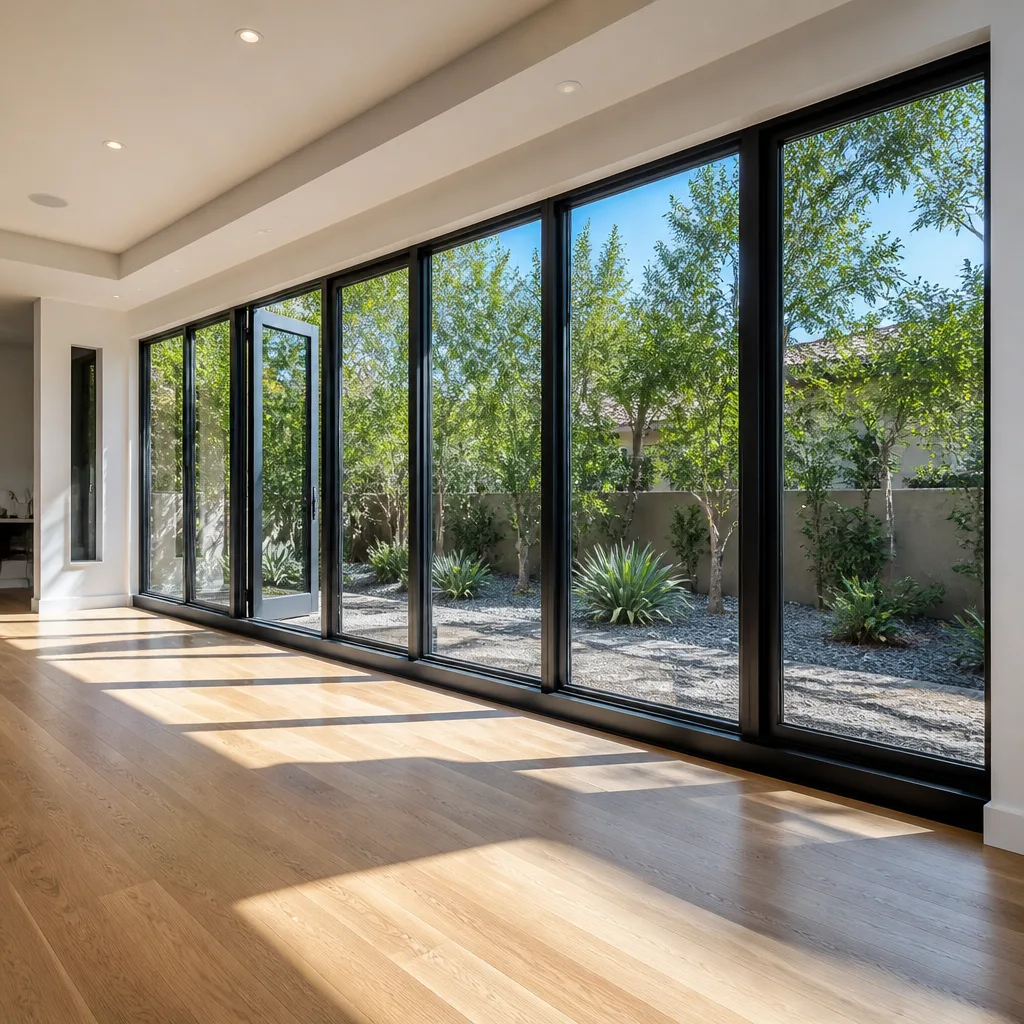
For Summerlin homes, the right window and door package is impact-rated or high-SHGC-controlled glass, installed in a frame material rated for 110°F surface temperatures, specified against both Clark County code and your master-planned HOA covenant, and measured in a survey that becomes the written quote. Get the sequence right – measure, product, permit, install, inspection – and you avoid the costly reorders and rework that desert conditions punish hardest.
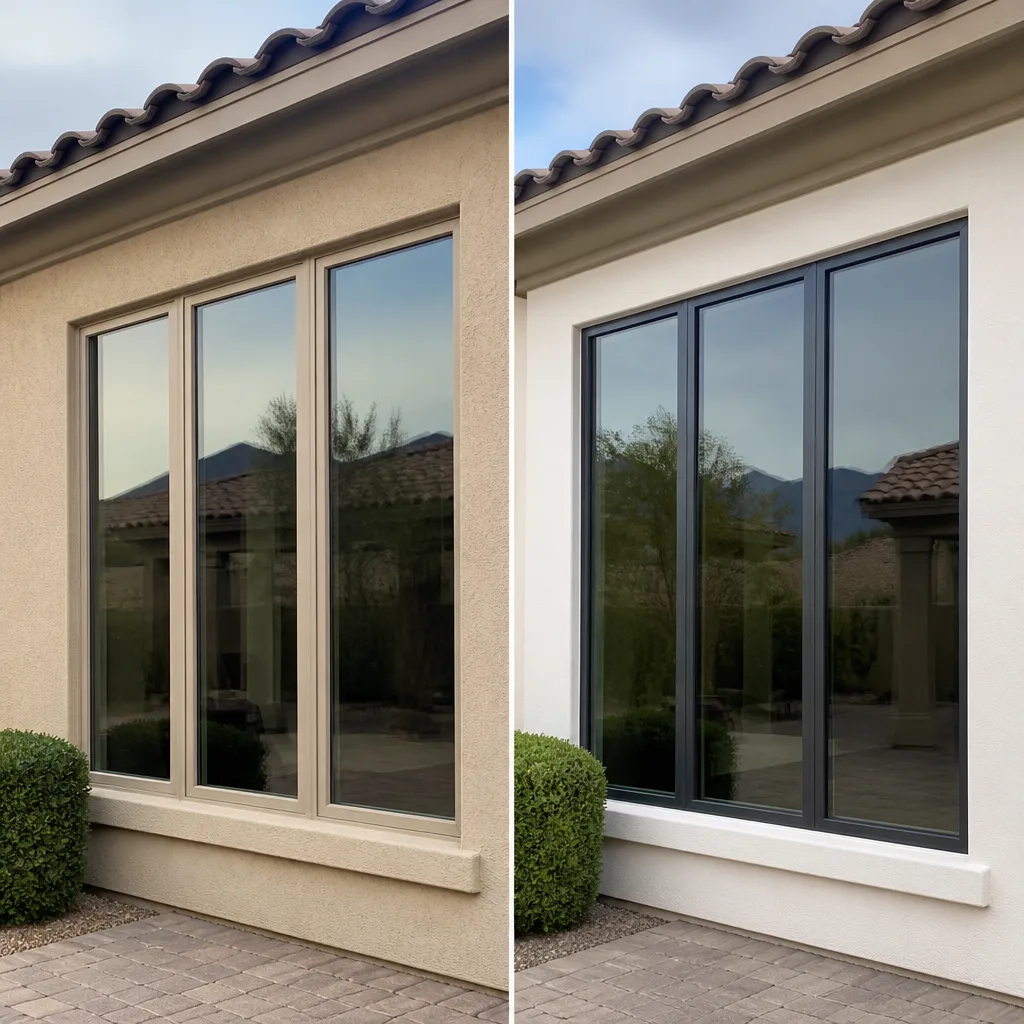
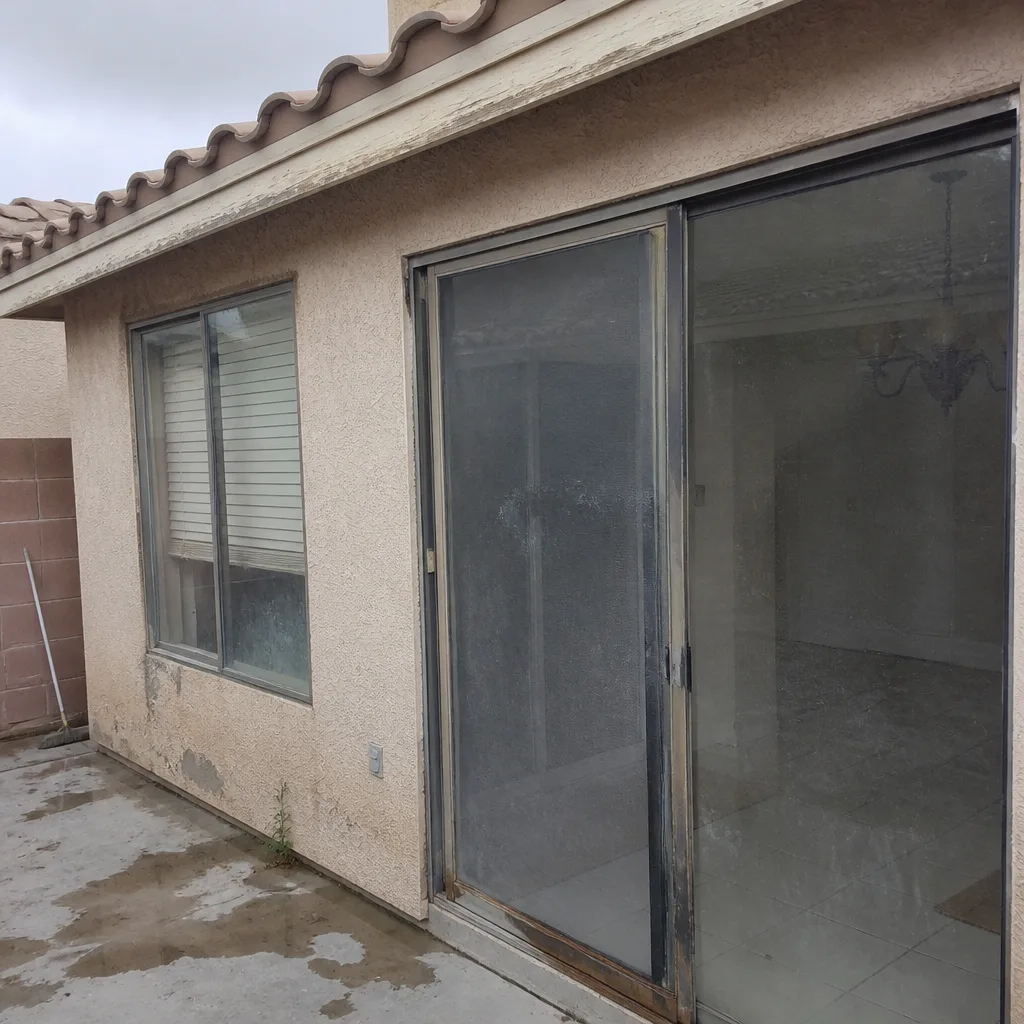 Before
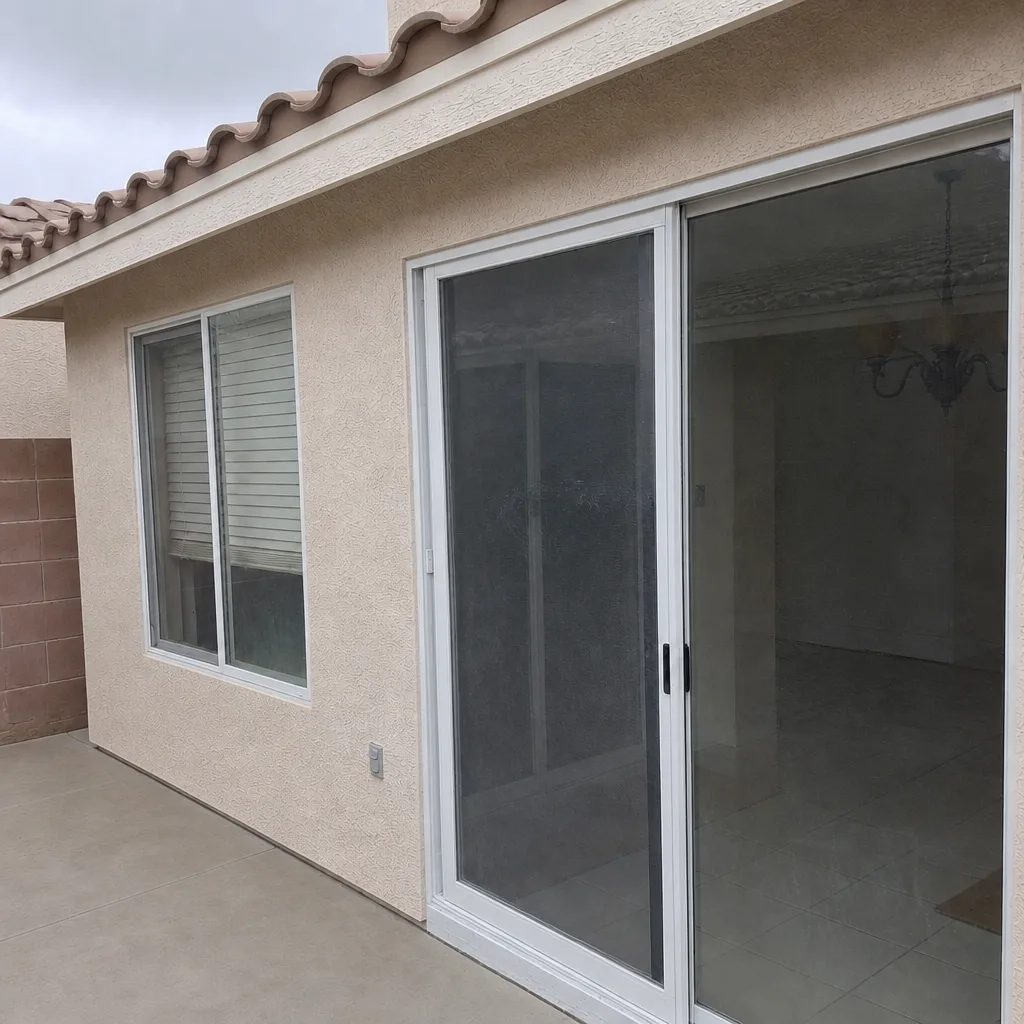 After
Table of Contents
- How SHGC Ratings Translate to Real Summer Cooling Bills in Summerlin
- Why Summerlin HOA Covenants Restrict Windows Building Code Allows
- The Caliche Problem: Ground Movement and Your Rough Openings
- Frame Materials Tested Against 110°F, Not Generic Claims
- The Five-Step Decision Sequence (and Why Reversing It Costs More)
- Choosing Among Product Lines by Performance Tier
- Permits, Inspection, and What You Should Receive in Writing
How SHGC Ratings Translate to Real Summer Cooling Bills in Summerlin
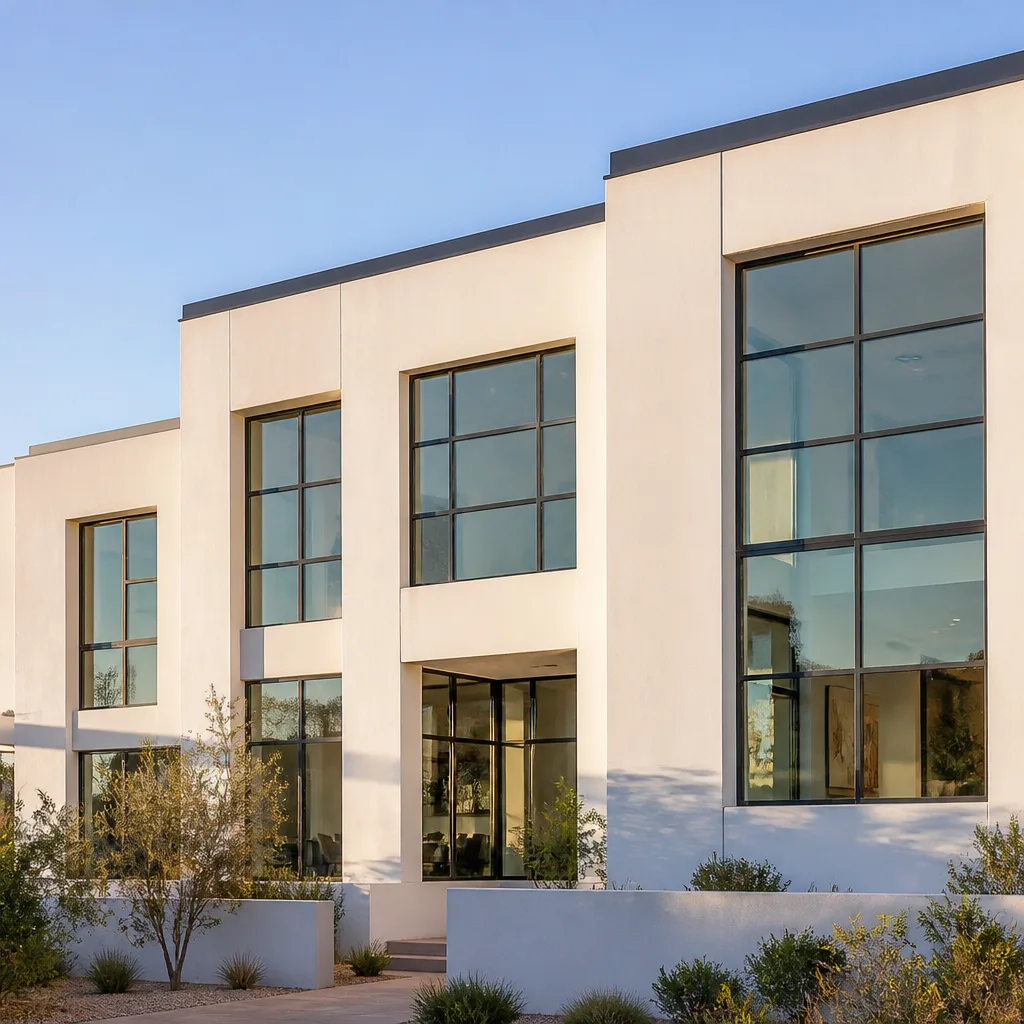
SHGC stands for Solar Heat Gain Coefficient: the fraction of solar energy that passes through a window as heat. A rating of 0.25 means 25% of the sun’s heat comes in. Clark County falls in IECC Climate Zone 3B (hot-dry), where the prescriptive code maximum for residential windows in most orientations is 0.25. West- and south-facing glass that fails that number drives your air conditioner harder and your summer bill higher.
In Summerlin, the difference isn’t abstract. A typical 2,800-square-foot single-family home with roughly 300 square feet of west-facing single-pane glass can lose the equivalent of $40 to $70 per month in cooling efficiency during June through September compared with a modern 0.22-SHGC low-E unit. Over four summer months that’s $160 to $280 per cooling season – just from the glass. Replace a full-facing wall of builder-grade aluminum sliders with a performance-tier product like ES Windows’ low-E impact line and the gap grows to $300 or more per season.
Two numbers matter together:
- SHGC controls heat gain. Lower is better in Summerlin. Target 0.25 or below, and 0.20 or below for west-facing.
- U-factor controls heat loss and also reflects how well the frame and glass hold a barrier. Lower is better. Target 0.30 or below for a whole-window number.
Don’t chase the lowest SHGC on every wall. North-facing glass in Summerlin benefits from a slightly higher SHGC because it receives less direct sun in summer and gains useful passive warmth in winter’s 40°F mornings. A specification built by orientation – which is how we build every measured survey – will sometimes mix ratings across one house. That’s correct engineering, not inconsistency.
One more local detail: the glare. Summerlin’s elevation (roughly 3,000 to 3,400 feet in The Ridges and Red Rock Country Club) means the sun comes in at a sharper angle than at sea level and the ambient UV is stronger. Lower SHGC glazing reduces that glare and protects interior floors and furnishings, which is a real cost over a 10-year window life even if it doesn’t show on a utility bill.
Why Summerlin HOA Covenants Restrict Windows Building Code Allows
Summerlin is a master-planned community built under a set of recorded covenants, conditions, and restrictions (CC&Rs) that govern exterior appearance. These covenants are stricter than the Nevada building code and they are separate from it. The county may approve a white-aluminum-clad window; your community association may not. Order product before the review clears and you can eat the cost of a reorder – sometimes thousands of dollars per opening.
What Summerlin covenants commonly control:
- Exterior frame color – often restricted to specific earth tones, bronze, or a listed palette per village.
- Profile width and grille pattern – grid style and lite distribution sometimes must match the original elevation.
- Visible glass reflectivity – high-mirror coatings are often prohibited for aesthetic and neighbor-view reasons.
- Door style on street-facing elevations – panels, glazing, and hardware may be specified.
- Window and door manufacturer – some associations maintain an approved-product list.
Read your CC&Rs before you order anything. Start with the architectural request form your association requires; most Summerlin communities have a defined submittal packet that includes a product data sheet, elevation drawing, and color chip. Ask specifically whether your village has an architectural review committee (ARC) and what the approval turnaround looks like. Budget four to six weeks for review on a whole-house replacement; a single-door swap usually clears faster.
Two mistakes we see repeatedly: submitting a manufacturer spec sheet with no color sample (the committee holds the file), and assuming a “same color as my neighbor’s” request will pass without documentation. Bring the chip and the product data together. If you’re replacing exterior doors and need the elevation documentation for the submittal, door installation in Summerlin is where we walk through what the packet needs.
Get the covenant question answered before the product decision, not after. It’s the single most expensive sequencing error in this market.
The Caliche Problem: Ground Movement and Your Rough Openings
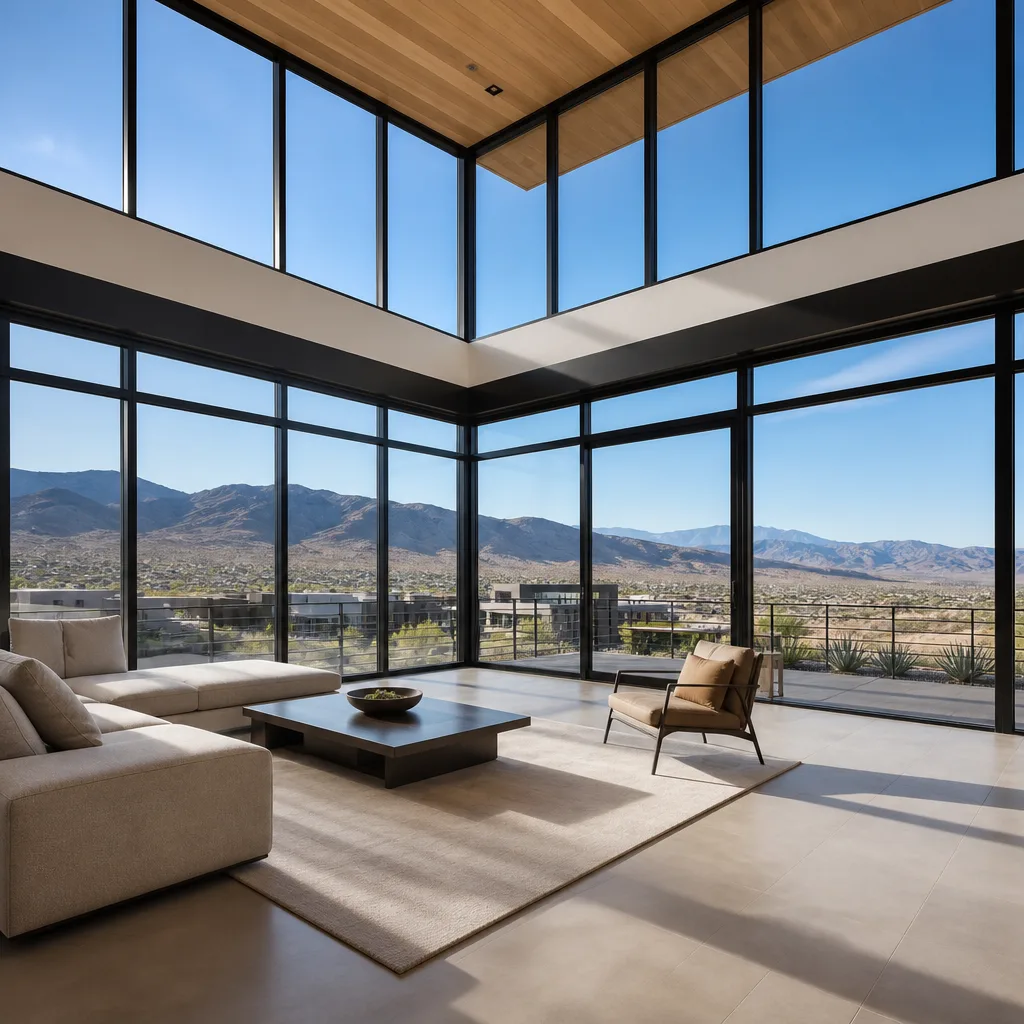
Caliche is the calcium-carbonate hardpan layer common across the Las Vegas valley, and Summerlin sits on plenty of it. It’s dense, cement-like soil that shifts with moisture and heat, and it interacts badly with slab-on-grade construction when water finds a path under the slab. Over a 10-year window life, that movement can rack a rough opening out of square, pinch a sash, or crack the seal between frame and drywall.
What that means for a window installation:
- Rough openings must be checked for square and plumb at survey, not assumed from the original build.
- Frame attachment has to accommodate small seasonal movement without transferring it to the glass or operating hardware.
- Flashing and drainage details matter more in a soil that can stay moist under a slab after a monsoon or an irrigation leak.
- Hairline drywall cracks near corners are a signal to measure the opening, not just patch the paint.
We measure rough openings with a laser level and record the readings in the survey the customer keeps. If an opening is out of tolerance, the fix is a carpentry correction that happens before the new unit is set – not a shim adjustment hidden behind trim. That’s a documented step in the window installation in Summerlin process, and it’s why a proper measured survey sometimes reveals scope the initial walkthrough didn’t.
If your home was built between 2015 and 2022 in a newer Summerlin village, you’re less likely to be dealing with settled openings than a home from the 1990s in The Trails or Sun City. If you’re in one of the older pockets, have the openings measured rather than trusting nominal sizes.
Frame Materials Tested Against 110°F, Not Generic Claims
National frame comparisons are usually written for climates that top out at 95°F. Summerlin’s exterior surfaces hit 110°F and often more. Here’s how the three dominant frame materials actually hold up.
Vinyl
Vinyl is the most affordable option and works well when it’s a quality extrusion. The failure mode in the desert is thermal expansion: cheap thin-wall vinyl can bow and warp on a west-facing wall, and dark colors absorb more heat. Specify a mid-to-heavy wall vinyl rated for high heat and stick to lighter exterior colors where your covenant allows. Expect a 15-to-25-year service life in Summerlin if specified correctly.
Fiberglass
Fiberglass has the closest thermal expansion rate to glass of the three, which makes it the most dimensionally stable in 110°F cycling. It won’t warp like thin vinyl and it doesn’t conduct heat like aluminum. It costs more than vinyl, usually 20% to 35% more per opening, and it’s the material we recommend most often for large west- and south-facing units and for full-height patio door walls.
Aluminum-Clad
Aluminum-clad is a wood core with an aluminum exterior, which gives you a durable face and a wide color range. The catch is thermal bridging: aluminum conducts heat, and a through-frame thermal break is essential. Specified with a proper thermal break and low-E glazing, aluminum-clad performs well in Summerlin and holds its finish in strong UV. Without the thermal break, you get condensation on the interior frame during summer and higher cooling load. It’s the most expensive of the three and the choice for homeowners who want a specific profile and color.
Here’s the side-by-side that matters:
- Vinyl: lowest cost, moderate heat tolerance, watch the wall thickness and color.
- Fiberglass: best dimensional stability in heat cycling, mid-premium price, strong for large openings.
- Aluminum-clad: highest cost, widest color range, requires a thermal break or performance drops.
Whichever you choose, the brand tier matters as much as the material. Product lines like CWS and Mr-Glass offer reliable mid-tier options; ES Windows and ECO Window Systems carry performance-tier products that handle the desert cycling well. We specify by what the opening requires, not by what’s cheapest on the shelf.
The Five-Step Decision Sequence (and Why Reversing It Costs More)
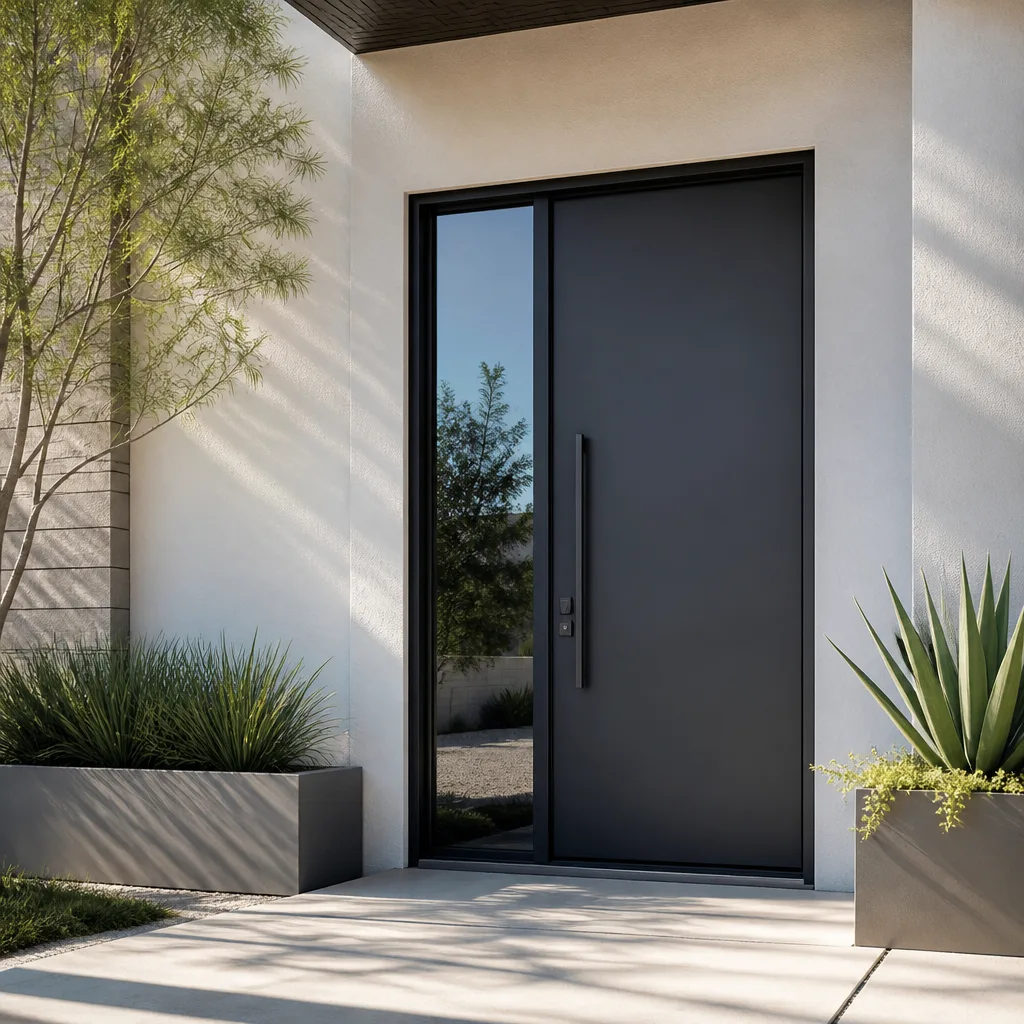
Every successful Summerlin window and door project follows the same order. Reverse any step and the cost goes up.
- Measured survey. Every opening gets measured, photographed, and recorded. You keep the survey. It’s the document the quote is built from, and the quote can’t differ from it.
- Product selection. Frame material, glass package (SHGC and U-factor by orientation), color, and profile are chosen against the survey, the covenant, and the climate. No product gets selected before step one is complete.
- Permit. Clark County requires a permit for window and door replacement that changes the opening or involves structural work. Pull it before anyone picks up a tool. Skipping the permit is one of the most common and expensive shortcuts we see.
- Install. Background-checked crews, uniformed, license numbers on the record before arrival. Flashing, sealing, and rough-opening corrections happen here, not later.
- Inspection and documentation. The county inspection passes, and you receive a photo record of the install plus a written warranty. That record is what your future buyer will ask for.
The sequencing trap in Summerlin: homeowners order product online or from a showroom before the measured survey is done, then discover the openings are out of tolerance or the color fails the covenant review. Reversing steps two and three ahead of step one is how a $9,000 project becomes a $14,000 one. Price the survey first.
Price ranges here, in dollars, before any work: full-frame window replacement typically runs $650 to $1,150 per opening for mid-tier vinyl with standard low-E, and $1,200 to $2,100 per opening for performance-tier fiberglass or impact-rated glass. Door replacement ranges from $1,400 for a standard sliding patio door in mid-tier to $4,500 and up for a large impact-rated multi-panel unit. A comprehensive whole-house package in Summerlin lands between $16,000 and $32,000 depending on opening count, material, and glass package. Written price before work starts, always – that’s the standard we install under.
Choosing Among Product Lines by Performance Tier
We work with eight manufacturer lines and specify them by what each opening in a Summerlin home actually needs. Two of the most-used in this market are worth naming.
CWS (Cascade Windows and Siding) is a solid mid-tier line for standard vinyl and sliding units, priced accessibly and specified reliably when an opening doesn’t demand premium performance. ECO Window Systems carries impact-rated and high-SHGC-control products, which is where Summerlin’s west-facing walls and large glass areas often land. Mr-Glass and ES Windows fill in performance and custom tiers depending on the opening and the covenant allowance.
Impact-rated matters more here than in most desert markets because hail is rare but wind-driven debris during monsoon season is real. If you’re replacing a large patio wall or a storefront-style opening, an impact-rated unit doubles as a wind-load solution and a security improvement. Choose the tier the opening requires, and don’t pay impact-rated prices for a north-facing bedroom window that will never see a monsoon gust.
Product selection is where we do most of the free second-opinion work: bring us a competitor’s written quote and we’ll review it against the survey and the climate, at no charge. The product is specified on the page, in dollars, before you commit.
Permits, Inspection, and What You Should Receive in Writing
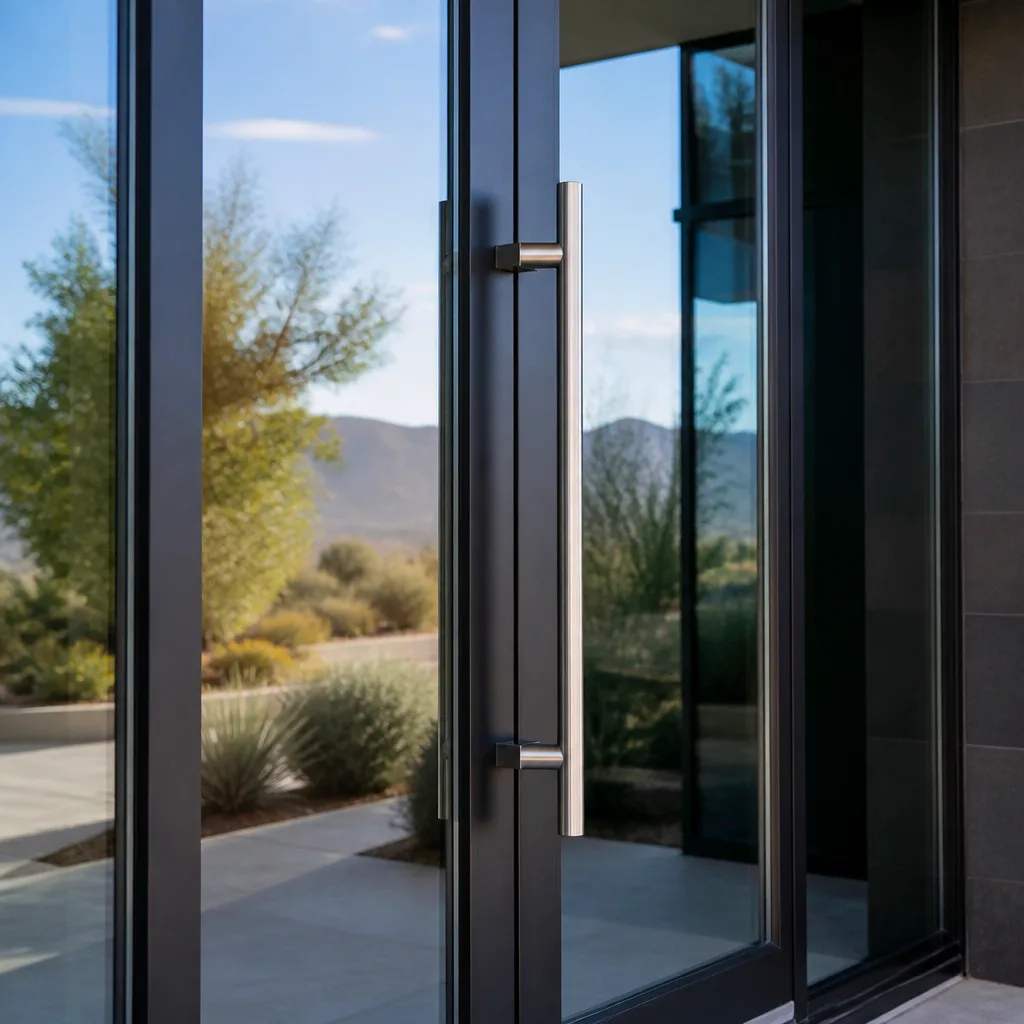
Clark County requires a permit for window and door replacement, and the inspection at the end confirms the installation meets code. A permit isn’t a formality here – it’s the document that protects your resale and your insurance coverage. We pull permits and pass inspections on every job that requires one, and we tell you when one isn’t required so you’re not paying for a permit you don’t need.
What you should walk away with, in writing, every time:
- The measured survey, with opening dimensions and photographs.
- The written scope of work and the price, which cannot differ from the survey.
- The permit number and the inspection result.
- A documented photo record of the finished install.
- The written warranty, including the 365-Day Done Right Promise: if it’s not done right, we make it right.
That set of documents is the whole point of operating under the Haven Standard. It’s the difference between a handshake and a record that a future buyer, an adjuster, or a home inspector can actually read.
For a fuller picture of how replacement differs from new construction, window replacement in Summerlin covers the scope and the trade-offs, and the Sightline Windows & Doors Summerlin home page has the full brand picture.
Common Mistakes to Avoid
- Ordering product before the measured survey. If the openings aren’t measured first, the survey and the order won’t agree, and someone eats the cost. The survey comes first, always.
- Ignoring the HOA covenant. A window the county approves can still fail your architectural review. Read the CC&Rs and submit the color chip before ordering.
- Specifying one SHGC for the whole house. Summerlin’s orientation mix means west and south glass needs lower SHGC than north. A single rating across the house leaves performance on the table.
- Skipping the permit. Unpermitted window and door work shows up in a home inspection and can complicate a sale. Pull the permit before the first tool goes in.
- Buying cheapest-wall vinyl for a west-facing wall. Thin vinyl and 110°F do not get along. Check the wall thickness and heat rating, not just the price.
- Choosing a frame with no thermal break. Aluminum without a thermal break sweats and costs you cooling dollars in a Summerlin summer.
- Not keeping the paperwork. The survey, the written price, the permit, the photo record, and the warranty are what protect your investment. Keep them together.
When to Call a Professional
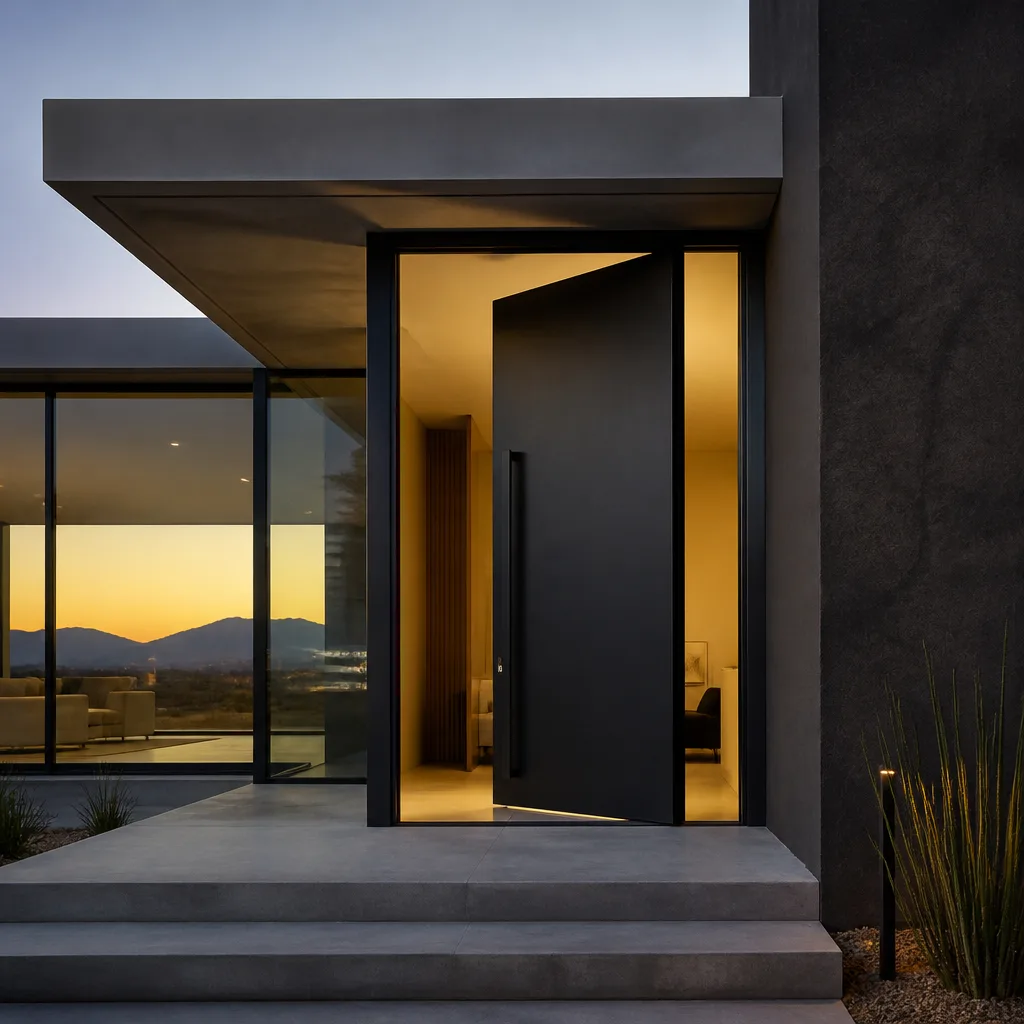
Call a professional when the decision touches anything structural, when the opening is out of square or the glass is large or high, or when the project requires a permit. Impact-rated installations, multi-panel door systems, second-story openings, and any job where the CC&R review adds complexity all belong in professional hands – and so does every installation on a home with settled rough openings or visible frame movement. A clear sign is a window that no longer closes smoothly, a sagging patio door, or a frame that shows daylight at the corner. Those are the conditions where a measured survey and a trained installer save you thousands over a DIY attempt that misses the thermal and structural details.
Sightline Windows & Doors Summerlin offers free estimates in Summerlin – call (844) 560-5201.
Frequently Asked Questions
Target a Solar Heat Gain Coefficient of 0.25 or below for most orientations, and 0.20 or below for west-facing glass, which is the standard that meets Clark County’s Climate Zone 3B prescriptive path and honestly works in Summerlin’s heat. Pair it with a whole-window U-factor of 0.30 or below. Call (844) 560-5201 for an exact quote – estimates are free.
Yes. Summerlin is a master-planned community governed by recorded CC&Rs, and those covenants control exterior frame color, profile, grille pattern, and sometimes approved manufacturers – all stricter than the county code. Read your village’s architectural submittal requirements and get color and product approval before you order. Call (844) 560-5201 to schedule a free estimate that includes a covenant review.
Plan on $16,000 to $32,000 for a comprehensive whole-house replacement in Summerlin, depending on the number of openings, frame material, and glass package. Individual openings run $650 to $1,150 in mid-tier vinyl and $1,200 to $2,100 in performance-tier fiberglass or impact-rated glass. Call (844) 560-5201 for a written, line-item price before any work starts.
Caliche is the calcium-carbonate hardpan layer common across the Las Vegas valley, and in Summerlin its seasonal movement can rack a rough opening out of square over a 10-year window life. That movement is why we measure every opening at survey and correct out-of-square conditions before setting the new unit. Call (844) 560-5201 for a free measured estimate.
Fiberglass is the most dimensionally stable in 110°F cycling and the material we recommend most often for large west- and south-facing units. Quality vinyl with a heavier wall works well at lower cost, and aluminum-clad performs well when it includes a proper thermal break. Call (844) 560-5201 to get the material matched to each opening in writing.
Clark County typically requires a permit for window and door replacement that changes the opening or involves structural work, and the inspection confirms the install meets code. We pull the permit and pass the inspection on every job that requires one, and we tell you when it isn’t required. Call (844) 560-5201 for a free estimate.
The Bottom Line
Summerlin is not a generic window market. The Mojave’s UV index, caliche-driven ground movement, and 110°F frame expansion cycles make local conditions the entire specification story, not a footnote. Get the sequence right – measured survey first, then product, then permit, then install, then inspection and documentation – and you avoid the reorders, rework, and permit problems that punish reversed steps. Read your HOA covenant before the product decision. Specify SHGC by orientation, not as one number for the house. Match the frame material to the heat, with fiberglass often the right call for the largest openings. Bring a competitor’s written quote and we’ll review it free. Every engagement starts with a survey you keep and a written price that can’t differ from it, backed by the 365-Day Done Right Promise and a documented photo record.
Call (844) 560-5201 for a free estimate and a written price before any work starts.
Written by the team at Sightline Windows & Doors Summerlin.
Six Reasons Homeowners Choose Sightline Windows & Doors Summerlin
Laminated glass and reinforced frames hold up to wind-driven rain, hail and flying debris, so your openings stay sealed when the weather turns.
Low-E insulated impact glass from our manufacturer lines commonly cuts monthly cooling bills 20-30%.
Laminated impact glass shuts out up to 40% of outside noise - traffic, neighbors, weather.
Monitoring services run $30-90 a month. Laminated impact glass resists forced entry around the clock, with no subscription.
Tighter seals and insulated glass even out hot and cold rooms and stop the drafts at the frame.
A full impact package upgrades curb appeal, buyer confidence and appraised value in one project.
Other Sightline Windows & Doors Summerlin Services